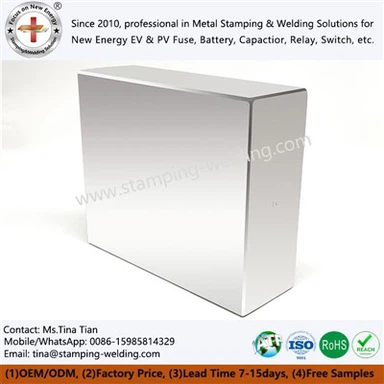


Aluminum Shell For Lithium Power Cell
Our aluminum shell for lithium power cell is lightweight, high-strength, excellent thermal and electrical conductivity, and good corrosion resistance, and is suitable for various types of batteries and different application scenarios. Whether you are an electric vehicle manufacturer, energy storage system provider or communications equipment manufacturer, we can provide you with customized solutions to meet your needs.
- Fast Delievery
- Quality Assurance
- 24/7 Customer Service
Product Introduction
PRODUCT PROFILE
Aluminum shell for lithium power cell is a battery shell made of aluminum material. It is usually used to accommodate the positive electrode, negative electrode and electrolyte inside the battery and protect its safe operation. As an important component in electric vehicles, mobile devices, and energy storage systems, aluminum battery shells have multiple functions and advantages.

pRODUCT PROCESS
- We need to prepare aluminum plates or aluminum alloy plates as raw materials for stamping. These sheets are usually pre-processed, such as cutting, trimming, etc., to ensure that the size and shape meet the requirements of the stamping process.
- Stamping operations are carried out continuously on the stamping press. The aluminum plate or aluminum alloy plate is fed into the punch or stamping machine. Through the pressure and movement of the upper and lower dies, it is subjected to pressure and deformation, and the shape of the shell is gradually formed.
- After finishing stamping, the case will have some burrs or stains that will need to be cleaned and treated. Usually, cleaning, deburring, deoxidation and other processes are used to make the surface of the shell smooth and remove surface defects.
- Quality inspection of molded shells. Check whether the size, shape, surface quality, etc. of the shell meet the design requirements and standards to ensure that the quality of the shell meets customer requirements.
- After completing the quality inspection, the case is packed to protect it from damage. Transportation is then arranged to send the finished shell to the customer or downstream production.

PRODUCT ADVANTAGE
- Aluminum material can effectively dissipate heat, which helps battery components maintain appropriate temperatures during high-load operation and extends battery life.
- Aluminum shell for lithium power cell has good corrosion resistance and mechanical strength. Aluminum materials can resist environmental corrosion such as acids and alkalis, and have high strength and rigidity, which can protect the internal components of the battery from the impact of the external environment.
- Aluminum battery shell has good processing properties and formability. Aluminum materials are easily processed into shells of various shapes and sizes to meet the needs of different battery models and sizes.

TECHNICAL ADVANTAGES
Save materials
Continuous stamping can minimize scrap and shear loss by precisely controlling the design and operation of the mold, saving the use of raw materials and reducing production costs.
Wide applicability
Continuous stamping is suitable for the production of products of various complex shapes and sizes, can meet the customized needs of different customers, and has high flexibility and applicability.
Good stability
Continuous stamping equipment usually has stable operation and production performance and can operate continuously for a long time without being affected by severe mechanical wear or equipment failure, ensuring the stability and reliability of production.
PRODUCT TEST
Leak test: One of the main problems with batteries is electrolyte leakage, which can be dangerous. Battery shells undergo rigorous leak testing to ensure there are no leaks. This involves placing the enclosure in a high-pressure or vacuum environment and monitoring for signs of leakage.
Check Dimensions: Accurate dimensions are critical to ensuring smooth assembly of the battery housing to the battery assembly. Dimensional inspection ensures that the housing meets certain tolerances and specifications.
Materials testing: Materials used to manufacture battery shells are tested to ensure they meet industry standards. This includes checking the composition and properties of the metals and alloys used.
Stress testing: Stress testing is typically performed to ensure the integrity of the battery shell under varying pressure conditions. This simulates the internal pressure changes that can occur during battery operation.
Corrosion Resistance: Battery shells can be tested for corrosion resistance to evaluate their performance when exposed to the corrosive electrolytes used in the battery. This test determines whether the enclosure can withstand prolonged exposure to electrolyte without damage.
Shock and Vibration Testing: Depending on the application, battery enclosures can be subjected to shock and vibration testing.

CONTACT US
By working with us, you will receive high-quality, reliable and innovative aluminum shell for lithium power cell, as well as our full range of technical support and services. Welcome to contact us at any time and look forward to working with you!

Aluminum shell for lithium power cell processing technology covers a variety of aspects such as material selection, shell design, mold manufacturing, stamping, surface treatment, quality control, etc. Each link is critical to the quality of the final presentation of the aluminum battery shell, and it is the key to achieving high-quality and high-efficiency production of aluminum battery shell.
Hot Tags: aluminum shell for lithium power cell, China, manufacturers, suppliers, factory, Inner Cap For Solar Photovoltaic Fuse, Cu Fuse Terminal Contact, Upper And Lower Sockets For Fuse, Fuse Contact And End Caps Components, Fuse Holder Cap, Terminal Contact