

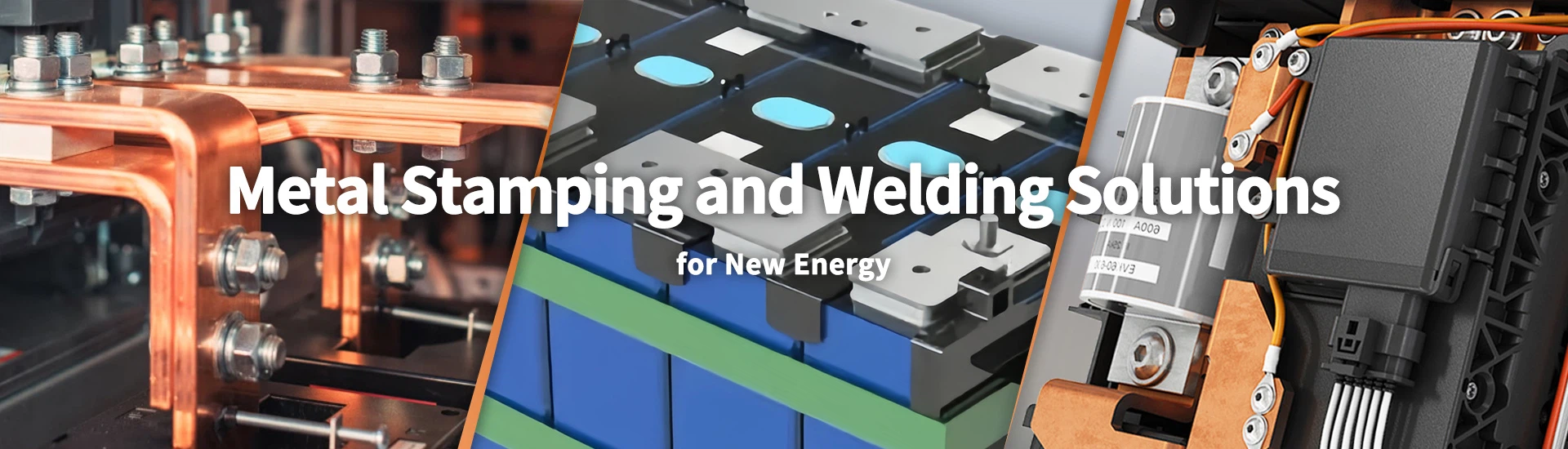
Storage Battery Cell Supplier for 314Ah LFP Energy Storage Applications
Xiamen Apollo supplies storage battery cells and battery packs for energy storage projects, including large-format lithium iron phosphate (LFP) products. Available product configurations include 314Ah and 280Ah cell models, subject to model specification and supply confirmation. Buyers can review capacity, voltage, internal resistance, and operating limits against their system requirements before procurement.
For energy storage projects requiring metal enclosure components, Apollo also provides aluminum battery cases and cover plates manufactured through precision stamping, deep drawing, and qualified joining processes. Our engineering team supports drawing review, material selection, and dimensional inspection planning for custom structural components. Cell supply and metal component manufacturing are evaluated under separate technical specifications and acceptance criteria.
Request a Factory Direct Quote
Explore Our Storage Battery Cell Product Catalog
Compare available LFP battery cells, storage battery packs, and related aluminum enclosures to identify products matching your energy storage system requirements.
-
![Lifepo4 Power Cells]() Add to Inquiry
-
![Lithium Battery For Energy Storage]()
Lithium Battery For Energy Storage
Add to Inquiry -
![LiFePO4 Lithium Ion Battery]() Add to Inquiry
-
![Rechargeable Brand New Batteries]()
Rechargeable Brand New Batteries
Add to Inquiry -
![Lithium-ion Battery Cell]() Add to Inquiry
-
![Prismatic Cell Aluminum Battery Case]()
Prismatic Cell Aluminum Battery Case
Add to Inquiry -
![Prismatic Lfp Cells Aluminum Shell]()
Prismatic Lfp Cells Aluminum Shell
Add to Inquiry -
![Top Lid For Prismatic Battery Cell]()
Top Lid For Prismatic Battery Cell
Add to Inquiry -
![Energy Storage Lithium Battery For New Energy]()
Energy Storage Lithium Battery For New Energy
Add to Inquiry -
![New Energy Lithium Storage Battery]()
New Energy Lithium Storage Battery
Add to Inquiry -
![Lithium-based Battery For New Energy Storage]()
Lithium-based Battery For New Energy Storage
Add to Inquiry -
![New Energy Storage Li-ion Battery]()
New Energy Storage Li-ion Battery
Add to Inquiry


Material Standards, Tooling & Forming Processes
Battery Cell Specifications and Product Scope
A storage battery cell is an electrochemical unit that stores and releases energy through controlled charging and discharging. For lithium iron phosphate (LFP) storage applications, the cell specification should identify the chemistry, nominal capacity, voltage range, allowable charge and discharge conditions, operating temperature, and applicable safety documentation.
Capacity alone does not establish suitability for an energy storage project. Buyers should also review DC internal resistance, cell voltage limits, charging conditions, cycle-life test criteria, and the manufacturer's defined end-of-life threshold. For large-format cells, terminal configuration, dimensions and integration requirements must match the pack design.
Apollo's published product range includes storage battery cells and packs, alongside aluminum battery cases and cover plates. For metal component projects, material and forming specifications are separate from the electrochemical performance of the cell itself.
Aluminum Battery Case and Cover Manufacturing
Prismatic battery cases commonly use aluminum alloys such as 3003 or other grades specified by the design. Material selection depends on drawability, strength, corrosion exposure, wall thickness, and the required joining method. Alloy temper and sheet thickness affect material flow during deep drawing and can influence local thinning, corner radii, and finished dimensions.
Precision stamping and deep drawing are used to form the case geometry. Tooling design should account for blank dimensions, forming depth, punch and die radii, lubrication, springback and the risk of wrinkling or cracking. Cover plates require control of terminal openings, sealing interfaces and the position of any safety-related features.
For custom aluminum battery cases, drawing review should establish critical dimensions, material specifications and inspection datums before tooling approval. Welded cover assemblies require separate acceptance criteria for weld geometry, joint integrity and sealing performance.
Storage Battery Cell and Structural Component Specifications
| Parameter | Storage battery cell | Aluminum case and cover |
| Product type | LFP or other explicitly specified cell chemistry | Formed aluminum enclosure and cover |
| Rated capacity | Confirmed by model datasheet | Not applicable |
| Nominal voltage | Confirmed by model datasheet | Not applicable |
| Internal resistance | Measured under defined test conditions | Not applicable |
| Material | Electrodes, electrolyte, and cell components defined by the cell manufacturer | Aluminum alloy specified by drawing |
| Forming process | Cell-manufacturing process defined by the cell supplier | Precision stamping and deep drawing |
| Dimensional control | Cell dimensions and terminal positions per datasheet | Drawing-defined tolerances and datum scheme |
| Sealing requirements | Defined by cell construction and product qualification | Weld and leak acceptance criteria where applicable |
| Traceability | Cell model, production batch and test records | Material lot, tooling revision and production batch |
The parameters in this table identify the information buyers should verify. They are not universal specifications or a guarantee that every listed product configuration is available.
For a specific large-format model, review 314Ah Storage Battery Cell and Pack.
Tooling and Dimensional Control
For aluminum battery enclosures and covers, the manufacturing review should address:
Wall thickness distribution: Deep drawing can reduce local wall thickness, particularly around corners and high-strain regions.
Forming cracks and wrinkles: Tool radii, blank-holder force, and lubrication must be appropriate for the material grade and forming depth.
Terminal and cover interfaces: Hole position, flatness, and sealing surfaces should be controlled against the approved drawing.
Tool wear: Progressive or forming die wear should be monitored where it affects critical dimensions.
First-article approval: Initial samples should be checked against drawing-defined dimensions before production release.
For custom case designs, see Customized Prismatic Battery Cell Casings.
Advanced Joining, Insulation & Surface Treatments
Cell Assembly and Electrical Connections
Battery cell manufacturing and metal component manufacturing involve different joining requirements. Electrode assembly, electrolyte filling, formation, and electrochemical testing belong to the battery cell manufacturing process. Aluminum case forming, cover joining, and terminal component production require their own process controls.
For aluminum battery cases and covers, laser welding may be used where the joint geometry, material thickness, and enclosure design support the process. Weld parameters should be qualified against penetration, joint strength, distortion and sealing requirements.
Excessive heat input can cause local deformation, while insufficient penetration or discontinuities may compromise joint integrity.
Where a cover incorporates terminals, insulation rings, or other electrical interfaces, assembly tolerances and insulation clearances must be defined in the product drawing. Terminal-to-case isolation requirements depend on the electrical design and must be validated using the applicable test method.
Leak Testing and Insulation Verification
For a sealed battery enclosure, the leak-test method and acceptance limit must be specified according to the product design. Helium mass spectrometry can be used for suitable assemblies when the required sensitivity, fixture arrangement, and test conditions have been established. A leak-rate figure should not be transferred between products without considering test configuration and measurement units.
Electrical insulation checks are also design-specific. The inspection plan may include insulation resistance, dielectric withstand voltage, and verification of terminal-to-enclosure isolation. The applicable voltage, duration, test points and acceptance limits should be defined by the product specification and relevant safety requirements.
Surface treatment selection depends on the substrate, corrosion environment, electrical contact requirements, and downstream joining process. Coatings applied to sealing or welding areas must be compatible with the qualified process and must not compromise the finished joint.
Process Control Matrix
| Process | Key control parameter | Required evidence |
| Aluminum case forming | Material grade, thickness, and finished geometry | Material certificate and dimensional report |
| Laser welding | Qualified process parameters and weld geometry | Weld inspection and applicable joint test results |
| Helium leak detection | Defined test method, fixture, and acceptance limit | Leak-test report |
| Terminal insulation | Clearance, insulation material, and test conditions | Electrical test records |
| Surface treatment | Coating type, coverage and specified thickness | Coating inspection record |
| Final assembly | Terminal position, enclosure dimensions and component fit | Final inspection report |
Request Custom Technical Evaluation
Quality Control & Certifications at Apollo
Quality requirements for storage battery cells and metal battery components should be defined separately. A complete cell requires model-specific electrical and electrochemical test records. A metal enclosure requires dimensional, material, and joining verification. When both are supplied in one project, the purchase specification should define the responsible manufacturer and acceptance criteria for each product.
Battery Cell Quality Verification
For complete storage battery cells, buyers should review the model datasheet and applicable test reports. Depending on the product and purchase agreement, relevant records may include:
Rated capacity and capacity-test conditions.
Open-circuit voltage and DC internal resistance.
Cell dimensions and terminal configuration.
Production batch identification and traceability.
Applicable transport and product safety documentation.
Defined operating temperature and charge/discharge limits.
Cycle-life figures must state the test conditions, charge and discharge rates, temperature, depth of discharge, and end-of-life criterion. Values obtained under different conditions should not be compared as if they were directly equivalent.
Metal Component Quality Verification
For aluminum battery cases and covers, quality control may include incoming material verification, dimensional inspection, forming-defect checks, weld inspection and leak testing where specified.
Dimensional inspection can use calibrated gauges, optical measurement equipment, and CMM systems where suitable for the part geometry. Critical dimensions should be identified on the approved drawing, with inspection frequency based on the control plan and project requirements.
Apollo identifies IATF 16949 and ISO 9001 among its quality-system credentials. For applicable automotive programs, PPAP Level 3 submissions can be defined according to customer requirements and the product's approval process. Typical deliverables may include the process flow diagram, PFMEA, control plan, dimensional results, material certificates, and process capability data where applicable.
Quality Records and Batch Traceability
| Quality item | Battery cell | Metal case or cover |
| Product identification | Model and production batch | Part number, drawing revision and production batch |
| Material records | Applicable cell product documentation | Aluminum alloy certificate |
| Electrical verification | Capacity, voltage and resistance as specified | Insulation or electrical checks where applicable |
| Dimensional verification | Cell dimensions and terminal positions | Drawing-defined critical dimensions |
| Joining verification | Cell assembly records where available | Weld inspection and leak test where required |
| Customer approval | Product-specific documentation | First-article and PPAP documents where applicable |
Before order placement, buyers should confirm which records are supplied with each batch, how long they are retained, and how nonconforming products are handled. For projects involving both cells and metal structures, supplier responsibilities should be documented to avoid gaps in inspection and traceability.
Frequently Asked Questions
Q: 1. What information should buyers check before purchasing a storage battery cell?
A: Confirm the chemistry, rated capacity, nominal voltage, operating voltage range, dimensions, terminal configuration, and permitted charge and discharge conditions. Also review internal resistance, capacity-test conditions, production traceability, and applicable safety documentation. Compare cycle-life figures only when temperature, depth of discharge, and end-of-life criteria are equivalent.
Q: 2. What is the difference between a storage battery cell and a battery pack?
A: A storage battery cell is an individual electrochemical unit. A battery pack combines multiple cells with electrical connections and, depending on its design, monitoring, protection, and thermal-management components. System voltage, usable energy, and current capability depend on the cell configuration and pack design.
Q: 3. Which aluminum alloys can be used for prismatic battery cases?
A: Aluminum alloy selection depends on forming depth, wall thickness, mechanical requirements, corrosion exposure, and joining method. Grades such as 3003 may be considered for suitable drawn enclosures, but the final alloy and temper must be confirmed against the approved drawing and forming validation results.
Q: 4. How should battery case welds and sealing performance be verified?
A: The inspection plan should define weld geometry, visual acceptance criteria, dimensional checks, and any required joint-strength or leak testing. Helium leak detection may be appropriate for qualified assemblies requiring sensitive leak measurement. The test method, fixture, acceptance limit, and measurement units must be agreed before production approval.
Request a Storage Battery Cell or Component Quote
Whether your project requires storage battery cells, battery packs or precision aluminum battery cases and covers, the first step is to define the product scope and acceptance criteria.
Submit your 2D drawings in .DWG or PDF format, 3D models in STEP format, or a cell specification sheet containing rated capacity, voltage, dimensions, and operating conditions. For metal components, include the alloy grade, material thickness, critical dimensions, joining method, and sealing requirements where applicable.
Apollo can review the submitted information to clarify manufacturing scope, DFM considerations, inspection requirements, and quotation details. A preliminary engineering review within 24 hours can be targeted for complete inquiries, subject to drawing complexity and specification availability.
We're well-known as one of the leading storage battery cell manufacturers and suppliers in China. Please feel free to buy high quality storage battery cell at competitive price from our factory. For more information, contact us now.
