

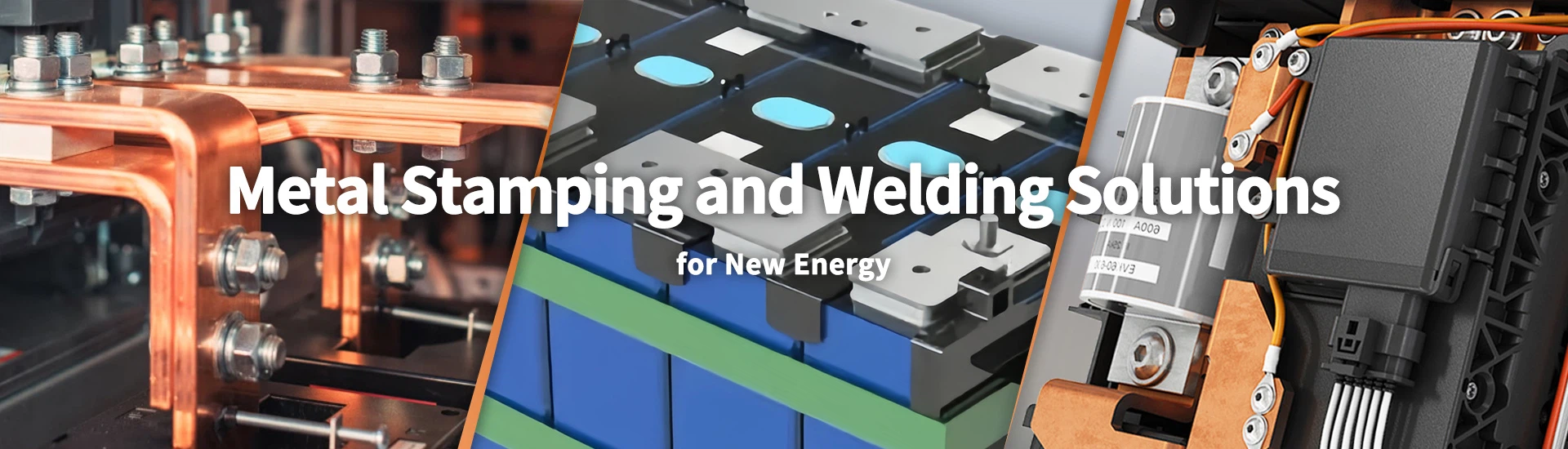
Custom Aluminum Busbars Manufacturer for Power Distribution and Energy Systems
Xiamen Apollo Stamping Welding Technology manufactures aluminum busbars for power distribution equipment, EV battery systems, energy storage units, and industrial electrical assemblies. Available material options include 6101, 6061, and other specified aluminum alloys. Production processes include precision cutting, stamping, punching, CNC bending, surface treatment, and electrical connection assembly for drawing-based OEM orders.
Our engineering team reviews 2D and 3D drawings to evaluate conductor dimensions, hole positions, bend geometry, contact interfaces, and assembly requirements. From prototype tooling to repeat production, each aluminum busbar project is managed against agreed material specifications, dimensional tolerances, inspection criteria, and delivery schedules. PPAP documentation can be arranged according to applicable customer requirements.
Request a Factory Direct Quote
Explore Our Aluminum Busbar Product Catalog
Browse aluminum flat bars, alloy busbars, flexible connections, and plated aluminum conductors for customized electrical distribution applications.
-
![6061 Aluminum Busbar]() Add to Inquiry
-
![Flexible Laminated Aluminum Busbar]()
Flexible Laminated Aluminum Busbar
Add to Inquiry -
![Flat Earth Grounding Aluminum Busbar]()
Flat Earth Grounding Aluminum Busbar
Add to Inquiry -
![Bus Bar Aluminium]() Add to Inquiry
-
![Aluminum Power Distribution Bar]()
Aluminum Power Distribution Bar
Add to Inquiry -
![Aluminium Busbar For Lithium Battery Pack]()
Aluminium Busbar For Lithium Battery Pack
Add to Inquiry -
![Aluminum Electrical Busbar]() Add to Inquiry
-
![Aluminum Flexible Connection]() Add to Inquiry
-
![Aluminum Electrical Power Connector For Busbar]()
Aluminum Electrical Power Connector For Busbar
Add to Inquiry -
![Electrical Aluminum Busbar Flexible Joint]()
Electrical Aluminum Busbar Flexible Joint
Add to Inquiry -
![Busbar Aluminium]() Add to Inquiry
-
![6101 Aluminium Flat Busbar]() Add to Inquiry

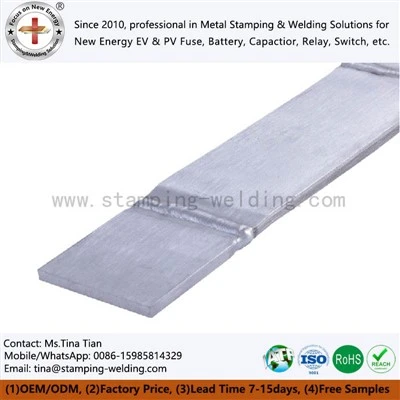
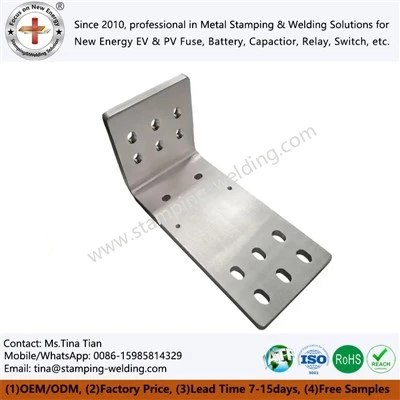
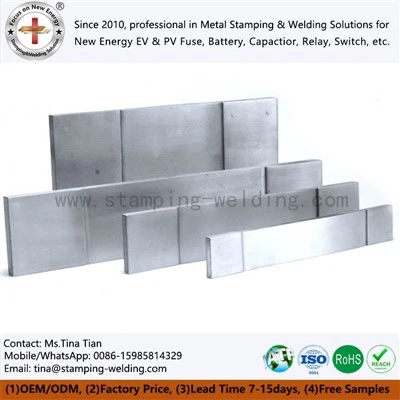


Material Standards, Tooling & Forming Processes for Aluminum Busbars
Aluminum busbar performance depends on alloy composition, temper, conductor cross-section, surface condition, and connection design.
Apollo's aluminum busbar range includes products associated with 6101 and 6061 aluminum alloys, flat conductors, flexible connections, and plated busbars. The final material specification should be confirmed against the approved drawing and the required electrical and mechanical properties.
1. Alloy selection for electrical and structural requirements
6101 aluminum alloy is commonly selected for electrical conductors where a balance between conductivity and mechanical strength is required. Its suitability depends on the specified temper and verified material properties.
6061 aluminum alloy offers higher structural strength in many heat-treated conditions and may suit busbar components requiring machined features or mechanical support. Its electrical conductivity differs from that of more electrically oriented alloys, so the design must account for resistance and temperature rise.
Pure aluminum grades may also be considered where high conductivity and forming characteristics take priority over strength. Alloy substitutions should not be made without engineering approval.
2. Cross-section design and current-carrying capacity
The current rating of an aluminum busbar cannot be determined from width and thickness alone. Engineers should evaluate continuous current, peak current, ambient temperature, enclosure ventilation, conductor spacing, surface finish, and allowable temperature rise.
Actual operating resistance increases with temperature. Final current ratings should therefore be validated for the intended assembly rather than inferred from a generic material value.
3. Precision stamping, punching and bending
Custom aluminum busbars can require blanking, punching, cutting, CNC machining and controlled bending. Tooling design must account for alloy temper, sheet thickness, bend radius, hole-to-edge distance and springback.
For multi-feature components, the drawing should define datum references and critical dimensions. A tolerance of ±0.01 mm may be specified for suitable individual features where the process and measurement method support it; it should not be assumed as a universal tolerance for every formed busbar.
Aluminum Busbar Technical Specifications
| Parameter | Engineering specification |
| Material options | 6101, 6061, or another approved aluminum grade |
| Material condition | Alloy and temper defined by drawing and application |
| Electrical conductivity | Verified against the selected alloy, temper, and material certificate |
| Cross-section | Width and thickness determined by current and thermal requirements |
| Dimensional tolerance | Defined per feature on the approved drawing |
| Forming process | Cutting, punching, stamping, CNC machining, and bending as applicable |
| Contact surface | Bare aluminum or specified surface treatment |
| Surface treatment | Tin plating or other approved finish where available |
| Inspection | Dimensional, visual, and electrical tests as specified |
| Documentation | Material certificates, inspection records and agreed project quality documents |
Advanced Joining, Insulation & Surface Treatments for Aluminum Busbars
The contact interface is often the main reliability risk in an aluminum busbar assembly. Aluminum forms a stable oxide film in air, but this film can increase contact resistance if the mating surfaces and joint design are not properly controlled. Surface preparation, contact pressure, and environmental protection should be specified together.
1. Tin plating and contact-interface control
Tin-plated aluminum busbars may be specified for electrical joints requiring a defined surface finish and improved contact compatibility. The plating process must account for substrate preparation, coating adhesion, coverage at edges and holes, and the risk of corrosion at exposed interfaces.
Plating thickness should be stated on the drawing or purchase specification and verified using an agreed measurement method. No single coating thickness is suitable for every current, environmental or mechanical condition.
2. Copper-to-aluminum connections
Direct copper-aluminum joints require careful assessment because differences in electrochemical potential can contribute to galvanic corrosion in the presence of moisture or electrolyte contamination. Suitable approaches may include engineered transition connectors, approved bimetallic interfaces, or specified protective coatings.
Where laser welding or another joining process is proposed, joint geometry, material compatibility, heat input, metallurgical condition, and mechanical strength must be evaluated. The process should be qualified for the actual alloy combination rather than assumed suitable for all aluminum busbars.
3. Insulation and electrical clearances
Where an aluminum busbar operates inside a high-voltage enclosure, insulation and spacing requirements depend on rated voltage, transient overvoltage, pollution conditions, altitude and enclosure geometry. Insulating coatings, sleeves or barriers should be selected according to the applicable design specification.
Dielectric breakdown voltage and insulation resistance are meaningful acceptance criteria only when the test method, sample configuration, and required limits are defined.
Quality Control & Certifications at Apollo
Aluminum busbar quality control should address both dimensional conformity and electrical joint performance. A part can meet its outline dimensions and still fail in service if the contact surface, flatness, hole alignment, or assembly torque is outside the approved specification.
1. Incoming material verification
Incoming inspections should confirm material grade, temper, dimensions, and traceability against purchasing requirements. Where required, the material certificate should record the alloy designation and relevant mechanical or electrical properties.
2. Dimensional and process inspection
Depending on component geometry and drawing requirements, inspection can include CMM measurement, optical measurement, flatness checks, hole-position verification, burr inspection and bend-angle measurement.
Critical-to-quality features should be identified before production. Measurement methods, sampling frequency, and acceptance criteria should be agreed in the control plan. Tight tolerances should only be claimed when supported by process capability and measurement-system evidence.
3. Electrical and environmental validation
Product-level validation may include conductivity or resistance measurement, joint resistance testing, temperature-rise testing, coating-thickness measurement and environmental exposure tests where required by the application.
For bolted aluminum joints, the validation plan should define contact preparation, fastener specifications, tightening torque, and any required thermal cycling or vibration tests. Acceptance limits must be based on the approved product specification.
4. Quality systems and production documentation
Apollo's website identifies ISO 9001 and IATF 16949 among its quality-related credentials and describes OEM manufacturing support. For automotive projects, confirm the applicable certification scope and site before supplier approval.
Where a customer requires PPAP Level 3, the deliverables can be aligned with the agreed submission requirements. Depending on the project, the package may include a process flow diagram, PFMEA, control plan, dimensional results, material certificates, and process-capability data.
Frequently Asked Questions About Aluminum Busbars
Q: What is the difference between 6101 and 6061 aluminum busbars?
A: 6101 is commonly selected for electrical conductivity combined with adequate mechanical strength. 6061 is often selected where structural strength and machinability are important. Actual conductivity and strength depend on temper and product condition, so selection should use certified material data and the assembly's current and thermal requirements.
Q: How do engineers calculate the current rating of an aluminum busbar?
A: Current rating depends on cross-sectional area, alloy conductivity, conductor length, ambient temperature, enclosure ventilation, conductor spacing, and allowable temperature rise. Engineers should calculate resistance and heat generation, then validate the complete assembly under defined operating conditions. A generic ampacity value should not replace application-specific thermal testing.
Q: Can aluminum busbars be connected directly to copper terminals?
A: Copper-to-aluminum connections require consideration of oxide films, galvanic corrosion, and long-term contact resistance. Depending on the application, a qualified transition connector, bimetallic interface, or approved surface treatment may be required. The joint design should specify contact preparation, fastener torque, environmental protection and validation criteria.
Q: When should a tin-plated aluminum busbar be specified?
A: Tin plating may be appropriate when the contact interface requires a defined surface finish, improved solderability or protection against surface oxidation. The decision depends on joint design, mating material, operating environment, and contact pressure. Plating thickness, adhesion, coverage, and acceptance criteria should be agreed before production.
Request a Custom Aluminum Busbar Engineering Review
Send Apollo your 2D drawing, 3D CAD file (.STEP or .DWG), material requirements, and electrical operating parameters. Include continuous and peak current, rated voltage, allowable temperature rise, mounting dimensions, contact materials, and environmental conditions.
Our engineering review can assess material selection, cross-section, hole positions, bend geometry, contact interfaces, and manufacturability. A quotation and DFM feedback can be targeted within 24 hours after receipt of complete project information, subject to drawing complexity and engineering workload.
For OEM projects requiring repeatable production, submit the expected annual volume, inspection requirements and any PPAP or traceability requirements with your initial inquiry.
We're well-known as one of the leading aluminum busbar manufacturers and suppliers in China. Please feel free to buy high quality aluminum busbar at competitive price from our factory. For more information, contact us now.
