

Ceramic Body for EV, PV, and New Energy Storage Fuse Manufacturer
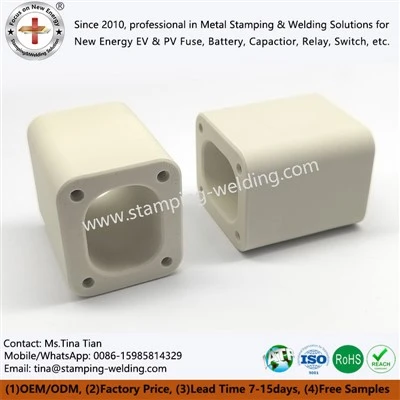
Xiamen Apollo manufactures alumina ceramic bodies for electric vehicle fuses, photovoltaic protection systems, and energy storage fuse assemblies. The product range includes tubular, cylindrical, and rectangular ceramic casings made from high-purity Al₂O₃ materials. Ceramic composition, wall thickness and internal geometry are specified according to insulation requirements, thermal loading and fuse assembly dimensions.
Our engineering team supports drawing-based development, ceramic mold design, powder pressing, high-temperature sintering and precision machining. Dimensional inspection covers critical bore sizes, wall thickness, and end-face geometry. For OEM production, Apollo can coordinate material certificates, first-article inspection, dielectric testing, and PPAP Level 3 documentation according to the customer's quality requirements.
Request a Factory Direct Quote
Explore Our Ceramic Body for Fuse Product Catalog
Compare EV, PV, high-speed, and energy storage fuse ceramic bodies by material composition, structural dimensions, and electrical insulation requirements.
-
![Ceramic Body]() Add to Inquiry
-
![Ceramic Body For High Speed Fuse]()
Ceramic Body For High Speed Fuse
Add to Inquiry -
![Alumina Ceramic Insulator For NH/Blade Type Fuses]()
Alumina Ceramic Insulator For NH/Blade Type Fuses
Add to Inquiry -
![Metallized Alumina Ceramics For Electrical Components]()
Metallized Alumina Ceramics For Electrical Components
Add to Inquiry -
![Insulating Ceramic Tube]() Add to Inquiry
-
![Corrugated Ceramic Tube]() Add to Inquiry
-
![Fuse Ceramic]() Add to Inquiry
-
![Metallized Ceramics]() Add to Inquiry
-
![Insulated Ceramic Tube in EV Fuses]()
Insulated Ceramic Tube in EV Fuses
Add to Inquiry -
![Porcelain Ceramic Tube For Electrical Fuse]()
Porcelain Ceramic Tube For Electrical Fuse
Add to Inquiry -
![95% Alumina Ceramic Tube For High Voltage Fuse]()
95% Alumina Ceramic Tube For High Voltage Fuse
Add to Inquiry -
![Ceramic Body For EV DC Fuse]() Add to Inquiry




Material Standards, Tooling & Forming Processes
Ceramic fuse bodies provide electrical insulation and mechanical containment within a fuse assembly. Material selection must account for operating voltage, temperature exposure, mechanical loading, internal arc conditions, and the geometry of the complete fuse design.
Alumina ceramic is widely used for electrical insulation because its dielectric properties, hardness, and thermal stability can suit demanding electrical applications. A 95% Al₂O₃ composition is one possible material specification, but the appropriate grade depends on the required electrical, mechanical, and manufacturing characteristics. Alumina percentage alone does not establish the dielectric strength, fracture resistance, or thermal shock performance of the finished component.
Ceramic Composition and Manufacturing Route
The production route generally includes powder preparation, forming, sintering, and dimensional finishing. Depending on the geometry and production method, ceramic bodies may be formed by extrusion, pressing or another suitable ceramic-forming process.
Sintering parameters affect shrinkage, density and dimensional consistency. Tooling compensation should therefore be based on the selected ceramic composition, production process and verified shrinkage data. Internal diameter, outside diameter, wall thickness, overall length and end-face geometry should be specified on the component drawing.
For fuse bodies with metallized or brazed ends, the ceramic preparation stage must also provide suitable interface geometry and surface condition. Chips, cracks, excessive dimensional variation, and damaged sealing surfaces can compromise subsequent assembly.
Ceramic Fuse Body Specifications
| Parameter | Engineering specification | Verification method |
| Ceramic composition | 95% Al₂O₃ or another specified alumina grade | Material specification and supplier documentation |
| Forming method | Extrusion, pressing, or other suitable forming process | Process documentation |
| Sintering | Controlled according to the selected ceramic grade | Process records and dimensional verification |
| Overall length | Defined by the approved drawing | Calibrated dimensional measurement |
| Inner and outer diameter | Defined by the drawing and assembly clearance | Bore gauge, optical measurement, or suitable gauges |
| Wall thickness | Based on insulation, mechanical, and structural requirements | Dimensional measurement |
| End-face geometry | Flatness, perpendicularity, and parallelism as specified | Optical or dimensional inspection |
| Surface condition | No unacceptable cracks, chips, or defects in critical regions | Visual inspection and specified defect criteria |
| Dielectric performance | Defined test voltage, duration, and acceptance criteria | Electrical testing under the agreed test method |
The numerical limits for each item should be established for the actual part number. A universal dimensional tolerance or dielectric-strength value should not be applied to every ceramic fuse body.
Dimensional Stability and Mechanical Integrity
Ceramic materials behave differently from ductile metals during machining and handling. They are hard and wear-resistant, but can be damaged by concentrated loads, edge impacts, and excessive clamping force. Machining allowances, fixture contact areas and inspection methods should account for these characteristics.
For thin-wall ceramic tubes, wall-thickness variation may affect mechanical integrity and the available insulation geometry. For short ceramic housings, end-face parallelism and overall length may govern the fit between terminal components. For long tubes, straightness and concentricity may also need to be specified.
Where a customer requires a narrow tolerance, Apollo should confirm the achievable tolerance against the actual dimensions, ceramic grade, production route, and measurement method before committing to mass production.
Advanced Joining, Insulation & Surface Treatments
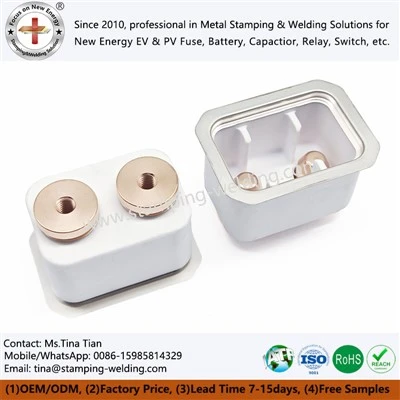
Ceramic fuse bodies may require conductive metal interfaces at the ends for connection to terminal caps, contact structures or other metallic components. The joining route depends on the ceramic composition, metal grade, operating temperature, and required sealing performance.
Mo-Mn Metallization and Nickel Plating
For suitable alumina ceramics, molybdenum-manganese (Mo-Mn) metallization can provide a metallic interface for subsequent joining. The ceramic surface preparation, metallization coverage, firing conditions, and coating adhesion must be controlled to obtain a consistent interface.
Nickel plating may be applied over a qualified metallized layer to provide a suitable surface for subsequent joining. Its thickness and coverage should follow the drawing and joining specification. Plating over an unsuitable or poorly bonded metallization layer will not, by itself, ensure joint reliability.
The inspection plan should define the required coating coverage, visual acceptance criteria, and any adhesion or solderability tests. Where the end interface is safety-related, the qualification plan should also consider thermal exposure and mechanical loads during assembly and service.
Vacuum Brazing and Hermetic Sealing
Vacuum brazing can be used for compatible ceramic-to-metal assemblies when the metallized interface, filler metal, and joint design have been qualified. The process must control joint clearance, brazing temperature, atmosphere, wetting, and thermal gradients.
Ceramic and metal components have different coefficients of thermal expansion. During heating and cooling, this difference can create residual stress around the joint. Joint geometry and material selection should therefore be evaluated together rather than treating brazing temperature as the only process variable.
Where hermeticity is required, the acceptance limit must be stated explicitly, including the test method, gas, test pressure or conditions, and units. Helium leak detection may be appropriate for qualified sealed assemblies, but not every ceramic fuse tube requires a hermetic enclosure. The requirement should be established from the complete fuse design.
Process Selection by Application
| Application | Engineering focus | Potential verification |
| EV fuse | Packaging constraints, vibration exposure, and thermal cycling | Dimensional inspection and application-specific thermal or mechanical tests |
| PV fuse | Outdoor temperature variation, insulation geometry, and environmental exposure | Electrical insulation and environmental qualification |
| Energy storage fuse | Continuous operating conditions, fault protection design, and assembly interfaces | Dimensional, electrical and specified environmental tests |
| High-voltage DC fuse | Insulation geometry, arc-containment design and terminal integration | Complete fuse qualification and component-level inspections |
| Ceramic-to-metal assembly | Metallization adhesion, brazing integrity and thermal-expansion compatibility | Joint inspection, mechanical tests and leak testing where required |
Request Custom Technical Evaluation
Quality Control & Certifications at Apollo
Quality control for ceramic fuse bodies should cover incoming material documentation, dimensional consistency, surface integrity and any required electrical or ceramic-to-metal joint tests. Inspection criteria should be agreed before production, with particular attention to the interfaces that determine fit, insulation geometry and sealing performance.
Dimensional and Surface Inspection
Critical dimensions may be checked using calibrated gauges, optical measuring systems or CMM equipment where the component geometry and measurement uncertainty make the method suitable. Inspection points should include overall length, internal and external diameters, wall thickness and end-face geometry as required by the drawing.
Visual inspection should identify cracks, chips, edge damage, and unacceptable surface defects. For components with metallized regions, the inspection plan should also address incomplete coverage, coating defects and damage to the interface.
Electrical and Environmental Verification
Electrical tests should follow the agreed specification and the applicable qualification plan. Depending on the design, these may include dielectric withstand testing, insulation resistance measurement, and thermal-cycle testing.
For ceramic-to-metal assemblies requiring a leak-tight joint, helium mass spectrometer leak detection can be used when the specified test method and acceptance criteria support it.
Mechanical integrity tests should likewise be selected according to the component design. Ceramic fracture resistance, metallization adhesion, and brazed-joint strength are different properties and require appropriate evaluation methods.
Quality Documentation and Traceability
For automotive and other controlled supply programs, the quality documentation package can be agreed during project review. Where applicable and supported by the project, PPAP Level 3 documentation may include:
Process Flow Diagram
PFMEA
Control Plan
Material certificates and relevant supplier records
Dimensional inspection results
Process capability data, including Cpk where appropriate
Approved sample and validation records
Apollo's applicable certifications and their scope should be confirmed for the specific manufacturing site and product program before they are stated as a qualification commitment.
Manufacturing and Delivery Controls
For repeat production, the control plan should link material batches, tooling revisions, ceramic processing records and final inspection results to the finished-part lot. This supports investigation of dimensional shifts, surface defects and joining failures.
Protective packaging should prevent ceramic-to-ceramic impact, edge chipping and damage to metallized surfaces during handling and transport. Packaging design should reflect component length, wall thickness, interface geometry, and shipping conditions.
For projects that combine ceramic housings with metal caps or other stamped components, see Custom Metal Stamping and Welding for related manufacturing and assembly support.
Frequently Asked Questions About Ceramic Bodies for EV, PV and Energy Storage Fuses
Q: 1. Why is alumina ceramic used for EV and high-voltage fuse bodies?
A: Alumina ceramic provides electrical insulation, hardness, and thermal stability for suitable fuse designs. The required grade depends on dielectric performance, mechanical loading, thermal conditions, and the complete fuse's arc-management system. Material composition alone does not establish the voltage rating or interrupting capacity of the finished fuse.
Q: 2. What is the function of Mo-Mn metallization on a ceramic fuse body?
A: Mo-Mn metallization creates a suitable metallic interface on compatible alumina ceramic for subsequent joining. A qualified nickel layer may be applied to support the joining process. Surface preparation, metallization adhesion, coating coverage, and brazing conditions must be controlled to obtain a reliable ceramic-to-metal joint.
Q: 3. Does every ceramic fuse body require helium leak testing?
A: No. Helium leak testing is appropriate when the assembly has a defined hermeticity requirement and a suitable test method. The specification must identify the leakage limit, units, and test conditions. Ceramic insulation components without a sealed cavity may instead require dimensional, dielectric, or mechanical verification.
Q: 4. What information is required to quote a custom ceramic fuse housing?
A: Provide a 2D drawing or 3D CAD model, ceramic grade, dimensions, operating temperature, voltage-related requirements, and end-interface details. If metallization or brazing is needed, include the metal material, joint design, and sealing requirements. Annual demand and inspection criteria help establish tooling, validation, and production scope.
Request a Custom Ceramic Fuse Body Engineering Review
Ceramic fuse body performance depends on material grade, wall geometry, dimensional stability, and, where applicable, the reliability of metallized or brazed end interfaces. Submit your component specifications for a drawing-based manufacturing review.
Please provide your 2D drawings in .DWG or PDF format, 3D models in STEP format, or a technical specification covering ceramic composition, critical dimensions, electrical requirements, operating temperature, end-interface design, and annual volume.
Apollo can review the information to identify manufacturing constraints, inspection requirements, and potential joining-process considerations. A preliminary DFM review and direct quotation can be arranged after the required technical information is received; response time depends on drawing complexity and specification completeness.
We're well-known as one of the leading ceramic body manufacturers and suppliers in China. Please feel free to buy high quality ceramic body at competitive price from our factory. For more information, contact us now.
