

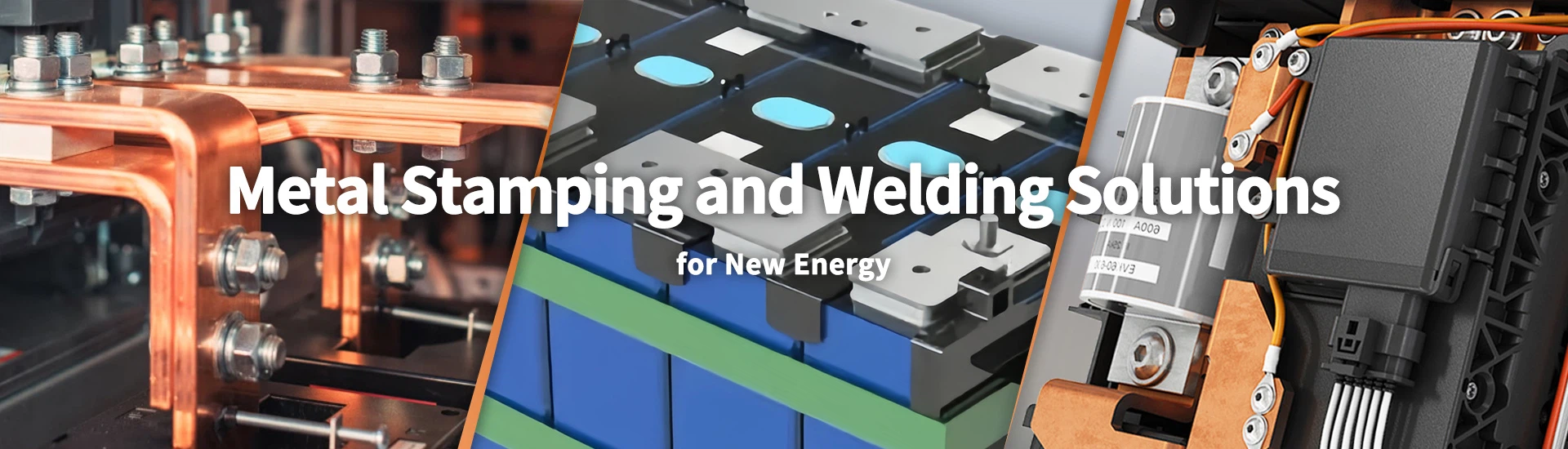
HVDC Contactor Ceramic Body Manufacturer for High Voltage DC Applications
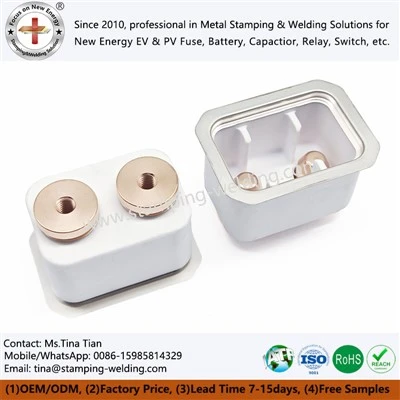
Xiamen Apollo Stamping Welding Technology manufactures HVDC contactor ceramic bodies using high-purity alumina ceramics with Al₂O₃ content above 95%. These insulating components provide electrical isolation, mechanical support, and a stable interface for high-voltage DC contactor assemblies used in electric vehicles, battery energy storage systems, and DC power equipment.
Apollo supports drawing-based ceramic body development, precision forming, high-temperature sintering, CNC machining and ceramic metallization. Mo-Mn metallization, nickel plating, and ceramic-to-metal brazing can be evaluated according to terminal design, dimensional tolerances, thermal expansion requirements, and hermetic sealing specifications. Production inspection and batch documentation can be defined for OEM projects.
Request a Factory Direct Quote
Explore Our HVDC Contactor Ceramic Body Product Catalog
Review our ceramic body configurations and select the required dimensions, insulation properties, and metallization structure for your HVDC contactor assembly.
-
![Metallized Alumina Ceramics For Electrical Components]()
Metallized Alumina Ceramics For Electrical Components
Add to Inquiry -
![Metallized Ceramics]() Add to Inquiry
-
![Metallized Ceramic Housing For Power Semiconductors]()
Metallized Ceramic Housing For Power Semiconductors
Add to Inquiry -
![High-Strength Metallized Ceramic Components]()
High-Strength Metallized Ceramic Components
Add to Inquiry -
![Alumina Ceramic Parts Precision Machining]()
Alumina Ceramic Parts Precision Machining
Add to Inquiry -
![Metallized Ceramics For Electrical Components]()
Metallized Ceramics For Electrical Components
Add to Inquiry -
![Metallized Ceramic Components]() Add to Inquiry
-
![Alumina Metallized Ceramics]() Add to Inquiry



Material Standards, Tooling & Forming Processes
Alumina Ceramic Selection for HVDC Contactor Bodies
Alumina ceramic is used in high-voltage electrical components because of its electrical insulation, thermal stability, and resistance to many forms of chemical degradation. A 95% Al₂O₃ formulation may be suitable for certain HVDC contactor ceramic bodies, but the final grade must be selected according to dielectric requirements, mechanical loading, thermal cycling, and the ceramic manufacturer's material data.
The ceramic body's geometry affects both electrical insulation and mechanical integrity. Wall thickness, internal clearances, edge radii, terminal openings, and sealing surfaces must be evaluated together. Localized stress around apertures or thin sections can increase the risk of cracking during assembly or thermal cycling.
Unlike ductile metal stampings, ceramic components cannot accommodate substantial plastic deformation after firing. Dimensional control therefore depends on powder preparation, forming, sintering shrinkage, grinding, and finishing. Where a metal-to-ceramic seal is required, the sealing surface and metallized area must be controlled against the joining process specification.
Ceramic Material and Dimensional Specifications
| Parameter | Engineering specification | Verification method |
| Ceramic composition | 95% Al₂O₃ or specified alumina grade | Supplier material certificate |
| Dielectric properties | Grade-specific values under defined test conditions | Material data and dielectric test |
| Housing wall thickness | Defined by approved drawing | Calibrated gauges or dimensional measurement |
| Sealing face flatness | Drawing-defined tolerance | Optical measurement or suitable metrology |
| Terminal aperture | Diameter, position, and profile per drawing | Optical measurement or CMM where suitable |
| Surface defects | Cracks, chips, and edge damage assessed against acceptance criteria | Visual inspection and specified nondestructive methods |
| Metallization region | Defined by joint design and metallization specification | Visual inspection and dimensional verification |
| Thermal cycling | Customer-defined temperature range and cycle count | Approved thermal cycling procedure |
The table describes parameters that should be defined for each project; it does not establish universal tolerances or certified performance values for all ceramic bodies.
Tooling, Sintering and Finishing Considerations
Forming and shrinkage compensation: Tooling dimensions must account for the ceramic body's material-specific shrinkage during sintering.
Grinding and finishing: Critical sealing faces and locating features may require post-sintering finishing to meet the drawing.
Edge integrity: Chamfers and radii should be defined to reduce chipping risks during handling and assembly.
Dimensional datums: The drawing should establish reference surfaces for terminal openings, sealing areas, and mounting interfaces.
Material traceability: Ceramic grade and production lot should be traceable to the applicable inspection records.
For projects requiring other high-voltage contactor components, see HVDC Contactor Parts.
Advanced Joining, Insulation & Surface Treatments
Mo-Mn Metallization and Ceramic-to-Metal Sealing
Where the design requires a brazed metal terminal or sealing ring, alumina ceramic may be prepared with a molybdenum-manganese (Mo-Mn) metallization system. The metallized region provides a bonding surface for subsequent joining operations, subject to the ceramic composition, metallization process, and braze alloy.
The manufacturing specification should define the metallization coverage, layer adhesion requirements, nickel finish where applicable, joint clearance, and brazing temperature profile. Process variables must be qualified against the actual ceramic and metal combination. Inadequate metallization adhesion, unsuitable joint clearance, or excessive thermal stress can contribute to interfacial defects.
Vacuum brazing can provide a controlled atmosphere for ceramic-to-metal joining. The qualification plan should consider braze alloy compatibility, joint geometry, thermal expansion mismatch, and cooling conditions. A sound-looking joint is not, by itself, proof of hermeticity or long-term reliability.
Electrical Insulation and Environmental Requirements
The ceramic body separates conductive elements and supports the insulation architecture of the contactor. Its electrical performance must be assessed as part of the complete assembly, including conductor spacing, surface condition, terminal geometry, and the surrounding environment.
Relevant design and validation considerations include:
Dielectric strength: Use material data and test results applicable to the ceramic grade, specimen geometry, and test conditions.
Dielectric withstand voltage: Define the test voltage, duration, electrode arrangement, and acceptance criteria for the finished component or assembly.
Creepage and clearance: Verify distances against the product's voltage rating, pollution conditions, and applicable safety requirements.
Thermal cycling: Assess the ceramic, metallization, and metal joint together for stress-related damage.
Hermeticity: Where the ceramic body forms part of a sealed chamber, define the leak-test method and acceptance limit.
Helium leak detection may be appropriate for qualified hermetic assemblies.
Joining Process Selection
| Process or feature | Primary purpose | Engineering control |
| Mo-Mn metallization | Establish a metal-bonding surface on alumina ceramic | Coverage, adhesion, and process consistency |
| Nickel finishing | Provide the specified finish over metallized areas | Coating continuity and thickness |
| Vacuum brazing | Join ceramic and metal sealing components | Braze alloy, joint clearance and thermal profile |
| Helium leak testing | Verify hermeticity where required | Defined test method and acceptance limit |
| Dielectric withstand testing | Assess electrical insulation performance | Test voltage, duration, and fixture configuration |
For a project involving custom ceramic housing geometry or metal-sealing interfaces, submit the drawing for an engineering review.
Request Custom Technical Evaluation
Quality Control & Certifications at Apollo
Quality assurance for HVDC contactor ceramic bodies should cover material identity, dimensional conformity, ceramic surface integrity, metallization quality, and joint performance. The inspection plan must reflect the component's role in the contactor and distinguish checks on the ceramic body from qualification tests performed on the complete switching assembly.
Dimensional inspection can use optical measurement systems, calibrated gauges and CMM equipment where suitable for the part geometry. Ceramic inspection should address cracks, chips, and damage around terminal openings and sealing faces. For metallized or brazed components, the inspection plan may include coating coverage, joint appearance, adhesion evaluation and specified leak testing.
Electrical qualification should use defined test conditions. Dielectric withstand testing, insulation resistance measurements, and thermal cycling should not be treated as interchangeable tests: each evaluates a different aspect of performance. High-voltage arc interruption and breaking capacity are properties of the qualified contactor design and cannot be inferred from the ceramic housing alone.
Recommended Inspection and Documentation Plan
| Inspection stage | Control item | Supporting record |
| Incoming material | Alumina grade and material identity | Material certificate |
| Ceramic body inspection | Critical dimensions, chips, cracks, and surface condition | Dimensional and visual inspection reports |
| Metallization | Coverage and surface condition | Process and inspection records |
| Brazed assembly | Joint appearance and specified mechanical or interface checks | Joining-process records |
| Hermeticity | Leakage rate where the design requires a sealed assembly | Leak-test report |
| Electrical validation | Dielectric withstand or insulation resistance as specified | Electrical test report |
| Thermal qualification | Performance after defined temperature cycling | Qualification test record |
| Production release | Drawing compliance and lot identification | Final inspection and traceability records |
Quality Systems and PPAP Documentation
Apollo identifies IATF 16949 and ISO 9001 among its quality-system credentials. The applicable certification scope and current validity should be confirmed before customer submission. For automotive programs, PPAP Level 3 deliverables may be prepared according to the customer's requirements and the actual project scope.
A project-specific submission may include:
Process flow diagram.
Process Failure Mode and Effects Analysis (PFMEA).
Control plan.
Material certificates.
Dimensional inspection results.
Process capability data, including Cpk where required and statistically supported.
Relevant joining, electrical, and hermeticity test reports.
The exact package should be agreed upon during quotation and APQP planning. Cpk values should be based on valid production data rather than estimated before process qualification.
For custom projects, the engineering review should establish the drawing revision, critical-to-quality characteristics, inspection frequency and acceptance criteria before mass production.
Frequently Asked Questions
Q: 1. Why is alumina ceramic used in an HVDC contactor body?
A: Alumina ceramic provides electrical insulation and thermal stability in compact high-voltage assemblies. The required alumina content and grade depend on dielectric properties, mechanical loading, geometry, and manufacturing conditions. Selection should use the ceramic supplier's material data and the contactor designer's qualification requirements.
Q: 2. What is the purpose of Mo-Mn metallization on a ceramic contactor body?
A: Mo-Mn metallization creates a metal-bonding surface on suitable alumina ceramic for subsequent joining operations. Its performance depends on ceramic composition, metallization coverage, process conditions, and finishing. The metallized interface must be qualified for the specified braze alloy, joint geometry, and service temperature.
Q: 3. How is hermeticity verified in a ceramic-to-metal assembly?
A: Helium leak detection can be used when the assembly requires a defined hermetic seal. The test procedure must specify the test configuration, calibration, measurement range, and acceptance limit. Thermal cycling and joint inspection may provide additional evidence, but they do not replace the specified leak test.
Q: 4. What information is needed to quote a custom HVDC contactor ceramic body?
A: Provide a 2D drawing or 3D CAD model, ceramic grade, critical dimensions, metallization areas, metal terminal material, and sealing requirements. Include dielectric test conditions, thermal cycling requirements, target quantities, and applicable qualification documents. These inputs allow the supplier to assess manufacturability and define the inspection scope.
Request an HVDC Contactor Ceramic Body Engineering Review
Ceramic housing reliability depends on material grade, dimensional control, metallization quality, and the integrity of any ceramic-to-metal joint. Send your component drawing and qualification requirements to establish the manufacturing and inspection scope before tooling or production approval.
Submit 2D drawings in .DWG or PDF format, 3D models in STEP format, and the applicable technical specifications. Include ceramic composition, sealing-interface details, dielectric test conditions, leak-rate limits where required, annual demand, and PPAP documentation requirements.
Apollo can review the supplied information for manufacturability, process selection, and inspection planning. A preliminary DFM review and factory-direct quotation can be targeted within 24 hours for complete inquiries, subject to drawing complexity and technical review requirements.
We're well-known as one of the leading hvdc contactor ceramic body manufacturers and suppliers in China. Please feel free to buy high quality hvdc contactor ceramic body at competitive price from our factory. For more information, contact us now.
