

Start-Stop Battery Manufacturer for EFB and AGM Automotive Applications
Xiamen Apollo Stamping Welding Technology supplies start-stop battery products for automotive applications requiring frequent engine restarts and repeated charge-discharge operation. The product range includes EFB and AGM configurations. Selection depends on rated voltage, capacity, cold-cranking amps (CCA), cycle requirements, terminal layout, and vehicle charging strategy.
For OEM and bulk procurement projects, we support product specification review and configuration assessment, including:
Battery Technology: EFB and AGM
Rated Voltage: 12V configurations
Capacity Range: 60Ah–100Ah options, subject to model availability
Performance Parameters: CCA, internal resistance, charge acceptance and cycle durability
Application: Passenger cars, commercial vehicles, and compatible start-stop vehicle platforms
Request a Factory Direct Quote
Explore Our Start-Stop Battery Product Catalog
Compare EFB and AGM battery options by capacity, starting performance, installation dimensions, and vehicle application before selecting a model.
-
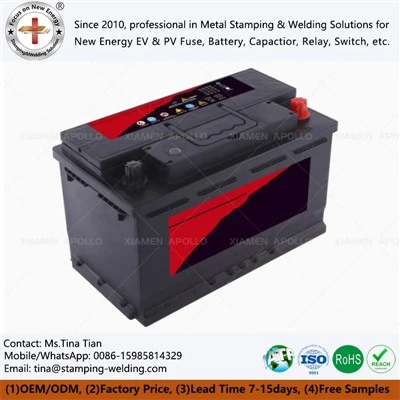
![Car Battery Stop Start EFB Battery]()
Car Battery Stop Start EFB Battery
Add to Inquiry -
![Car Battery Start Stop]() Add to Inquiry
-
![Start Stop Battery For Cars]() Add to Inquiry
-
![Car Start Stop Battery]() Add to Inquiry
-
![Start Stop Car Batteries]() Add to Inquiry

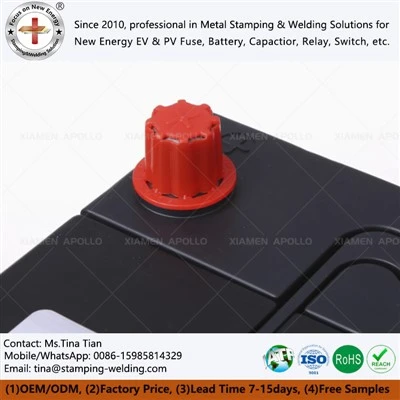
Material Standards, Tooling & Forming Processes
Start-stop battery performance depends on the interaction between electrode design, grid alloy, active material, separator structure, terminal connection, and housing integrity. Unlike a conventional starting battery designed for less frequent engine restarts, a start-stop battery must repeatedly deliver cranking current while supplying electrical loads during engine-off periods.
EFB and AGM Battery Structures
Enhanced Flooded Battery (EFB) uses an enhanced flooded lead-acid design intended for increased cycling demands. Its performance depends on lead-alloy grid design, active material formulation, plate construction, and charge acceptance under the specified operating conditions.
Absorbent Glass Mat (AGM) uses a glass-fiber separator that absorbs and retains the electrolyte. The internal design, valve-regulated construction, and recombination characteristics must be compatible with the battery's intended charging profile and operating environment.
These technologies should not be treated as interchangeable solely because they share the same nominal voltage or external dimensions. The vehicle manufacturer's battery specification and charging strategy should determine the appropriate technology.
Material and Structural Components
Lead-alloy grids: Alloy composition, grid geometry, and corrosion resistance affect structural integrity and current collection during repeated cycling.
Active material: Formulation, coating consistency, and curing conditions influence capacity, charge acceptance, and cycle performance.
Separators: AGM glass-fiber separators retain electrolyte, while EFB structures use a different internal arrangement suited to enhanced flooded operation.
Battery housing: Polypropylene-based housings are commonly used in automotive lead-acid batteries. Impact resistance, dimensional stability, and chemical compatibility must be evaluated against the intended operating conditions.
Terminals and connectors: Material, terminal geometry, surface condition, and connection resistance affect current transfer and compatibility with the vehicle harness.
Start-Stop Battery Technical Specifications
| Parameter | Specification or selection basis | Verification method |
| Battery technology | EFB or AGM, according to vehicle requirements | Model and specification review |
| Rated voltage | 12V for the listed 12V product configurations | Voltage measurement |
| Capacity | Select by model; listed product information includes 60Ah–100Ah options | Capacity test under the applicable test conditions |
| Cold Cranking Amps (CCA) | Defined by model specification and applicable test method | Standardized cranking performance test |
| Internal resistance | Model-specific acceptance limit | Approved resistance measurement method |
| Cycle durability | Based on start-stop duty cycle and customer requirements | Defined charge-discharge cycling test |
| Charge acceptance | Evaluated under specified state of charge, voltage, current, and temperature | Controlled charge acceptance test |
| Terminal layout | Position, dimensions, and polarity per model drawing | Dimensional and visual inspection |
| Housing integrity | Chemical compatibility, mechanical strength, and sealing requirements | Applicable leak, vibration, and mechanical tests |
The table defines the main procurement parameters, not a universal performance guarantee. Rated capacity, CCA, cycle-life targets, and test conditions must be confirmed for each battery model.
Manufacturing and Assembly Process
A typical lead-acid start-stop battery manufacturing flow includes grid production, active-material preparation, plate formation, plate-group assembly, container insertion, intercell connection, electrolyte filling, and sealing. Final electrical tests verify compliance with the relevant product specification.
The precise process and inspection sequence depend on the battery technology and manufacturing site. Buyers should request the applicable process flow and quality records rather than assume that every supplier uses the same grid-forming or assembly method.
For vehicle-specific product configurations, review Start Stop Battery for Cars.
Advanced Joining, Insulation & Surface Treatments
In automotive start-stop batteries, electrical connections and enclosure integrity must remain stable during repeated starting cycles, vibration, and temperature variation. Terminal design, intercell connections, polarity marking, and housing sealing should therefore be evaluated as parts of the complete battery system.
Terminal Connections and Electrical Resistance
Battery terminals must match the vehicle's cable connectors and installation requirements. Relevant inspection points include terminal dimensions, polarity, surface condition, connection resistance, and mechanical retention. The connection design should also accommodate the specified installation torque without damaging the terminal or housing.
For lead-acid battery assemblies, internal intercell connections must maintain electrical continuity under the battery's rated current and thermal conditions. The joining process should be qualified against the selected materials, joint geometry, and required mechanical integrity.
Housing Sealing and Electrolyte Retention
Housing and cover sealing are particularly important for preventing electrolyte leakage and maintaining the intended pressure-management behavior. EFB and AGM constructions differ, so the applicable sealing method and acceptance criteria should be selected for the specific product.
Inspection may include visual checks, dimensional verification, pressure-based leak tests, or other validated methods. Helium mass spectrometry should only be specified where the battery design, sealing process, and approved test method justify its use; it should not be presented as a universal requirement for all automotive start-stop batteries.
Surface Protection and Identification
Terminal finishes and external surface treatments should be selected according to electrical contact requirements, corrosion exposure, and compatibility with mating parts. Product labeling should identify the model, rated voltage, capacity, polarity, and other required markings in accordance with the product specification and applicable regulations.
For projects requiring a detailed evaluation of charging performance, review Start Stop Battery Charge Acceptance.
Request Custom Technical Evaluation
Quality Control & Certifications at Apollo
Quality control for start-stop batteries should verify electrical performance, mechanical integrity, sealing, and compatibility with the target vehicle. Acceptance criteria must be defined by battery model, technology, and applicable test standards.
Recommended Production and Final Inspection
| Inspection item | Purpose | Required evidence |
| Open-circuit voltage | Verify basic electrical condition | Voltage test record |
| Rated capacity | Confirm delivered capacity under defined conditions | Capacity test report |
| CCA | Verify starting performance | Test result against model specification |
| Internal resistance | Assess electrical condition using the approved method | Measurement record |
| Charge acceptance | Evaluate response to charging under defined conditions | Controlled test report |
| Cycle durability | Assess performance under repeated charge-discharge operation | Cycling test results |
| Housing and cover | Check dimensions, visible defects, and assembly integrity | Inspection records |
| Seal integrity | Assess leakage resistance using the specified method | Leak-test record |
| Vibration resistance | Verify mechanical integrity under defined test conditions | Environmental test report |
| Batch traceability | Link finished products to production lots | Batch and inspection records |
Automotive Quality Documentation
For automotive supply programs, the required quality documentation should be agreed upon before production release. Depending on the project, this may include the process flow diagram, PFMEA, control plan, dimensional inspection results, material documentation, test reports, and process capability analysis.
IATF 16949:2016 and ISO 9001 should be referenced only within the scope of the applicable certified organization and manufacturing site. PPAP Level 3 should be described as an available project deliverable only when Apollo can supply the required records for the relevant product and customer program.
Supply Consistency and OEM Approval
For repeat orders, buyers should confirm the approved model specification, change-control procedure, packaging requirements, batch identification, and revalidation rules. Any change to grid alloy, separator, terminal design, housing material, or production process should be evaluated according to the customer's change-control requirements.
These controls help purchasing and engineering teams compare suppliers on specification compliance, test evidence, and repeat-order consistency rather than price and nominal capacity alone.
Frequently Asked Questions
Q: 1. What is the difference between an EFB and an AGM start-stop battery?
A: EFB uses an enhanced flooded lead-acid structure, while AGM retains electrolyte in a glass-fiber separator. Their charging behavior, internal construction, and intended duty cycles differ. Select the technology specified for the vehicle, considering electrical loads, charging strategy, and the manufacturer's requirements.
Q: 2. Which specifications should be confirmed when purchasing a start-stop battery?
A: Confirm rated voltage, capacity, CCA, dimensions, terminal position, polarity, battery technology, and operating temperature. OEM projects should also define charge acceptance, cycle durability, vibration resistance, and applicable test methods. Matching only the external dimensions and amp-hour rating does not establish vehicle compatibility.
Q: 3. Can an AGM battery replace an EFB battery in a start-stop vehicle?
A: Compatibility depends on the vehicle manufacturer's requirements, charging system, and battery management strategy. AGM and EFB use different internal constructions and charging characteristics. Before changing technology, verify the approved replacement specification and installation requirements rather than selecting a battery solely by capacity or physical size.
Q: 4. How is start-stop battery quality verified before shipment?
A: A suitable inspection plan may include voltage, capacity, CCA, internal resistance, charge acceptance, cycle durability, sealing, and vibration tests. Test conditions and acceptance limits must be specified for each model. Buyers should request relevant test records, model identification, and batch traceability documentation.
Request a Start-Stop Battery OEM Quote
To evaluate a start-stop battery project, provide the target vehicle model, battery technology (EFB or AGM), rated voltage, capacity, CCA, dimensions, terminal layout, and annual demand. If you are sourcing a battery housing or metal component rather than a complete battery, include the 2D drawing or 3D CAD file.
Apollo can review the submitted specifications to identify dimensional, material, connection, and inspection requirements. The quotation scope should define the supplied product, applicable testing, sample-validation process, packaging, and required quality documentation.
Submit your files in STEP, .DWG, or PDF format, together with any relevant electrical specifications. For complete inquiries, request a preliminary DFM review and quotation within 24 hours; turnaround depends on technical complexity and the availability of required information.
We're well-known as one of the leading start stop battery manufacturers and suppliers in China. Please feel free to buy high quality start stop battery at competitive price from our factory. For more information, contact us now.
