

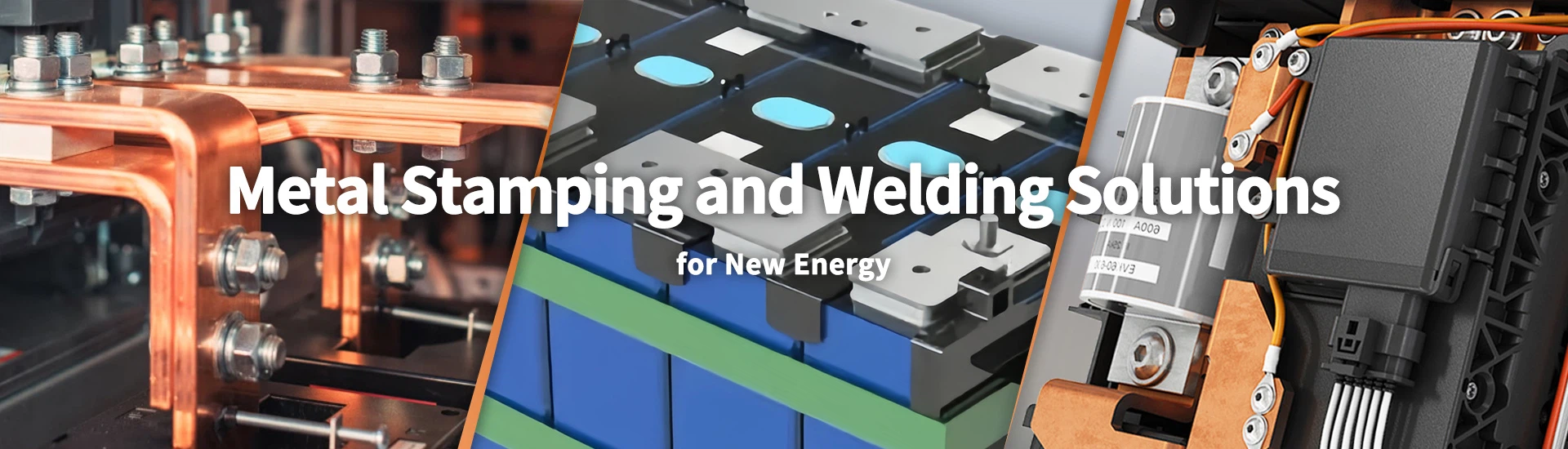
Electrical Cabinet Manufacturer for Server, Energy Storage, and EV Charging Systems
Xiamen Apollo Stamping Welding Technology manufactures metal electrical cabinets and enclosures for server infrastructure, energy storage systems, EV charging equipment, and industrial automation. Cabinet structures can be fabricated from carbon steel, galvanized steel, or aluminum according to mechanical loading, corrosion exposure, and installation requirements. Production focuses on sheet metal cutting, precision bending, welding, and enclosure assembly.
Apollo supports OEM electrical cabinet projects from drawing review and DFM evaluation to tooling, fabrication, and production inspection. Customers can specify cabinet dimensions, sheet thickness, mounting interfaces, door configurations, cable entries, and surface finishes. Inspection requirements can include dimensional verification, coating checks, assembly fit, and IP protection testing according to the agreed product specification.
Request a Factory Direct Quote
Explore Our Electrical Cabinet Product Catalog
Compare server racks, energy storage enclosures, EV charging cabinets, and industrial control cabinets for different installation environments.
-
![Electrical Cabinet]() Add to Inquiry
-
![Electrical Cabinet Outdoor]() Add to Inquiry
-
![Outdoor Server Rack]() Add to Inquiry
-
![Battery Charging Cabinet For Electric Vehicles]()
Battery Charging Cabinet For Electric Vehicles
Add to Inquiry -
![Modular Distribution Cabinets]() Add to Inquiry
-
![DC Distribution Cabinet]() Add to Inquiry
-
![Steel Distribution Cabinets]() Add to Inquiry
-
![Outdoor Energy Storage Cabinet]()
Outdoor Energy Storage Cabinet
Add to Inquiry -
![Lithium-Ion Battery Charging Cabinet]()
Lithium-Ion Battery Charging Cabinet
Add to Inquiry -
![Wall-mounted Metal Distribution]()
Wall-mounted Metal Distribution
Add to Inquiry -
![Modular Integrated Battery Storage Cabinet]()
Modular Integrated Battery Storage Cabinet
Add to Inquiry -
![DC Fast Charging]() Add to Inquiry


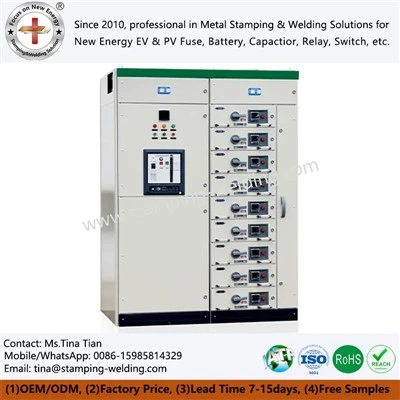
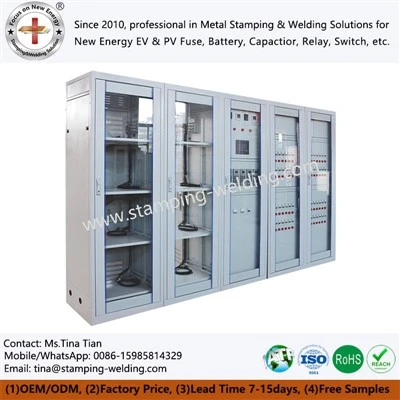
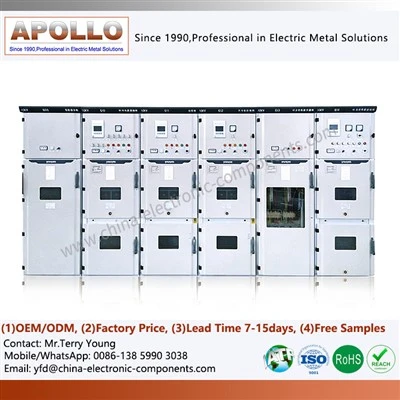


Material Standards, Tooling & Forming Processes
Electrical cabinet performance begins with the enclosure structure. Sheet material, thickness, bend geometry, frame reinforcement, and joining sequence determine dimensional stability, load capacity, and assembly fit. Apollo's cabinet manufacturing requirements can be defined around customer drawings, equipment layout, installation loads, and the intended indoor or outdoor environment.
Material Selection for Different Cabinet Applications
Cold-rolled steel is commonly used for indoor server racks where stiffness, mounting accuracy, and surface finish are important. Frame sections, side panels, doors and mounting rails must be designed around the equipment dimensions and specified static load. Standard 19-inch mounting interfaces may be used where the project requires compatibility with rack-mounted servers, switches and power distribution units.
ESS enclosures may use coated steel, galvanized steel or aluminum, depending on the required structural strength, corrosion exposure, weight and thermal design. The layout must account for battery modules, electrical connections, cable routes, cooling equipment, and maintenance access. Fire barriers, ventilation paths and separation between electrical compartments must follow the system-level design and applicable safety requirements.
EV charging enclosures require space for power modules, control electronics, cable storage, cable glands and heat-management equipment. Material selection should account for installation location, expected mechanical impact, corrosion exposure, and operating temperature. Outdoor models may require corrosion-resistant sheet material, suitable coatings and engineered sealing at doors, joints and cable entries.
PLC and Industrial Electric Cabinets
Industrial control cabinets require a stable mounting structure for DIN rails, wiring ducts, PLC modules, terminal blocks, circuit protection devices and control power supplies. The enclosure layout should separate power wiring from sensitive control or communication cables where required by the system design. Grounding provisions and access for commissioning and maintenance should be defined before fabrication.
Electrical Cabinet Manufacturing Specifications
| Parameter | Engineering specification | Verification method |
| Enclosure material | Cold-rolled steel, galvanized steel, stainless steel, or aluminum as specified | Material certificate and incoming inspection |
| Sheet thickness | Defined by structural load, panel size, and drawing | Thickness gauge |
| Cutting tolerance | Drawing-defined tolerance based on geometry and process capability | Calibrated gauges or optical measurement |
| Bend geometry | Drawing-defined angle, radius, and flange dimensions | Angle gauge and dimensional inspection |
| Assembly interfaces | Door gaps, mounting holes, frame alignment, and panel fit | First-article and assembly inspection |
| Surface treatment | Powder coating, wet paint, plating, or specified protective finish | Coating thickness and visual inspection |
| Enclosure protection | Target IP rating specified for the complete enclosure configuration | Applicable ingress protection test |
| Grounding provisions | Bonding points and conductive interfaces defined by the electrical design | Grounding continuity test |
| Thermal management | Ventilation, fan, heat exchanger, or cooling arrangement as specified | Thermal evaluation under defined load |
These are specification categories, not universal performance claims for every Apollo cabinet. Actual material grades, tolerances, load limits, and protection ratings should be confirmed for each project.
Tooling and Dimensional Control
Laser cutting establishes the profile and mounting-hole geometry of the sheet metal. CNC bending forms doors, side panels, mounting brackets and structural sections. The tooling plan must account for bend allowance, material thickness, inside radius, and springback to maintain the finished dimensions.
Welded frames require a defined sequence to limit distortion. Fixture design, weld location, and heat input can affect squareness, flatness, and door alignment. Where the enclosure contains multiple removable panels, tolerances should be allocated across the complete assembly rather than specified independently for each part.
For cabinet projects requiring repeat production, the engineering review should identify:
Critical mounting-hole positions and equipment interfaces.
Door, hinge, and lock alignment.
Frame squareness and base mounting flatness.
Weld distortion limits and acceptable surface defects.
Fastener access, cable entry clearance, and service space.
Inspection points for first articles and subsequent production lots.
For server-specific layouts, see the Server Cabinet Manufacturer.
Advanced Joining, Insulation & Surface Treatments
Electrical cabinet fabrication requires joining and surface protection methods suited to the enclosure material, structural loads and operating environment. Process selection should account for weld distortion, corrosion protection, grounding continuity and the condition of mating surfaces after assembly.
Welding and Mechanical Joining
MIG or TIG welding may be used for compatible metal structures where joint strength, access and appearance meet the project requirements. Resistance welding may suit selected sheet-metal joints, brackets or internal components. Mechanical fasteners and riveted joints can be used for removable panels, mounting rails and serviceable assemblies.
Welding fixtures should control frame alignment and panel position during joining. After welding, critical dimensions should be checked before coating, since surface finishing can conceal some defects but cannot correct structural distortion. Weld inspection criteria should distinguish appearance requirements from load-bearing or sealing requirements.
Powder Coating and Corrosion Protection
Powder coating is commonly used on steel electrical enclosures to provide a durable finish and protect the substrate. The coating system should specify pretreatment, coating type, target thickness, color, surface appearance, and the required corrosion performance.
For outdoor electrical cabinets, coating selection alone does not establish weather resistance. The full design must consider exposed edges, fasteners, door seams, hinges, cable glands, water drainage, and galvanic compatibility between dissimilar materials. Stainless steel or galvanized components may be appropriate for particular environments, but the final choice depends on the exposure conditions and service-life requirements.
IP Protection and Sealing Design
IP ratings are defined under IEC 60529. The required rating must be specified for the complete enclosure in its tested configuration, including doors, ventilation components, cable entries, glands and other openings.
A higher IP rating may restrict natural airflow. Where equipment produces significant heat, the design must balance ingress protection against cooling requirements. Fans, filters, heat exchangers or air-conditioning units should be selected according to the equipment heat load and ambient conditions.
For outdoor cabinets, the design review should address:
Gasket material, compression, and continuity at door interfaces.
Cable gland selection and sealing at entry points.
Water drainage and protection of exposed joints.
Coating coverage at cut edges and fastener locations.
Grounding continuity across painted or coated joints.
Access for filter replacement, cleaning, and maintenance.
Process Selection by Cabinet Type
| Cabinet type | Main fabrication and finishing considerations | Required verification |
| Server Cabinet | Frame rigidity, mounting rail alignment, airflow openings and cable management | Dimensional inspection, load test where specified, and airflow evaluation |
| Energy Storage Cabinet | Structural support, battery compartment layout, cable routing, and environmental protection | Drawing inspection, grounding checks, and project-defined enclosure tests |
| EV Charging Cabinet | Outdoor coating, door sealing, cable storage, thermal management and grounding | IP testing where specified, thermal evaluation and grounding continuity |
| PLC Cabinet | DIN rail mounting, wiring duct layout, component access, and separation of power and signal cables | Mounting-interface inspection and electrical checks |
| Outdoor Electric Cabinet | Corrosion protection, gasket compression, drainage, and cable gland sealing | Coating inspection and enclosure ingress protection testing |
Request Custom Technical Evaluation
Quality Control & Certifications at Apollo
Electrical cabinet quality control should verify material compliance, formed dimensions, structural assembly, surface condition, and electrical interfaces. The inspection plan should be based on the approved drawings, the enclosure's operating environment, and the risks associated with the installed equipment.
Incoming Material and Fabrication Inspection
Incoming sheet material should be checked against the specified grade, thickness, and surface condition. During laser cutting and CNC bending, inspection should focus on critical dimensions, hole positions, bend angles, and flange geometry. First-article inspection establishes whether the fabricated components meet the drawing before the project moves into repeat production.
Welded assemblies should be checked for frame alignment, visible weld defects, and dimensional distortion. For load-bearing or sealed structures, additional tests may be required according to the joint design and acceptance criteria. Powder-coated parts should be inspected for coating coverage, adhesion, and visible defects using the applicable project requirements.
Assembly and Electrical Inspection
Before shipment, the cabinet inspection plan may include:
Door and panel fit, hinge operation, and locking mechanism function.
Equipment mounting positions and clearance for service access.
Fastener installation and grounding connection integrity.
Cable entry locations, gland interfaces and gasket condition.
Surface finish, coating condition and identification labels.
Dimensional checks against approved drawings.
IP testing, load testing or thermal evaluation when required by the project.
CMM equipment, optical measurement systems and calibrated gauges may be selected according to component size and tolerance requirements. A measurement accuracy figure should not be confused with the tolerance achievable on a complete welded cabinet.
Quality Documentation and Traceability
Apollo's quality-system certifications and their applicable scope should be confirmed before they are stated as requirements for a particular cabinet program. Where IATF 16949 or ISO 9001 documentation is applicable and available, it should be presented accurately and linked to the relevant manufacturing operation.
For automotive or other customer-controlled programs, PPAP Level 3 may be required when agreed by the customer. A project-specific submission can include:
Process flow diagram.
Process Failure Mode and Effects Analysis (PFMEA).
Control plan.
Material certificates.
Dimensional inspection results.
Measurement system records and capability data where applicable.
Approved samples and other customer-required records.
PPAP Level 3 should not be presented as automatically included with every electrical cabinet order. The required submission level and documentation scope must be established during quotation and project planning.
Packaging and Delivery Control
Cabinet packaging should protect the finished coating, door edges, hinges, mounting rails, and sealing surfaces. Large enclosures may require corner protection, internal bracing and suitable pallet support to prevent deformation during handling and transport.
For repeat orders, revision control is important. The production release should identify the approved drawing revision, material specification, coating system, hardware list and inspection requirements. This reduces the risk of mismatched panels, obsolete hole patterns, or incorrect hardware being shipped with a new production batch.
Frequently Asked Questions
1. What material is suitable for outdoor electrical cabinets?
Galvanized steel, coated cold-rolled steel, stainless steel and aluminum may be suitable, depending on corrosion exposure, structural load, weight and thermal requirements. The correct selection also depends on coating compatibility, cut-edge protection, fasteners, and the expected maintenance interval. Final material selection should follow the installation environment and project specification.
2. Can Apollo manufacture server cabinets with custom dimensions and 19-inch mounting interfaces?
Custom server cabinets can be evaluated against the required rack width, height, depth, mounting rail spacing, and equipment load. Submit the equipment layout, overall dimensions, mounting details, and cable-routing requirements. The design review should also address door clearance, service access, ventilation openings, and the required static or dynamic load criteria.
3. How can an electrical cabinet achieve IP65 protection?
IP65 requires protection against dust ingress and water jets under the applicable test conditions. The complete enclosure design must account for gaskets, door compression, cable glands, ventilation components, fasteners, and other openings. The rating should be claimed only when the specified configuration has been tested or supported by appropriate verification evidence.
4. How should thermal management be designed for ESS and EV charging cabinets?
Thermal design starts with the heat dissipated by the installed modules, ambient temperature, and allowable internal component temperatures. The enclosure layout must provide suitable airflow paths or a specified cooling system without compromising required ingress protection. Validation should use defined operating loads, sensor locations, and environmental conditions rather than enclosure dimensions alone.
Request a Custom Electrical Cabinet Quote
Submit your 2D drawings, 3D CAD models, or cabinet specifications for engineering review. Apollo can assess sheet material, panel thickness, laser-cut profiles, bend geometry, welding access, mounting interfaces, surface treatment, and enclosure assembly requirements before production planning.
For server cabinets, include equipment dimensions, rack configuration, load requirements, and airflow needs. For ESS and EV charging cabinets, provide the installation environment, target IP rating, cooling arrangement, cable entry locations, and grounding requirements. For PLC cabinets, include the component layout, DIN rail positions, wiring duct arrangement, and service access requirements.
Send files in STEP, .DWG, or PDF format, together with expected annual volume, prototype quantity and required delivery schedule. A preliminary DFM review and direct quotation within 24 hours can be targeted for complete inquiries, subject to drawing complexity and engineering workload.
We're well-known as one of the leading electrical cabinet manufacturers and suppliers in China. Please feel free to buy high quality electrical cabinet at competitive price from our factory. For more information, contact us now.
