

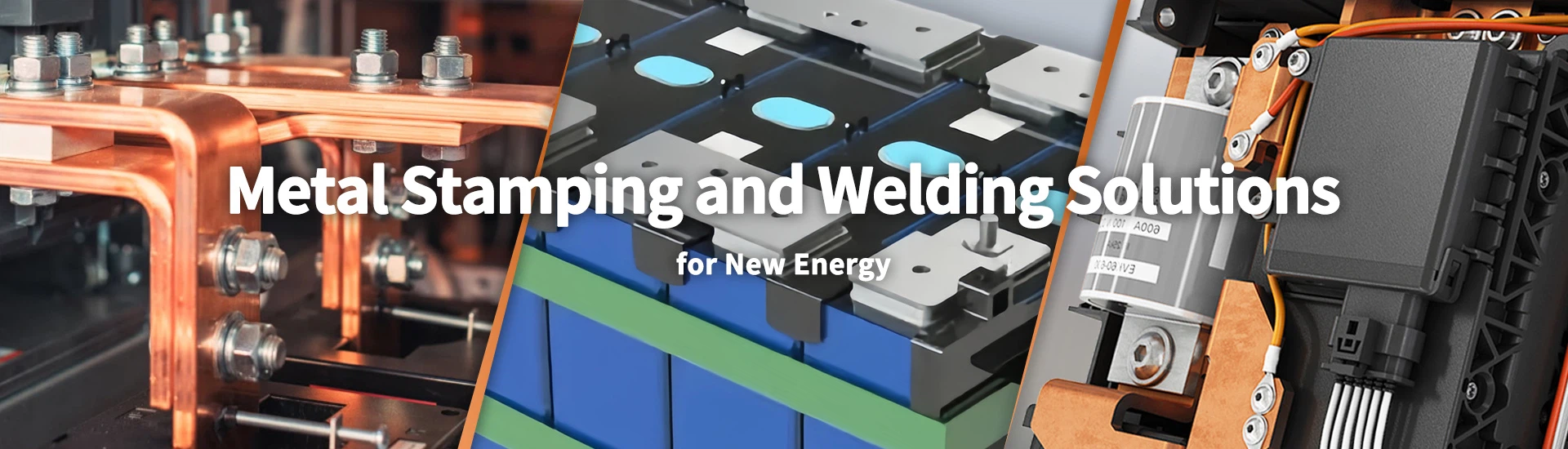
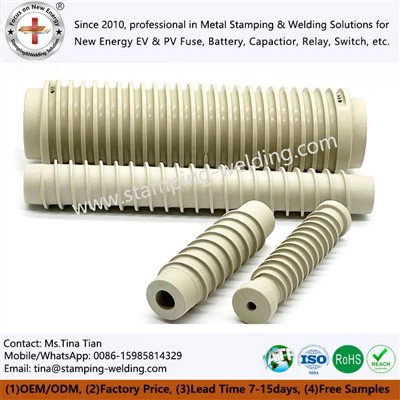
Resistor Ceramic Body Manufacturer for Precision Electrical Insulation Applications
Xiamen Apollo Stamping Welding Technology supplies custom resistor ceramic bodies for power resistors, industrial electrical equipment, and precision electronic assemblies. Alumina-based ceramic materials, including 95% and 96% Al₂O₃ grades where specified, provide electrical insulation, mechanical support, and thermal stability. Material selection is based on operating temperature, dielectric requirements, component geometry, and application conditions.
Apollo supports drawing review, dimensional assessment, and OEM production coordination for custom ceramic components. Engineering evaluation covers ceramic forming, sintering shrinkage, precision grinding and critical dimensional requirements. Inspection criteria can include outer diameter, inner diameter, wall thickness, flatness, and surface defects. Material documentation and PPAP Level 3 deliverables can be arranged according to project requirements.
Request a Factory Direct Quote
Explore Our Resistor Ceramic Body Product Catalog
Review available ceramic body configurations and identify suitable dimensions, material grades, and structural designs for your resistor assembly.
-
![Corrugated Ceramic Tube]() Add to Inquiry
Material Standards, Tooling & Forming Processes
A resistor ceramic body provides the structural and insulating base for a resistor assembly. Its material and geometry must suit the resistor design, power dissipation, operating temperature, and installation conditions. Material selection should consider dielectric performance, thermal conductivity, mechanical strength, chemical stability, and dimensional change during manufacturing.
1. Alumina Ceramic for Resistor Bodies
Alumina is commonly used for ceramic electrical components because of its electrical insulation, mechanical strength, and resistance to elevated temperatures. The actual performance depends on alumina purity, additives, sintering conditions, and final density.
For a resistor ceramic body, the specified grade should be selected against the component's insulation requirements, temperature profile, and mechanical loading. The material specification should identify the grade or purity, relevant mechanical and electrical properties, and applicable test methods.
2. Aluminum Nitride Ceramic for Thermal Management
Aluminum nitride (AlN) may be considered where heat transfer through the ceramic is a primary design requirement. Its thermal conductivity is generally higher than that of conventional alumina ceramics, but the actual value depends on grade, purity, and manufacturing process.
AlN should not be specified solely on thermal conductivity. Electrical insulation, mechanical loading, interface design, machining requirements, and total component cost must also be evaluated. For a resistor assembly with significant heat dissipation, the engineering review should consider the complete thermal path from the resistive element through the ceramic and into the surrounding structure.
3. Ceramic Forming, Sintering and Precision Machining
Depending on geometry and material, production may use extrusion, dry pressing, or another suitable ceramic forming method. Green-body dimensions must account for shrinkage during drying and sintering. Variations in powder characteristics, forming density and kiln conditions can influence the final dimensions and defect rate.
For tubular and corrugated ceramic bodies, the manufacturing plan should address wall thickness, bore geometry, concentricity and the risk of cracking during forming or firing. CNC machining, grinding, or other finishing operations may be used where the design requires tighter dimensional control than the as-fired condition can provide.
Resistor Ceramic Body Specifications
| Parameter | Specification basis | Engineering consideration |
| Ceramic material | Alumina or aluminum nitride, subject to design | Electrical insulation and thermal requirements |
| Alumina purity | Defined by the approved material grade | Dielectric and mechanical performance |
| Thermal conductivity | Grade-specific material data | Heat transfer and operating temperature |
| Dielectric strength | Material data and applicable test method | Wall thickness, temperature, and test conditions |
| Forming method | Extrusion, dry pressing, or qualified alternative | Geometry, production volume, and shrinkage |
| Bore diameter | Drawing-defined tolerance | Element fit and assembly alignment |
| Wall thickness | Drawing-defined tolerance | Mechanical integrity and electrical insulation |
| Surface condition | Agreed limits for cracks, chips, and pores | Assembly reliability and inspection yield |
| Final dimensions | Drawing and approved inspection plan | Post-sintering shrinkage and machining allowance |
The table identifies the parameters to be specified during engineering review. Final numerical limits should be established using the approved material datasheet, component drawing, and inspection plan.
Dimensional Control for Custom Ceramic Parts
Ceramic components require different dimensional controls from ductile metal stampings. During firing, shrinkage and distortion can affect bore diameter, length, wall thickness, and straightness. A tolerance such as ±0.01 mm should only be specified where the geometry, material, manufacturing route, and inspection method support it.
For custom designs, the drawing review should identify:
Critical dimensions and their functional purpose.
Bore diameter, wall thickness, and concentricity requirements.
Permitted chips, cracks, surface pores, and edge damage.
Datums and measurement methods for cylindrical or corrugated profiles.
Whether critical dimensions apply before or after final grinding.
These controls help establish realistic production tolerances before tooling investment and qualification.
For related electrical ceramic applications, see Ceramic Body for Fuse and HVDC Applications.
Advanced Joining, Insulation & Surface Treatments
The finishing requirements for a resistor ceramic body depend on how the ceramic interfaces with the resistive element, terminal, support, or heat-dissipation structure. Some designs use a bare ceramic body as an insulating substrate. Others may require localized metallization, a conductive film, a protective coating, or a defined bonding interface.
These processes should be specified according to the resistor architecture rather than applied to every ceramic component by default.
1. Ceramic Surface Condition and Electrical Insulation
The ceramic surface should be evaluated for cracks, chips, contamination, and defects that may affect insulation or assembly. Surface roughness may also influence the bonding process or fit of an associated component.
For components used at elevated temperatures or under high electric fields, the qualification plan should define the relevant insulation test, test voltage, duration, temperature, and acceptance criteria. Dielectric strength values taken from a material datasheet should not automatically be treated as the allowable working electric field of a finished component.
2. Metallization and Joining Interfaces
Where a resistor ceramic body requires a metallized region, the material system and surface preparation must be compatible with the ceramic composition and subsequent joining process. Alumina and aluminum nitride may require different metallization and bonding routes.
For a metallized ceramic assembly, the engineering review should address:
Metallization coverage and adhesion.
Interface compatibility with the selected metal or resistive element.
Thermal expansion mismatch between the ceramic and attached materials.
Bond integrity following thermal cycling.
Electrical isolation between conductive regions where required.
Mo-Mn metallization and nickel finishing are established options for certain alumina-to-metal joining applications. They should only be included in a resistor ceramic body specification where the design calls for a metallized interface. They are not universal requirements for all resistor ceramics.
3. Thermal and Environmental Qualification
Thermal cycling can produce stress where ceramic components contact metals with different coefficients of thermal expansion. The resulting stress depends on geometry, interface design, temperature range, and the joining method.
For components used in demanding operating environments, qualification may include thermal cycling, insulation resistance measurement, dielectric withstand testing, and dimensional inspection before and after exposure. The test profile should reflect the actual application rather than an arbitrary universal temperature range.
Request Custom Technical Evaluation
Quality Control & Certifications at Apollo
Resistor ceramic body quality depends on material consistency, forming density, sintering control, dimensional accuracy, and the detection of ceramic defects. An inspection plan should be established before production and should distinguish material qualification from finished-part acceptance.
1. Incoming Material and Process Control
Incoming inspection should verify the specified ceramic grade and the relevant material documentation. During forming and sintering, process controls should address batch identification, forming conditions, firing parameters, and the dimensional changes expected after sintering.
For tubular or corrugated ceramic components, inspection should focus on bore diameter, overall length, wall thickness, straightness and surface integrity. Where appropriate, optical measurement, calibrated gauges, or CMM equipment may be used, provided the component geometry and fixturing permit reliable measurement.
2. Finished-Part Inspection
The final inspection plan should identify the acceptance criteria for each part number.
| Quality checkpoint | Inspection focus | Evidence or record |
| Material verification | Ceramic grade and batch identification | Material certificate or supplier documentation |
| Visual inspection | Cracks, chips, pores, and surface contamination | Visual inspection record |
| Dimensional inspection | Bore, length, wall thickness, and profile | Dimensional report |
| Electrical insulation | Test voltage, duration, and acceptance limit | Electrical test record, where specified |
| Thermal qualification | Application-specific temperature exposure | Qualification report, where required |
| Metallized interface | Coverage, adhesion and bond integrity | Process and test records, where applicable |
| Lot traceability | Material batch and production identification | Batch records and packaging labels |
X-ray inspection, microscopy or other defect-analysis methods may be considered when the component geometry, risk assessment and customer requirements justify their use. These methods should not be presented as routine 100% inspection unless the production process actually includes them.
3. Quality Systems and Customer Documentation
Apollo's website identifies ISO 9001:2015 and IATF 16949 among its quality-system credentials. The applicability of these systems to a specific ceramic component program, along with the availability of customer-specific documentation, should be confirmed during quotation.
For automotive projects requiring PPAP Level 3, the submission scope may include the process flow diagram, PFMEA, control plan, material documentation, dimensional results, and process capability data where applicable. The final submission must follow the customer's requirements and the agreed product qualification plan.
4. Packaging and Batch Consistency
Ceramic components are susceptible to edge chipping and fracture under impact. Packaging should separate parts, prevent direct ceramic-to-ceramic collision, and protect critical surfaces during handling and transport.
For recurring orders, the production and packaging records should identify the product specification, production lot, and applicable inspection status. This allows dimensional or surface defects to be traced to a particular batch and supports more consistent incoming inspection at the customer's facility.
Frequently Asked Questions
Q: 1. Which ceramic material is suitable for a resistor ceramic body?
A: Alumina is widely used where electrical insulation, mechanical strength, and heat resistance are required. Aluminum nitride may be considered when higher thermal conductivity is needed. Final selection depends on resistor power, operating temperature, insulation requirements, geometry, and the thermal path through the assembled component.
Q: 2. What dimensional tolerance can be achieved for a custom resistor ceramic body?
A: The achievable tolerance depends on material, forming method, sintering shrinkage, geometry, and post-sintering machining. Bore diameter, length, straightness, and wall thickness should be specified separately. Tight tolerances such as ±0.01 mm require feasibility review and a suitable inspection method before production approval.
Q: 3. How is electrical insulation reliability verified?
A: The qualification plan should define dielectric withstand voltage or another applicable insulation test, including test duration, temperature, and acceptance criteria. Material datasheet values alone do not establish finished-part performance. Surface defects, wall thickness, contamination, and component geometry should also be considered when setting inspection requirements.
Q: 4. Can Apollo manufacture resistor ceramic bodies from customer drawings or samples?
A: Apollo's product page lists resistor ceramic bodies and corrugated ceramic tubes, and its website describes drawing- and sample-based manufacturing support. For a new design, submit the material requirement, CAD drawing, critical dimensions, operating temperature, and electrical specifications for a feasibility assessment.
Request a Custom Resistor Ceramic Body Quote
The correct ceramic body specification depends on the resistor structure, operating temperature, electrical insulation requirements, and assembly geometry. Provide these details at the quotation stage to reduce material-selection and dimensional risks before production.
Submit your 2D drawing in .DWG or PDF format, a 3D model in STEP format, or a reference sample with the required dimensions and material information. Please include the ceramic grade, bore diameter, wall thickness, surface requirements, operating temperature, and any dielectric or thermal test criteria.
Apollo can review the submitted specifications for material suitability, forming and sintering considerations, machining requirements, and inspection planning. A preliminary DFM review and quotation timeline can be confirmed after the drawing and technical requirements have been received.
We're well-known as one of the leading resistor ceramic body manufacturers and suppliers in China. Please feel free to buy high quality resistor ceramic body at competitive price from our factory. For more information, contact us now.
