

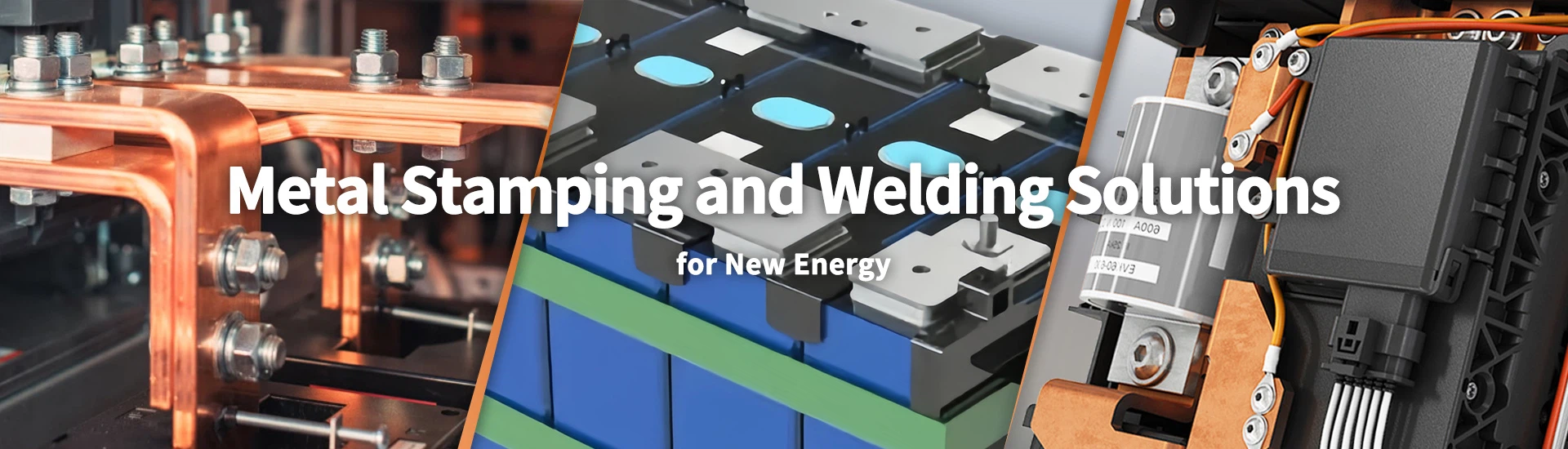
Home Energy Storage Parts Manufacturer for Battery Cases and Metal Components
Xiamen Apollo Stamping Welding Technology manufactures metal components for home energy storage applications, including aluminum battery cases, battery cover plates, and related formed parts. Material selection and manufacturing processes are defined by component drawings, dimensional requirements, and assembly conditions. Available processes include precision stamping, aluminum forming, machining, and welding for residential battery storage equipment.
Manufacturing Capabilities at a Glance
Materials: Aluminum 3003, 3005, 5052, and specified metal alloys.
Processes: Deep drawing, precision stamping, CNC machining, laser welding, and assembly.
Engineering: 2D/3D drawing review, DFM analysis, and custom tooling.
Quality: Material verification, CMM measurement and first-article inspection.
Documentation: Material certificates, dimensional reports, and agreed PPAP submissions.
Request a Factory Direct Quote
Explore Our Home Energy Storage Product Catalog
Review the available energy storage products and related metal components, then contact Apollo to confirm drawing-specific manufacturing requirements.
-
![Solar Home Energy Storage Lithium-ion Battery]()
Solar Home Energy Storage Lithium-ion Battery
Add to Inquiry -
![Solar Battery Storage For House]()
Solar Battery Storage For House
Add to Inquiry -
![Household Energy Storage]() Add to Inquiry
-
![Residential Energy Storage System]()
Residential Energy Storage System
Add to Inquiry -
![Home Solar Battery Storage System]()
Home Solar Battery Storage System
Add to Inquiry -
![Home Energy Storage System]() Add to Inquiry
-
![Modular Battery Storage]() Add to Inquiry



Material Standards, Tooling & Forming Processes
Metal components used in home energy storage equipment must meet the dimensional, mechanical, and environmental requirements of the final assembly. For aluminum battery cases and cover plates, the alloy and temper should be selected according to forming depth, required strength, corrosion exposure, and joining method.
Aluminum alloys such as 3003 and 5052 may be considered for formed enclosures and cover components, depending on the design. Their suitability must be evaluated against the required draw ratio, material thickness, corner radius, and post-forming strength. Alloy selection should not be based on corrosion resistance alone, because formability and welding requirements may also determine the appropriate material.
For deep-drawn battery cases, tooling design should account for blank-holder force, punch radius, lubrication, material flow and springback. These factors affect wall-thickness distribution, flange flatness, and the risk of wrinkles or tearing. For stamped cover plates and mounting parts, die clearance and tool condition influence burr height, hole position, and dimensional repeatability.
For custom projects, review the Home Energy Storage Battery Case and Cover product page to assess relevant component configurations.
Home Energy Storage Component Specifications
| Parameter | Engineering consideration | Verification method |
| Aluminum alloy | 3003, 5052, or another specified grade | Material certificate |
| Sheet thickness | Defined by the approved drawing | Calibrated thickness gauge |
| Forming method | Deep drawing, stamping or secondary forming | Process and first-article inspection |
| Critical dimensions | Drawing-defined tolerances | CMM, optical measurement or gauges |
| Flatness and profile | Based on sealing and assembly interfaces | Dimensional inspection |
| Joining method | Laser welding or another qualified process, where applicable | Visual inspection and joint testing |
| Surface protection | Coating or conversion treatment specified by the project | Coating inspection and applicable environmental tests |
| Leak tightness | Required only for components with specified sealing functions | Qualified leak-test method and acceptance limit |
| Traceability | Material lot and production batch identification | Production records |
These are engineering specification categories, not fixed guarantees for every Apollo product. Final values must be defined in the approved drawing and inspection plan.
Forming and Dimensional Control
For home energy storage battery enclosures, manufacturing feasibility should be evaluated before the tooling design is finalized. The following points should be included in the drawing review:
Wall-thickness distribution: Deep drawing can cause local thinning, particularly around corners and high-strain areas.
Flange flatness: Warpage may affect gasket compression, lid alignment, and the repeatability of the sealing interface.
Hole and feature position: Mounting holes, terminal openings, and locating features must align with the battery assembly.
Burr direction and edge condition: Edges should be compatible with handling, insulation clearances, and adjacent components.
Tooling repeatability: Die wear and material-lot variation should be monitored for long production runs.
The final tolerance should be based on the functional dimension and manufacturing capability of the specific part. A universal ±0.01 mm tolerance should not be applied to an entire drawn enclosure without validation.
Advanced Joining, Insulation & Surface Treatments
The joining process for a home energy storage battery case or cover depends on the material, joint geometry, sealing requirement, and expected service environment. Laser welding may be appropriate for selected aluminum assemblies where controlled heat input and limited joint distortion are required. The process must be qualified against the specified weld penetration, joint strength, and sealing criteria.
Weld design should account for joint gap, edge preparation, material thickness, and fixture accuracy. Excessive heat input may cause distortion, while insufficient penetration or poor joint fit-up can compromise the connection. For components requiring a sealed enclosure, visual inspection alone is not enough to demonstrate leak tightness; a suitable leak test should be defined when the design requires it.
Surface protection should be selected according to the installation environment. Coating type, pretreatment, film thickness, edge coverage and adhesion requirements should be specified for the finished component. Where the housing forms part of an electrical insulation system, the required creepage distances, clearance distances and dielectric test conditions must be evaluated at the assembly level.
Joining and Surface-Treatment Controls
| Process | Main control parameters | Recommended verification |
| Aluminum laser welding | Joint gap, power, travel speed, focus and fixture position | Weld appearance, section inspection and specified joint tests |
| Mechanical fastening | Hole position, fastener specification, and installation torque | Dimensional and torque verification |
| Surface coating | Pretreatment, coating thickness and curing conditions | Thickness, adhesion and appearance checks |
| Sealing interface | Flange flatness, gasket compression and joint geometry | Assembly inspection and leak test where required |
| Electrical insulation | Material, thickness and interface geometry | Dielectric and insulation tests according to design requirements |
The selected process and acceptance limits should be confirmed for each project rather than assumed from the general product category.
Request Custom Technical Evaluation
Quality Control & Certifications at Apollo
Quality control for home energy storage metal components should connect incoming material inspection, forming-process control, joining verification, and final dimensional acceptance. Apollo can define the inspection scope with reference to customer drawings, critical-to-quality dimensions, and the product's intended function.
Incoming inspection should verify the material grade, thickness, and applicable material documentation. During forming, inspection should focus on profile accuracy, flange flatness, burr condition and visible cracks or wrinkles. For welded parts, the inspection plan should specify the required visual criteria and any additional mechanical, metallographic or leak-tightness tests.
Where the component is part of a sealed battery assembly, the leak-test method and acceptance threshold must be agreed upon with the customer. A helium mass-spectrometer test should be specified only when the component design and required leak rate justify that method.
For programs requiring formal quality documentation, the deliverables can be defined before production. These may include material certificates, a process flow diagram, PFMEA, control plan, dimensional inspection results, and process capability data where applicable. PPAP Level 3 documentation should be provided only when required by the customer program and supported by the actual project records.
Recommended Inspection Plan
| Stage | Inspection focus | Evidence |
| Incoming material | Alloy grade, thickness, and material condition | Material certificate and incoming inspection record |
| Tooling validation | Forming profile and critical dimensions | First-article inspection report |
| In-process forming | Wrinkles, cracks, burrs, and dimensional drift | Process inspection records |
| Welding | Seam condition and specified joint performance | Weld inspection and test records |
| Surface treatment | Coating appearance, thickness and adhesion where required | Surface-treatment inspection records |
| Final inspection | Drawing compliance, quantity and packaging | Final inspection report |
| Batch traceability | Material lot, production batch and tooling revision | Lot identification and production records |
Production and Delivery Considerations
For repeat orders, the production control plan should identify the approved drawing revision, material specification, inspection frequency and acceptance criteria. Packaging should protect formed edges, coated surfaces, and sealing interfaces against deformation or contamination during transportation.
The quotation stage should also confirm annual demand, sample requirements, tooling ownership, packaging specification, and delivery schedule. These details help align manufacturing capacity with the customer's project ramp-up and ongoing replenishment needs.
Frequently Asked Questions
Q: 1. Which aluminum alloy is suitable for home energy storage battery cases?
A: The selection depends on forming depth, wall thickness, strength, corrosion exposure, and joining requirements. Alloys such as 3003 and 5052 may be considered for different enclosure designs. Final selection should be based on the approved drawing, material temper, forming trials, and validation results rather than alloy designation alone.
Q: 2. How can manufacturers control dimensional accuracy in deep-drawn battery enclosures?
A: Control begins with material-thickness consistency, die geometry, blank-holder force, and lubrication. First-article inspection should verify wall profile, flange flatness, hole positions, and critical assembly interfaces. Production monitoring can then identify tooling wear and dimensional drift before they affect downstream assembly.
Q: 3. How should weld quality and leak tightness be verified for battery covers?
A: The inspection method depends on the enclosure's sealing function and specified acceptance limits. Visual inspection checks surface defects, while section analysis or mechanical tests may assess joint integrity. If the design requires a defined leak rate, a qualified leak-test method must be selected and documented.
Q: 4. Can Apollo manufacture custom home energy storage metal components from drawings?
A: Apollo's product range includes battery cases, cover plates, and related metal components. For a new project, provide 2D drawings or 3D CAD files, material requirements, annual volume, and critical dimensions. The engineering review can then assess forming feasibility, tooling needs, joining methods, and inspection scope.
Request a Home Energy Storage Component Quote
Submit your 2D drawings in .DWG or PDF format, 3D CAD files in STEP format, or a component specification for engineering review.
Include the required alloy grade, material thickness, critical dimensions, surface treatment, joining method, annual volume, and applicable inspection requirements. For sealed battery housings, also provide the required leak-test method and acceptance limit.
Apollo can review manufacturing feasibility, forming risks, tooling requirements, and the proposed quality-control plan before quotation. A preliminary DFM review and quotation target within 24 hours can be arranged for complete inquiries, subject to drawing complexity and technical review requirements.
We're well-known as one of the leading home energy storage manufacturers and suppliers in China. Please feel free to buy high quality home energy storage at competitive price from our factory. For more information, contact us now.
