


Full process production equipment matrix
| Equipment type | Specific equipment/technology | Import share | Core advantages |
| Precision stamping equipment |
(1) High-speed stamping machine (2) In-mold riveting production line (3) Multi-station progressive die forming equipment |
70% | Support 0.01mm precision processing, suitable for 0.1-5mm thickness metal sheets (copper/aluminum/stainless steel), daily production capacity of 500,000 pieces |
| Welding and assembly equipment |
(1) Robot welding unit, laser welding machine (2) High-temperature tunnel furnace, tin soldering wire (3) Resistance welding equipment |
85% | Realize copper and aluminum dissimilar metal welding (penetration depth ≤ 0.5mm), support flexible busbar curve welding, and welding defect rate < 0.1% |
| Surface treatment equipment |
(1) Fully automatic electroplating production line (including nickel/tin plating line), (2) Epoxy resin powder spraying line, PVC dipping equipment |
60% | Coating thickness uniformity ±5%, salt spray test ≥1000 hours, insulation coating thickness controllable (50-200μm) |
| Mold development equipment |
(1) Precision grinder (accuracy 0.002mm), (2) Slow wire cutting machine (Sodick, Japan) |
100% | Self-developed precision stamping mold (life ≥5 million times), from drawing to sample proofing cycle ≤7 days |
| Testing equipment |
(1) Three-coordinate measuring machine (accuracy 0.0007mm) (2) Image measuring machine (accuracy 0.001mm) (3) Salt spray test machine |
100% | Covering full-dimensional detection of size, electricity, and corrosion resistance, data can be traced back to production batches |
Highlights of equipment layout
Automation connection rate: 6 stamping-welding-testing automated production lines, reducing manual intervention, and the automation rate of key processes reaches 90%
Customization capability: Reserved modular workstations to support fast switching between multi-variety small batches (1000 pieces minimum order) and large-scale mass production
Workshop real shot and capacity data visualization
Visual scene design
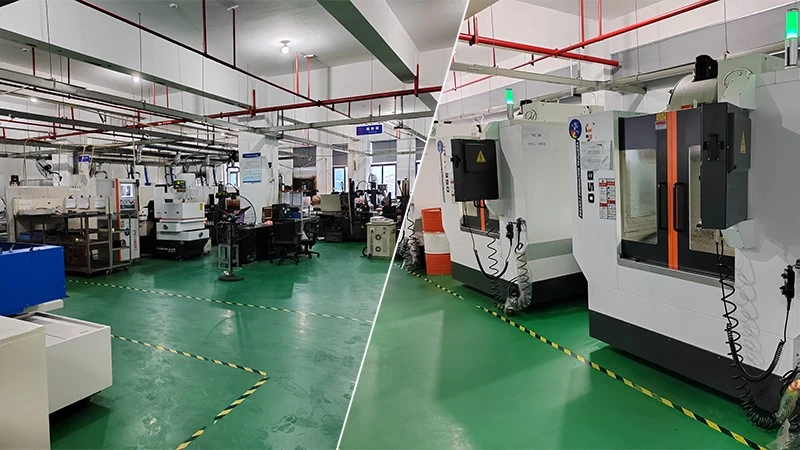
Workshop partition real shot:
Mold workshop
Display of a slow wire cutting machine and a precision grinder cluster
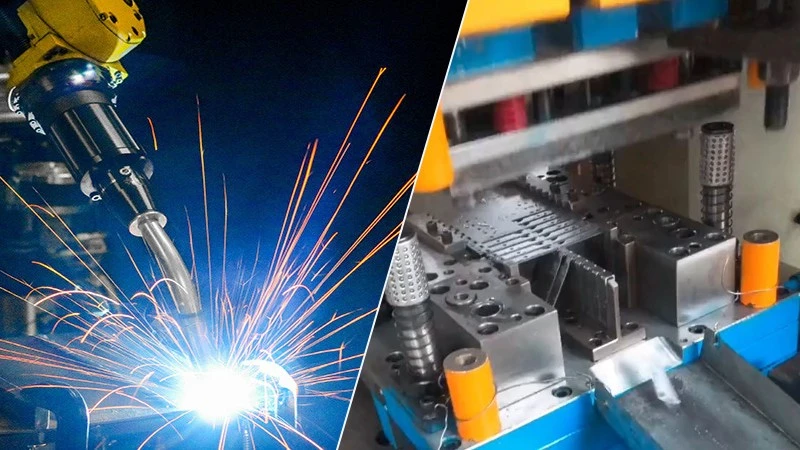
Automated production line
Dynamic operation of the robot welding arm, continuous production of high-speed stamping machine
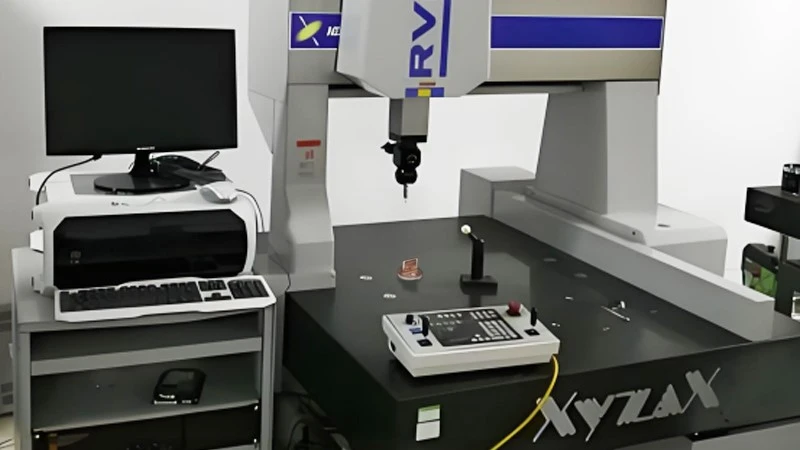
Testing laboratory
Coordinate measuring machine performs micron-level inspection on fuse contact cap
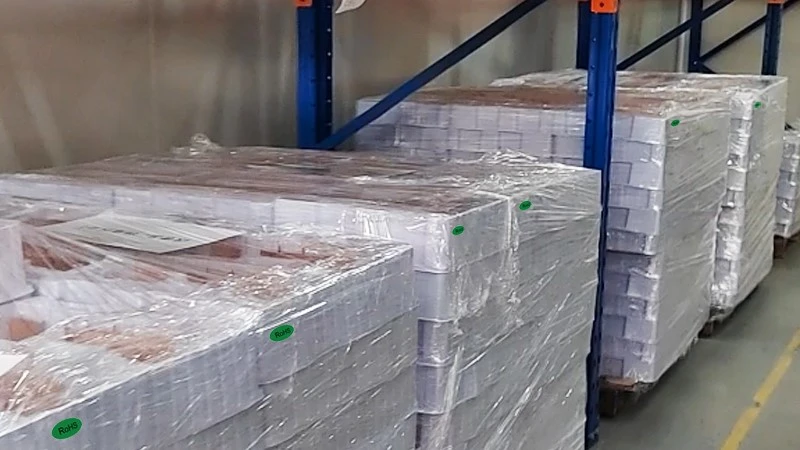
Storage area
Finished products are stored in partitions, with RoHS/REACH compliance labels affixed, and forklifts automatically enter and exit the warehouse
Quality inspection system diagram
Key testing technology
Material testing: Direct reading spectrometer (Germany Spike) analyzes metal composition to ensure copper purity ≥ 99.95%
Functional testing: High current temperature rise test bench (simulating 3000A working conditions) to verify the conductive performance of the busbar
Reliability testing: Vibration test bench (compliant with IP67 standard) to detect the fatigue resistance of flexible connection components
Typical product yield and quality commitment
Product yield disclosure (with industry comparison)
| Product name | Actual yield | Industry average | Key control measures |
| Fuse contact cap (copper) | 99.98% | 99.5% | In-mold inspection + 100% visual code scanning inspection after welding |
| Laminated busbar | 99.7% | 99.2% | Dynamic calibration of laser welding path + full inspection of insulation coating thickness |
| Battery aluminum shell stamping parts | 99.2% | 98.5% | Intelligent monitoring system for mold wear (automatic inspection every 50,000 times) |
| Welding components | 99.5% | 98.8% | Real-time traceability of robot welding parameters (storage cycle 3 years) |
Quality Commitment
Zero defect goal: PPAP one-time pass rate of automotive electronic products ≥ 95%, zero complaint rate in mass production stage ≥ 98%
Traceability: Each product is attached with a unique QR code, which can be scanned to check production batches, test data, and operators