

Cylindrical Ceramic Body Manufacturer for Low Voltage Fuse Applications
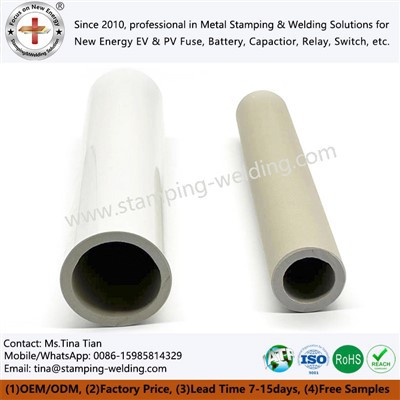
Xiamen Apollo Stamping Welding Technology supplies cylindrical ceramic bodies and insulating ceramic tubes for low-voltage fuse assemblies and electrical protection devices. Alumina-based ceramic materials are selected according to dielectric requirements, thermal conditions, and mechanical loading. Production specifications cover tube diameter, wall thickness, overall length, and end-face geometry for repeatable assembly and volume supply.
Apollo supports drawing-based development, material specification review, and dimensional evaluation for custom cylindrical ceramic bodies. Engineers can define inner and outer diameter tolerances, ceramic composition, surface finish, and end configurations before production approval. Inspection records and material documentation can be arranged according to the customer's quality requirements and project documentation plan.
Request a Factory Direct Quote
Explore Our Cylindrical Ceramic Body Product Catalog
Review our cylindrical ceramic tubes and low-voltage fuse insulating bodies to identify the dimensions and material configuration required for your application.
-
![Insulating Ceramic Tube]() Add to Inquiry
-
![Cylindrical Ceramic Body For Low-voltage Electrical Appliances]()

Material Standards, Tooling & Forming Processes
A cylindrical ceramic body for a low-voltage fuse must maintain its specified geometry, electrical insulation, and structural integrity throughout assembly and operation. Material selection should account for operating voltage, thermal exposure, internal clearance, manufacturing tolerances, and the fuse's intended interruption conditions.
Alumina ceramic is used in electrical insulation components because of its dielectric properties, heat resistance, and dimensional stability at elevated temperatures. The appropriate alumina content depends on the required material grade and component design. A 95% Al₂O₃ composition may be suitable for certain applications, but it should only be specified when confirmed by the applicable material specification.
Ceramic tube manufacturing generally involves powder preparation, forming, drying where applicable, firing, and finishing. The specific forming route depends on tube dimensions, wall thickness, material formulation, and production volume. Firing conditions affect shrinkage, porosity, and final dimensions; tooling and process parameters therefore need to account for dimensional changes during sintering.
For a custom cylindrical ceramic body, the drawing should define inner diameter, outer diameter, total length, wall thickness, end-face condition, and any required grooves or terminal interfaces. These dimensions determine the available internal space and the fit between the ceramic tube and its end caps.
Cylindrical Ceramic Body Specifications
| Parameter | Specification basis | Inspection or verification |
| Ceramic composition | Alumina-based ceramic or specified alternative grade | Material specification and supplier documentation |
| Alumina content | Defined by the approved ceramic grade | Material certificate or agreed verification method |
| Inner diameter | Customer drawing | Calibrated bore gauge or suitable dimensional instrument |
| Outer diameter | Customer drawing | Micrometer or optical measurement |
| Tube length | Customer drawing | Calibrated length gauge or dimensional measurement |
| Wall thickness | Defined by inner and outer diameter requirements | Dimensional measurement or approved sampling method |
| End-face geometry | Flatness, perpendicularity, and edge condition as specified | Optical inspection and suitable gauges |
| Dielectric strength | Defined by the electrical design and applicable test method | Dielectric withstand testing where specified |
| Thermal performance | Based on operating temperature and thermal cycling requirements | Material data and qualification testing |
| Surface condition | No unacceptable cracks, chips, or other defects | Visual inspection under defined lighting and acceptance criteria |
The table identifies the principal engineering parameters. It does not establish universal dimensional tolerances or electrical ratings. Actual acceptance limits must be confirmed for the selected ceramic grade, tube dimensions, and fuse design.
Dimensional Control and Forming Considerations
Firing shrinkage: Ceramic dimensions change during firing. Tool compensation and process control must account for the selected formulation and production conditions.
Wall thickness consistency: Uneven wall thickness can affect mechanical strength, thermal gradients, and the available internal space.
End-face quality: Chips and irregular edges may interfere with end-cap assembly or create local stress concentrations.
Surface integrity: Cracks and unacceptable porosity must be assessed against the component's specified acceptance criteria.
Lot consistency: Repeat orders should use documented material specifications, approved drawings, and defined inspection methods.
For broader product selection, see New Energy Fuse Ceramic Body.
Advanced Joining, Insulation & Surface Treatments
The ceramic body provides the insulating enclosure, while the fuse's conductive end caps, terminals and internal fuse element establish the electrical path. The ceramic tube must be compatible with the selected end-cap geometry and assembly process without introducing excessive mechanical stress or damaging the ceramic surface.
Depending on the fuse construction, end caps may be assembled using mechanical retention, soldering, brazing or another specified joining process. The method must suit the conductive cap material, ceramic interface, operating temperature, and required mechanical retention. Metal-to-ceramic brazing generally requires a suitable ceramic metallization system or another qualified joining design; it should not be assumed to apply to every cylindrical ceramic body.
Ceramic Surface and Interface Requirements
For a ceramic tube that is assembled with metal end caps, engineering review should consider:
Fit and clearance: The interface dimensions must accommodate the specified assembly method and dimensional variation.
Edge protection: Assembly tooling and handling procedures should minimize chipping at the tube ends.
Metallization compatibility: Where brazing is required, the ceramic surface preparation and metallization system must be compatible with the selected filler metal and process.
Thermal expansion: The ceramic and metal components should be assessed for thermal-expansion mismatch over the intended operating temperature range.
Electrical insulation: The finished assembly must satisfy the applicable dielectric and insulation requirements under defined test conditions.
Dielectric and Thermal Qualification
Dielectric withstand voltage, insulation resistance, and thermal shock resistance are separate performance characteristics. They should be evaluated using test methods appropriate to the finished component and its intended application.
The qualification plan should specify test voltage, duration, electrode arrangement, sample conditioning, and acceptance criteria. Thermal testing should reflect the actual temperature range and transition conditions expected in service. A material datasheet alone does not establish that a finished fuse assembly meets its product safety requirements.
For applications involving high fault currents, the ceramic body's suitability must also be considered within the complete fuse design. Breaking capacity and arc interruption performance depend on the fuse element, internal geometry, filler material where used, end-cap construction, and overall qualification.
Request Custom Technical Evaluation
Quality Control & Certifications at Apollo
Quality control for cylindrical ceramic bodies should cover incoming material identification, dimensional consistency, surface defects, and application-specific electrical qualification. The inspection plan should be established from the approved drawing and material specification rather than applying identical acceptance limits to all ceramic tube sizes.
Recommended Inspection Controls
| Inspection stage | Control item | Verification method |
| Incoming material | Ceramic grade and material documentation | Certificate review and supplier traceability |
| Dimensional inspection | Inner diameter, outer diameter, and length | Calibrated gauges and dimensional measurement |
| Wall thickness | Conformance to drawing requirements | Suitable dimensional measurement method |
| Surface inspection | Cracks, chips, and unacceptable visible defects | Visual inspection under defined conditions |
| End-face inspection | Edge condition and specified geometry | Optical inspection and dimensional gauges |
| Electrical qualification | Dielectric withstand or insulation resistance where specified | Test method defined by the customer or applicable standard |
| Thermal qualification | Resistance to specified thermal exposure or cycling | Approved qualification test |
| Final release | Drawing compliance, quantity, and lot identification | Final inspection report and traceability records |
Where optical measuring systems or CMM equipment are suitable for the part geometry, they may be used to verify specified dimensions.
However, the measurement method must be appropriate to the ceramic's size, surface, and feature geometry. A stated instrument resolution or equipment accuracy should not be presented as the actual product tolerance without supporting measurement evidence.
For automotive or other customer-controlled programs, the project quality plan should define the required documentation. PPAP Level 3 may be applicable when requested by the customer and agreed for the project. Depending on the program, documentation may include dimensional results, material records, process flow, PFMEA, control plan, and process capability data where applicable.
Apollo's applicable quality certifications, inspection resources, and documentation scope should be confirmed against current company records before publication. Certification claims should identify the correct standard and scope.
Batch Consistency and Packaging
Ceramic components can be damaged by impact, edge-to-edge contact and concentrated loads during handling. Packaging should separate individual parts or layers, prevent movement during transport, and protect tube ends from chipping.
For repeat production, inspection records should identify the relevant product specification, lot, and inspection status. This allows dimensional or surface-quality issues to be investigated against the applicable material and production batch.
Frequently Asked Questions
Q: 1. What ceramic material is suitable for a cylindrical low-voltage fuse body?
A: Alumina ceramic is commonly used where electrical insulation, heat resistance, and structural stability are required. The appropriate alumina content depends on the fuse design, operating temperature, dielectric requirements, and manufacturing process. The selected grade should be confirmed against material documentation and application-specific qualification results.
Q: 2. Which dimensions should be specified when ordering a cylindrical ceramic body?
A: Provide the inner diameter, outer diameter, overall length, wall thickness, and end-face requirements. Include grooves, steps, or other interface features where present. The drawing should identify critical dimensions and tolerances so the manufacturer can assess forming feasibility, firing shrinkage, inspection methods, and compatibility with the end caps.
Q: 3. How can ceramic tube cracking and edge chipping be controlled?
A: Cracking and chipping can result from forming defects, firing variation, handling impact, or excessive stress during end-cap assembly. Controls include material and process consistency, defined surface acceptance criteria, protective handling, and dimensional checks. Assembly forces and thermal-expansion mismatch should also be reviewed for the finished fuse design.
Q: 4. Can cylindrical ceramic bodies be customized for different fuse ratings?
A: Yes, tube dimensions and interface features can be evaluated against different fuse designs. However, changing the ceramic body's dimensions alone does not establish a new current rating, voltage rating, or breaking capacity. Those ratings depend on the complete fuse construction and must be validated through the applicable design and qualification process.
Request a Custom Cylindrical Ceramic Body Quote
Submit your ceramic tube drawing and application requirements for an engineering review. Include the material grade, inner diameter, outer diameter, wall thickness, tube length, end-cap interface, and any specified dielectric or thermal qualification requirements.
Accepted reference formats can include 2D .DWG or PDF drawings and 3D STEP models where available. If the ceramic composition or firing-related dimensional allowance has not yet been finalized, identify the critical assembly dimensions and operating conditions so they can be reviewed during the feasibility assessment.
Apollo can assess the submitted requirements for manufacturing feasibility, dimensional inspection planning, and quotation scope. A preliminary DFM review within 24 hours may be requested for complete submissions, subject to drawing complexity and technical information availability.
We're well-known as one of the leading cylindrical ceramic body manufacturers and suppliers in China. Please feel free to buy high quality cylindrical ceramic body at competitive price from our factory. For more information, contact us now.
