

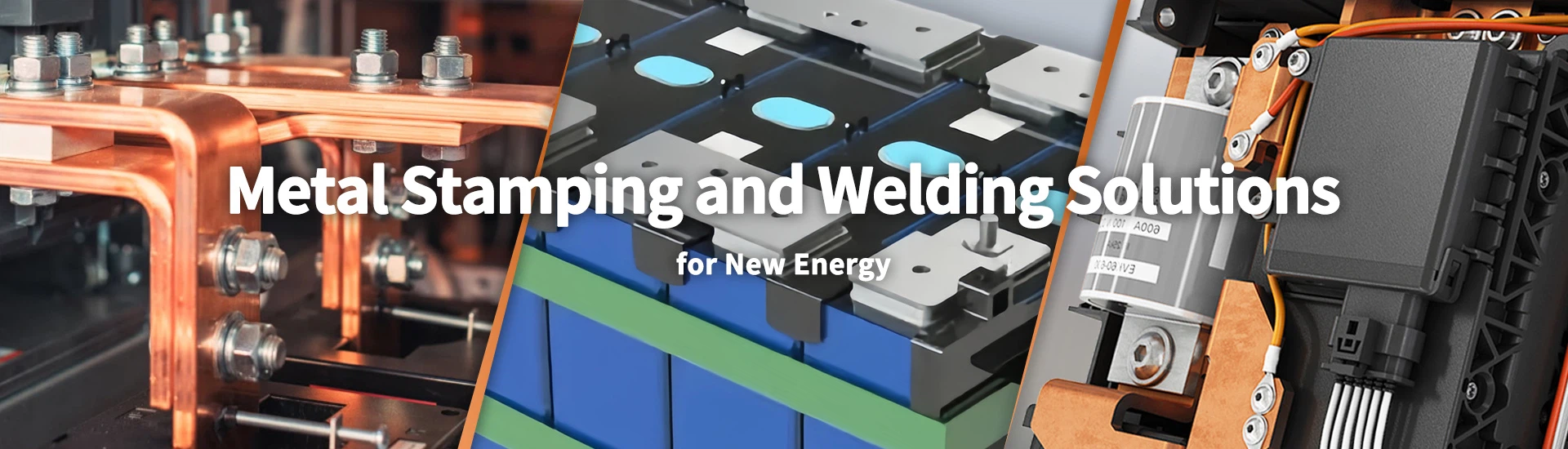
Custom Copper, Brass, Aluminum, and Steel Welding Parts Manufacturer
Xiamen Apollo Stamping Welding Technology manufactures custom copper, brass, aluminum, and steel welding parts for electrical equipment, new energy systems, industrial machinery, and power electronics. Material selection is based on conductivity, thermal performance, mechanical strength, and operating conditions. Production integrates precision stamping, laser welding, resistance welding and TIG/MIG processes for repeatable component manufacturing.
Apollo supports OEM projects from drawing review and DFM assessment to tooling, joining, and production inspection. Engineers evaluate material grades, sheet thickness, joint geometry, weld penetration and dimensional tolerances before process approval. Inspection plans can include dimensional reports, weld strength testing, metallographic examination, and PPAP Level 3 documentation according to customer requirements.
Request a Factory Direct Quote
Explore Our Metal Welding Parts Product Catalog
Browse copper, brass, aluminum, and steel welding components by material, joint configuration, and application requirements.
-
![Metal Welding Assembly]() Add to Inquiry
-
![GE Protective Capacitors Aluminium Can]()
GE Protective Capacitors Aluminium Can
Add to Inquiry -
![Capacitor Stainless Steel Cans]()
Capacitor Stainless Steel Cans
Add to Inquiry -
![Stainless Steel Cans For High Voltage Film Capacitor]()
Stainless Steel Cans For High Voltage Film Capacitor
Add to Inquiry -
![Capacitor Aluninum Case]() Add to Inquiry
-
![Capacitor Aluminum Square Case]()
Capacitor Aluminum Square Case
Add to Inquiry -
![Cylindrical Aluminium Can Energy Storage Pulse Filter Capacitor]()
-
![Aluminium Can For Metalized Film DC Filter Capacitors]()
Aluminium Can For Metalized Film DC Filter Capacitors
Add to Inquiry -
![Aluminum Can For Power Factor Correction Capacitor]()
Aluminum Can For Power Factor Correction Capacitor
Add to Inquiry -
![Film Power Capacitor Aluminium Can]()
Film Power Capacitor Aluminium Can
Add to Inquiry -
![Cylindrical Capacitors Aluminum Shell]()
Cylindrical Capacitors Aluminum Shell
Add to Inquiry -
![Tin Plated Can For Low Voltage Shunt Capacitor]()
Tin Plated Can For Low Voltage Shunt Capacitor
Add to Inquiry


Material Standards, Tooling & Forming Processes
The performance of a welded metal assembly depends on the base material, joint design, surface condition, and manufacturing sequence. Copper, brass, aluminum, and steel require different forming and joining parameters. Material selection should therefore begin with the component's electrical, thermal, structural, and environmental requirements rather than welding cost alone.
Copper Welding Parts
Copper welding parts are used where electrical or thermal conductivity is important. C1100 copper is a common high-conductivity copper grade, but the exact conductivity, temper, and mechanical properties must be confirmed against the specified material standard.
Copper's high thermal conductivity can draw heat away from the joint. Welding procedures must account for material thickness, contact geometry, joint accessibility, and the required penetration. For electrical assemblies, mechanical strength and joint resistance should be evaluated separately because a mechanically sound weld does not automatically establish acceptable electrical performance.
Brass Welding Parts
Brass welding parts may be used for terminals, formed electrical components, and mechanical connection assemblies. Brass grades differ in copper-zinc ratio, lead content, strength, and machinability. Welding or brazing parameters should be selected for the specified grade rather than treating all brass alloys as equivalent.
Where fusion welding is used, zinc volatilization and associated porosity or fume generation require process-specific controls. For some geometries, resistance welding or brazing may be more appropriate than conventional fusion welding.
Aluminum Welding Parts
Aluminum welding parts support lightweight structures and selected electrical assemblies. Aluminum's surface oxide layer, thermal conductivity, and alloy-dependent cracking sensitivity influence joint preparation and process selection.
Laser welding can provide localized heat input, while other joining methods may be suitable depending on the alloy, thickness, and joint design. The process plan should define surface preparation, shielding, penetration requirements, distortion limits, and post-weld inspection.
Steel Welding Parts
Carbon steel and stainless steel have different welding and corrosion requirements. Carbon steel components may require post-weld corrosion protection, while stainless steel assemblies need appropriate control of heat input, surface contamination, and heat tint.
For load-bearing structures, joint design and weld size must be evaluated against the applicable mechanical requirements. For thin stamped components, fixture design and welding sequence are important to limit distortion and maintain assembly dimensions.
Material and Welding Specification Table
| Material | Relevant properties | Joining options for evaluation | Main process risks | Recommended verification |
| C1100 copper | High electrical and thermal conductivity | Resistance welding, laser welding, brazing | Heat dissipation, incomplete fusion, distortion | Joint resistance where applicable, weld inspection, mechanical testing |
| Brass | Grade-dependent strength, formability and corrosion behavior | Resistance welding, brazing, selected fusion processes | Zinc volatilization, porosity, cracking | Visual inspection, joint strength and material verification |
| Aluminum alloy | Low density, oxide layer, alloy-dependent weldability | Laser welding, resistance welding, qualified brazing | Porosity, cracking, oxide contamination, and distortion | Weld inspection, tensile or shear testing |
| Carbon steel | Strength and structural load capacity vary by grade | Resistance welding, laser welding, TIG/MIG welding | Distortion, incomplete fusion, and corrosion after welding | Weld-size inspection and mechanical testing |
| Stainless steel | Corrosion resistance depends on grade and surface condition | TIG/MIG welding, laser welding, resistance welding | Heat tint, distortion, and corrosion degradation | Visual inspection, dimensional verification, and applicable corrosion tests |
| Copper-aluminum assembly | Combines high copper conductivity with lower aluminum density | Qualified laser welding or other validated joining processes | Brittle intermetallic compounds and interface defects | Metallographic section, mechanical testing, and electrical testing where applicable |
The joining method should be selected only after the alloy grades, thicknesses, and joint geometry are known. Numerical limits for weld penetration, strength, and dimensional tolerance must be defined in the product drawing or approved process specification.
Tooling and Dimensional Control
Precision welding assemblies often combine stamped or formed components with one or more welded joints. The dimensional condition before welding influences final alignment, joint gap, and residual stress.
Apollo's project review should establish:
Critical dimensions and datum references before and after welding.
Component flatness, hole position, and mating-surface requirements.
Fixture location and clamping strategy.
Permissible weld distortion and post-weld correction.
Inspection frequency for first articles and repeat production.
A tolerance of ±0.01 mm may be appropriate for specific machined or stamped features when the process and inspection method support it. It should not be applied automatically to every welded dimension, because weld shrinkage and material distortion can require different tolerances.
For assemblies combining several parts, the drawing should distinguish pre-weld component tolerances from final assembly tolerances.
Advanced Joining, Insulation & Surface Treatments
Welding process selection should account for material compatibility, thickness, joint access, production volume and required joint performance. Apollo's metal welding product range covers copper, brass, aluminum and steel assemblies, with process options evaluated against individual project requirements.
Laser Welding for Copper, Aluminum and Dissimilar Metals
Laser welding concentrates heat within a defined area and can support repeatable joining when the joint geometry and process window are suitable. Copper's reflectivity and high thermal conductivity require attention to laser coupling and heat input. Aluminum requires control of oxide contamination, porosity, and solidification cracking where relevant to the alloy.
For copper-aluminum joints, the difference in melting behavior creates a risk of excessive aluminum melting and brittle intermetallic compound formation. Process development should consider beam position, energy input, joint fit-up, and the material combination.
Metallographic cross-sections can help assess fusion depth, interface structure, and defects. Tensile or shear tests provide evidence of mechanical performance, while electrical resistance testing may be required for current-carrying assemblies.
A specific intermetallic-layer thickness or weld-strength value should only be published when supported by a validated process specification and representative test data.
Resistance Welding and Brazing
Resistance welding is suitable for selected metal assemblies where electrical current and electrode force can create a localized joint. Weld quality depends on contact condition, electrode wear, current, force, and weld time. Production controls should be developed for the specific material stack and geometry.
Silver brazing and other brazing methods use a filler material to join compatible metal components. Joint clearance, surface cleanliness, filler selection, and thermal-cycle control influence wetting and joint integrity. Brazing may be suitable where direct fusion welding would introduce excessive distortion or other material-related risks.
TIG and MIG Welding for Steel Assemblies
TIG welding can provide controlled heat input and precise weld placement for suitable steel or stainless steel components. MIG welding may be appropriate for higher production rates and structural assemblies. Selection depends on thickness, access, weld configuration, and appearance requirements.
Where a weld is safety-critical or subject to internal-defect limits, inspection requirements should be defined before production. Visual inspection alone cannot confirm internal fusion or exclude all porosity and cracking.
Surface Protection After Joining
Post-weld surface treatment depends on the base metal, operating environment, and functional requirements.
Copper: oxidation control and specified plating may be necessary at electrical interfaces.
Brass: surface protection should account for the alloy and exposure conditions.
Aluminum: conversion coating or other compatible surface treatments may be considered where required.
Steel: painting, powder coating, plating, or other corrosion-protection systems may be specified according to the environment.
Stainless steel: weld cleaning and surface restoration may be required to maintain corrosion performance.
Coatings should not be applied across electrical contact areas unless the design explicitly permits an insulating or resistive surface layer.
For further information on copper-aluminum joining challenges, see Copper Aluminum Welding Parts.
Request Custom Technical Evaluation
Quality Control & Certifications at Apollo
Quality assurance for metal welding parts should verify the condition of incoming materials, component dimensions, joint quality, and finished-assembly requirements. The inspection plan should be established from the product drawing, customer specification, and intended application.
Incoming Material Inspection
Material verification should confirm the specified alloy, thickness, and material condition. For electrical components, conductivity may also need to be verified where it is a defined acceptance requirement. Certificates should be linked to the relevant material lot when traceability is required.
Dimensional Inspection
Optical measurement systems, calibrated gauges and CMM equipment may be selected according to feature size, accessibility and tolerance requirements. Inspection should focus on dimensions that affect assembly fit, electrical contact position, weld alignment and functional performance.
Weld Joint Inspection
Weld inspection requirements should reflect the joint's function and failure risks. Available evaluation methods include:
Visual examination for surface cracks, undercut, excessive spatter, and other specified defects.
Metallographic cross-section analysis for fusion profile, interface structure, and internal defects visible in the section.
Tensile, shear, or pull testing to verify mechanical strength against defined acceptance criteria.
Electrical resistance measurement for current-carrying joints where required.
X-ray or other suitable non-destructive testing when justified by the component geometry and inspection specification.
Not every method is necessary for every assembly. The customer and manufacturer should agree on the required method, sampling frequency, and acceptance criteria before production release.
Automotive Quality Documentation
Apollo identifies IATF 16949 and ISO 9001 among its quality-system credentials.
For automotive programs, the project quality plan can define PPAP Level 3 deliverables where required by the customer.
Depending on the program scope, the submission may include:
Process Flow Diagram.
PFMEA.
Control Plan.
Material test certificates.
Dimensional inspection results.
Welding process validation records.
CPK data for designated critical characteristics where applicable.
Product-specific mechanical or electrical test results.
These records should correspond to the actual production process, material specification, and approved revision. CPK values should be calculated from representative process data rather than stated as a general capability claim.
Batch Consistency and Traceability
For repeat orders, production control should link material lots, component revisions, welding parameters, and inspection records to finished-product batches where required. This makes it easier to investigate a change in weld strength, dimensional variation or electrical performance.
Before mass production, the parties should agree on first-article approval, critical characteristics, inspection sampling and packaging conditions. This is particularly important for welded assemblies installed in electrical equipment, where an incorrect interface dimension may affect final assembly or service performance.
Frequently Asked Questions
Q: 1. Can copper and aluminum be laser welded together?
A: Yes, selected copper-aluminum joints can be laser welded, but the result depends on alloy grades, thickness, joint geometry, and heat input. Excessive intermetallic compound formation can reduce ductility. Process validation should include suitable metallographic analysis and mechanical testing before mass-production approval.
Q: 2. How do I choose between resistance welding, laser welding, and brazing?
A: Choose based on material compatibility, thickness, joint access, electrical requirements, production volume, and allowable distortion. Resistance welding suits certain localized joints, laser welding supports controlled heat input, and brazing joins compatible materials through a filler metal. The final choice requires drawing review and process validation.
Q: 3. How is weld strength verified for custom metal welding parts?
A: The test method depends on joint geometry and service loading. Tensile, shear, or pull tests can assess mechanical strength, while metallographic sections help examine the fusion profile and internal structure. Acceptance limits should be established from the drawing or approved validation plan before production release.
Q: 4. What information is needed to quote custom copper, brass, aluminum, or steel welding parts?
A: Provide a 2D drawing or 3D CAD model, alloy grades, material thickness, joint configuration, annual demand, and surface-treatment requirements. Include critical dimensions, mechanical load limits, and electrical specifications where relevant. This information allows the manufacturer to assess process feasibility, tooling, inspection requirements, and production cost.
Request a Custom Metal Welding Parts Quote
The right joining process depends on the base metal, material thickness, joint geometry, and required performance. Send Apollo your component drawings so the engineering team can assess manufacturability, welding options, and inspection requirements before production.
Submit 2D drawings in .DWG or PDF format, 3D CAD files in STEP format, or a technical specification covering copper, brass, aluminum, or steel grades, joint locations, surface treatment, critical dimensions, and annual volume.
For electrical assemblies, include contact resistance or conductivity requirements where applicable. For structural assemblies, identify the loading direction, mechanical strength criteria, and environmental exposure. These details help establish a quotation based on the actual manufacturing and quality requirements.
Apollo can review the supplied information for DFM considerations, process selection, and production planning. A 24-hour preliminary DFM review and quotation target can be agreed for complete inquiries; actual turnaround depends on drawing complexity and specification completeness.
We're well-known as one of the leading metal welding part manufacturers and suppliers in China. Please feel free to buy high quality metal welding part at competitive price from our factory. For more information, contact us now.
