

Metallized Ceramics
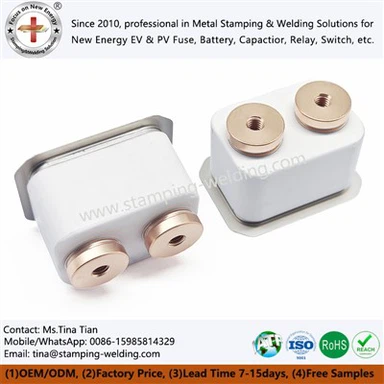
This product features metallized ceramics—a core component specifically engineered for high-voltage DC contactors. Utilizing a high-purity alumina substrate, it achieves a robust, hermetic ceramic-to-metal seal and maintains stable insulation performance even under intense arcing and frequent thermal cycling. It is widely used in sectors such as new energy vehicles, supercharging stations, energy storage systems, and rail transportation. We are dedicated to providing global manufacturers of high-voltage contactors, relays, and power electronics with comprehensive, end-to-end manufacturing solutions—spanning powder preparation, precision forming, high-temperature sintering, and surface metallization through to ceramic-to-metal brazing.
- Fast Delievery
- Quality Assurance
- 24/7 Customer Service
Product Introduction

What are metallized ceramics?
Metallized ceramics are precision structural components consisting of a high-purity insulating ceramic substrate with a dense, strongly adherent metal layer-subsequently plated with nickel, silver, or gold-bonded to specific surface areas via a specialized high-temperature sintering process. In applications such as new energy vehicles, high-voltage ultra-fast charging stations, battery energy storage systems, and high-voltage power distribution units, high-voltage DC contactors are responsible for connecting, carrying, and safely interrupting high-voltage, high-current circuits. Metallized ceramic components play a pivotal role in these devices, serving as both the arc-extinguishing chamber housing and the electrical insulation barrier.
Material Properties of Metallized Ceramic Components
High Dielectric Strength and Insulation
Utilizing high-purity alumina powder and a modified sintering aid system to control grain growth results in an exceptionally dense ceramic microstructure. This enables the material to withstand extremely high breakdown voltages across narrow gaps, effectively preventing high-voltage arc puncture.
Excellent Thermal Conductivity
As HVDC contactors handle 300A–1000A currents and generate severe Joule heating, our high-purity alumina precision advanced ceramic Metallization Parts leverage a dense substrate to rapidly dissipate thermal energy from the arc-extinguishing chamber, significantly delaying contact oxidation and ablation.
Superior Thermal Shock Resistance
A proprietary formulation optimizes CTE, ensuring our precision metallized alumina ceramic components maintain uniform stress distribution from -40°C to +150°C, preventing micro-cracks during rapid temperature fluctuations.

Manufacturing Advantages of Precision High-Strength Metallized Ceramic Components
Fully Automated Dry Pressing and Isostatic Pressing
Automated high-precision presses shape complex HVDC contactor ceramic enclosure cavities for high-voltage DC contactors, guaranteeing uniform green body density and precise shrinkage control.
Continuous High-Temperature Reduction Sintering Furnaces
Equipped with continuous tunnel and high-vacuum furnaces, our controlled heating produces high-strength metallized ceramic components with consistent grain size and superior bonding strength across all batches.
Automated Metallization Printing
Vision-aligned screen printing delivers precise ceramic metallization with uniform coating thickness on complex edges, inner walls, and features, eliminating overspray and coating voids.

Application Areas for Metallization Ceramics in Electrical Components
Vehicle electrification drives demand for HVDC contactor ceramic body for electrical components across key nodes: Main HVDC Relays manage battery connection and emergency cutoffs, PDUs control auxiliary circuits and DC fast charging, and Pre-charge Contactors buffer inrush currents using surge-resistant arc chambers.
For 800V/1000V fast charging, contactors featuring precision-machined alumina ceramic parts handle output control to safely disconnect high voltage during plug-in, completion, or faults, while enabling flexible power module switching in shared-power charging stacks.
In utility-scale, C&I (commercial and industrial), and residential energy storage applications, system DC-side voltages often reach as high as 1000V–1500V. Battery Cluster/Rack Master Switch: Manages the independent connection and disconnection of individual battery clusters.
PCS DC-Side Isolation: Rapidly interrupts high DC currents between the battery pack and the inverter during grid anomalies or system faults to prevent the spread of thermal runaway.
High-voltage DC control extends across multiple industries: Rail Transit uses it for auxiliary power and distribution cabinets; Solar Inverters rely on it for DC-side isolation in centralized and string systems; and Wind Power & HVDC applications integrate high-voltage relays in converters and control cabinets.
Drones and eVTOLs rely on the metallized ceramic housing for power semiconductors for high-voltage battery disconnection, while all-electric marine vessels and heavy construction machinery use them for robust high-voltage DC power distribution and protection under demanding operational conditions.

Frequently Asked Questions About Metallized Ceramic Envelope
Do you provide customized (OEM/ODM) design support for metallized ceramic substrate?
Yes. Over 60% of our products are highly customized components. Our engineering team can get involved early in your project (during the DFM stage) to help optimize the ceramic structural design, recommend the most suitable metallization method (Mo-Mn or AMB), and evaluate the match between the ceramic and metal (e.g., oxygen-free copper or Kovar) regarding their coefficients of thermal expansion.
What metallization processes do you use for your components, and how is the plating thickness controlled?
Using the Mo-Mn process in reducing atmospheres for ceramic-to-metal metallization, we offer custom Ni, Ag, or Au plating tailored to copper, silver, or vacuum brazing.
How do you ensure consistency in insulation and hermeticity across batches during mass production?
Our fully automated dry-press molding, high-precision screen printing, and continuous sintering produce precision metallized ceramics with minimal human intervention. To guarantee defect-free quality, 100% of finished parts undergo automated helium mass spectrometer leak testing and high-voltage insulation testing before shipment.
Which industry certifications do your products meet for electric vehicles (EVs) and battery energy storage systems (BESS)?
Our manufacturing systems are fully certified to IATF 16949 (automotive quality management) and ISO 9001 standards. All materials comply with RoHS and REACH environmental directives and meet the rigorous performance requirements for automotive high-voltage DC contactors and industrial-grade relays.

Contact Us
Leveraging our deep expertise in ceramic materials science and high-precision ceramic-to-metal sealing capabilities, our engineering team helps you overcome challenges related to thermal stress distribution and hermeticity failure in ultra-high-voltage environments, enhancing the overall reliability and product lifecycle of metallized alumina ceramics for electrical components right from the design stage. Submit your drawings or specifications to receive a professional DFM assessment and a customized engineering solution.

Hot Tags: Metallized Ceramics, Alumina Metallized Ceramics, HVDC Contactor Ceramic Body, Ceramic Arc Chamber, Ceramic Metallization Manufacturer, Custom Metallized Ceramic Supplier, OEM Ceramic to Metal Components, Wholesale HVDC Ceramic Components, EV HVDC Relay Ceramics, BESS Contactor Ceramics, Fast Charger Ceramic Seals, Ceramic-to-Metal Brazing, Mo-Mn Ceramic Metallization, AMB Brazed Ceramics, Vacuum Tight Ceramic Sealing