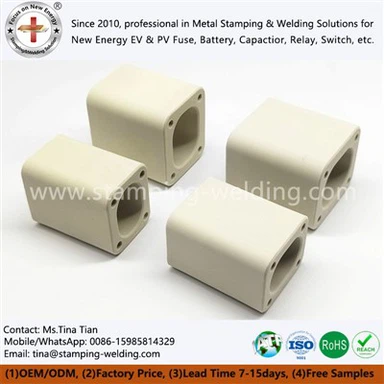


Fuse Ceramic
In circuit protection designs for modern high-voltage power distribution, new energy storage systems (ESS), electric vehicles (EVs), and rail transit, fuse ceramic bodies serve not merely as physical switches for interrupting current, but as the final safety barrier against catastrophic electrical fires and equipment damage. As a specialized manufacturer of technical electrical ceramics, we are dedicated to providing high-quality ceramic fuse solutions for traditional power systems.
- Fast Delievery
- Quality Assurance
- 24/7 Customer Service
Product Introduction

What is Fuse Ceramic?
Fuse ceramics refer to high-performance inorganic non-metallic structural ceramic components specifically designed for use in electrical and electronic fuses, serving as insulating protective housings and arc-extinguishing chambers. Within the overall fuse assembly, these ceramic components typically take the form of tubes, square bodies, or custom shapes; they contain a fusible element (such as a silver or copper alloy) and an arc-extinguishing medium (such as high-purity quartz sand), with their ends sealed to metal end caps.
Material Properties of Ceramic Fuse Tubes
Phase Stability and High-Density Crystalline Structure
Thanks to the composite formulation of high-purity alumina and corundum/mullite, the ceramic fuse casing features a uniform, dense internal grain structure and superior dielectric strength.
01
Extreme Arc-Erosion Resistance
Designed for Bussmann fuses, this ceramic body withstands high-temperature arc impacts without melting or carbonizing, consistently maintaining ultra-high surface insulation resistance.
02
Zero Water Absorption and Dense Barrier Properties
Utilizing steatite ceramic for EV fuses, combined with precise system parameter calculations and computerized monitoring, ensures comprehensive safety in production.
03
Superior Dimensional Stability
We build comprehensive power supply and distribution management and scientific monitoring systems for our clients, fully ensuring the stable operation of their electrical systems.
04

Manufacturing Process for Fused Alumina Ceramic Components
Spray Granulation and Dry/Isostatic Pressing
Utilizing imported powders and isostatic pressing technology, the ceramic bodies for high-breaking-capacity (HRC) fuses feature uniform density, eliminating sintering-induced deformation at the source.
Fully Automated Continuous Sintering
By utilizing algorithmic control for 1,600°C high-temperature tunnel kilns, we produce customized ceramic tubes with uniform grain growth and the complete elimination of porosity.
Precision Diamond Machining
Equipped with multi-axis CNC diamond grinding machines, the system enables precision machining of ceramic tube inner and outer diameters, end faces, and grooves with extremely tight tolerance control.
Surface Polishing and Wear-Resistant Treatment
The inner and outer surfaces of the fused alumina ceramic body can be ground or glazed; it offers resistance to pollution flashover and facilitates the automated press-fitting of end caps.

Applications of Ceramic-Body Fuse Links
High-Voltage Power Transmission and Distribution Systems
Used in products such as dropout fuses and high-voltage current-limiting fuses, these ceramic fuse tubes enable precise fault isolation.
New Energy PV & Energy Storage (PV & ESS)
To address the challenge of interrupting DC currents that lack a natural zero-crossing point, our ceramic tubes effectively extinguish arcs, meeting the rigorous demands of high-voltage systems.
Electric Vehicles (EV/HEV) and Charging Stations
The square ceramic body features high strength and lightweight properties, easily passing automotive-grade vibration and thermal cycling tests.
Rail Transit and Industrial Control
Steatite ceramic components for EV fuses are suitable for protecting the main converters of electric locomotives, wind power systems, and high-power variable frequency drives.

Frequently Asked Questions: Ceramic Body for Siemens
How do your fuse ceramics address the challenge of extinguishing DC arcs in HVDC and energy storage systems?
+
-
The high-purity, dense mullite/corundum phase ceramic tube offers superior resistance to arc ablation; combined with an arc-suppressing internal structure, it accelerates energy absorption and de-ionization within the quartz sand.
Do you offer customization for non-standard dimensions or complex geometries (e.g., square shapes, irregular internal cavities, or side holes)? What are the lead times?
+
-
We possess capabilities in mold design and precision forming, supporting the entire process from blueprints to sample delivery. For non-standard parts, we utilize a combination of dry pressing/isostatic pressing and CNC machining; the lead time for both sample development and the initial delivery of mass-production molds is just 10–15 days.
How do you ensure a low breakage rate (minimal loss) for ceramic tubes and metal end caps during automated assembly and crimping?
+
-
Cracking during the crimping process is often caused by micro-cracks at the ends, poor coaxiality, or improper chamfering. Our ceramic tubes undergo precision grinding to ensure high coaxiality and uniform wall thickness; combined with high-precision edge radii or composite chamfer designs, they effectively distribute stress and ensure high yields during automated assembly.
What are the key physical and electrical performance requirements for the ceramic bodies used in traditional power fuses?
+
-
Traditional power fuses generate extremely high temperatures and arc pressures when interrupting fault currents. Consequently, the ceramic body must possess high mechanical strength and thermal shock resistance (to prevent bursting during arc extinction), excellent dielectric strength, and extremely low water absorption and thermal expansion coefficients. These properties ensure that insulation breakdown or degradation does not occur during long-term exposure to high-voltage environments.
How does the material selection for ceramic bodies in traditional power fuses differ from that of ordinary industrial ceramics?
+
-
Traditional power fuses typically utilize high-purity alumina, steatite, or mullite ceramics. Compared to standard structural ceramics, these electrical-grade ceramics feature optimized formulations and sintering processes that significantly enhance arc ablation resistance and thermal shock resistance, enabling them to withstand the intense thermal shock experienced during high-voltage current limiting or arc extinction in dropout fuses.

Contact Us
We offer more than just standardized electrical ceramic components; we are committed to serving as a collaborative technical partner throughout the development of your high-voltage protection systems. From material selection and structural optimization to stable, high-volume delivery, our engineering team is ready to support the success of your project. If you are seeking a supplier of ceramic components for power fuses-featuring exceptional burst resistance, ultra-low defect rates, and global delivery capabilities-please contact our engineering team today to obtain sample test data and technical consultation.

Hot Tags: Fuse Ceramic, Fuse Ceramic Body, NH Fuse Ceramic Body, Ceramic Fuse Tube Manufacturer, Precision Fuse Ceramic Supplier, High Voltage Fuse Ceramic, Custom Fuse Ceramic Parts, EV Fuse Ceramic Body, Photovoltaic Fuse Ceramic, Steatite Ceramic Body, Alumina Ceramic Fuse Tube, OEM Fuse Ceramic Manufacturer, Arc Resistance Fuse Body