

Ceramic Body
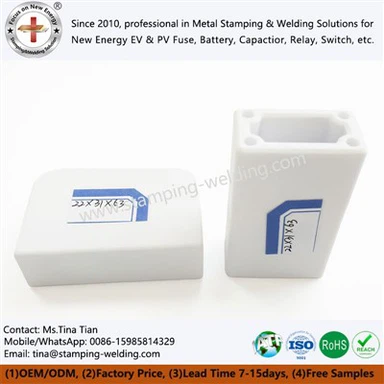
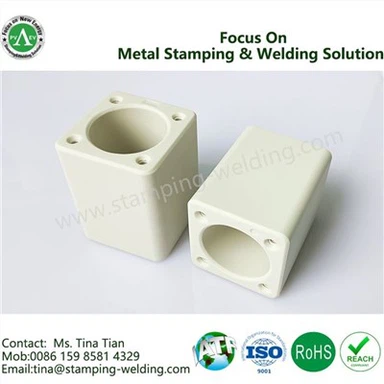
Xiamen Apollo specializes in the R&D and manufacturing of Ceramic Body. Our core product lines include New Energy Fuse Ceramic Body, NH Fuse Ceramic Body, Resistor Ceramic Body, and HVDC Contactor Ceramic Body. Our service network covers the fields of electric power, the new energy industry, rail transit systems, industrial equipment manufacturing, and data center infrastructure. Relying on the three core competitiveness of high conductivity, strong corrosion resistance, and customized service capabilities, we continue to provide safe, reliable, efficient, and energy-saving electrical connection system solutions to global customers.
- Fast Delievery
- Quality Assurance
- 24/7 Customer Service
Product Introduction
Overview Of Product Series
Xiamen Apollo focuses on the research, development, and production of Ceramic Bodies. Our main product lines include New Energy Fuse Ceramic Body, NH Fuse Ceramic Body, Resistor Ceramic Body, and HVDC Contactor Ceramic Body. Our service network extends across electric power, new energy, rail transit, industrial equipment manufacturing, and data center infrastructure. With core strengths in high conductivity, strong corrosion resistance, and customized service capabilities, we consistently deliver safe, reliable, efficient, and energy-saving electrical connection system solutions to customers worldwide.

Product Classification And Characteristics
1. New Energy Fuse Ceramic Body
The ceramic body of the new energy fuse is the core component of high-voltage circuit protection. It is precisely manufactured with high-purity ceramic materials and has excellent insulation, high-temperature resistance, and arc resistance. It is designed for high-demand scenarios such as new energy vehicles, photovoltaic energy storage, and charging piles. As the source factory, we provide full process control from raw materials to finished products to ensure stable and reliable product performance and enable customers to provide efficient and safe energy system solutions.

1.1 Core advantages
Material performance: 95 alumina ceramic (Al₂O₃≥95%) is used, with high mechanical strength (bending strength ≥300MPa), high-temperature resistance (long-term use temperature ≤1200℃), and high insulation (volume resistivity ≥10¹⁴Ω·cm).
Structural design: Precision molding process to ensure dimensional accuracy of ±0.05mm, suitable for high-voltage DC fuses for new energy vehicles (DC 1000V-1500V), and meet short-circuit breaking capacity ≥100kA.
Safety features: strong resistance to arc erosion, no residual conductive track after melting, UL 248-19, IEC 60269 certified.
1.2 Precision production process
The whole process is self-controlled:
1. Raw material pretreatment:
Imported high-purity alumina powder with particle size D50≤1μm is used to ensure material uniformity.
Nano-scale dispersion technology to avoid sintering pore defects.
2. Molding process:
Dry pressing/isostatic pressing, mold accuracy ±0.02mm, density consistency ≥99%.
3. High-temperature sintering:
Fully automatic atmosphere protection kiln, 1650℃ constant temperature sintering, dense crystal structure without cracks.
4. Precision machining:
Japanese CNC machine tools, aperture tolerance ±0.01mm, flatness ≤0.005mm.
5. Full inspection process:
X-ray flaw detection for internal defects, insulation withstand voltage test (AC 50kV/1min), yield rate ≥99.8%.

1.3 Technical parameters
| Item | Parameters |
| Dielectric strength | ≥18kV/mm |
| Volume resistivity | 1×10¹⁴Ω·cm |
| Bending strength | ≥350MPa |
| Operating temperature | -40°C to +1250°C |
1.4 Application scenarios
New energy vehicles: Battery pack main circuit protection, withstanding 800V high-voltage platform impact.
Photovoltaic energy storage system: DC 1500V fuse core carrier, anti-PID effect.
Charging pile module: Support fast charging overload current (≥500A), flame retardant grade UL94 V-0.
Industrial inverter: Suppress high-frequency arc and extend IGBT life.
2. NH Fuse Ceramic Body

2.1 Core advantages
Arc extinguishing technology: filled with high-purity quartz sand (SiO₂≥99.5%), the particle size is controlled at 100-200μm, ensuring rapid absorption of arc energy and breaking time ≤10ms.
Melt matching: supports copper-tin alloy welding technology (melting point 170℃), accurate overload protection curve, short-circuit protection adopts variable-section copper melt design, and the breaking capacity reaches 120kA (400V AC).
Environmental resistance: passed salt spray test (500 hours) and temperature cycle (-40℃~+125℃), suitable for outdoor/industrial harsh environments.
2.2 Performance parameters
| Item | Index |
| Maximum operating temperature | 1200℃ |
| Flexural strength | ≥300MPa |
| Volume resistivity | ≥1×10¹⁴Ω·cm |
| Water absorption | ≤0.1% |

2.3 Production process:
① Raw material ratio: high-purity alumina powder + nano-grade binder, ball milled and mixed to a particle size of ≤1μm;
② Dry pressing: using a 2000T hydraulic press imported from Germany, with a tolerance control of ±0.05mm;
③ High-temperature sintering: 1650℃ atmosphere protection kiln, continuous 48 hours of densification treatment;
④ Precision machining: CNC machine tool fine-finishing inner wall finish Ra≤0.8μm;
⑤ Full inspection process: X-ray flaw detection + high-voltage insulation test, defective product rate <0.2%.
Key equipment: fully automatic isostatic press, tunnel sintering line, three-coordinate measuring instrument.
2.4 Application scenarios:
Power protection solutions for multiple industries
New energy field: photovoltaic inverter DC1500V system, wind power converter fuse core carrier;
Industrial equipment: overcurrent protection of inverter and UPS power supply, suitable for 160A-630A rated current;
Rail transit: meet EN 45545 fire protection standard, applied to traction power supply system;
Power system: supporting switch cabinets below 35kV, certified by GB/T 15166.5.
3. Resistor Ceramic Body

3.1 Core Advantages
Material Innovation: Low Alkali Ceramic (K₂O+Na₂O≤0.5%), Insulation Resistance ≥10¹²Ω at High Temperature, Dielectric Loss ≤0.002 (1MHz). Process Precision: Extrusion Molding + High-Temperature Sintering (1330℃±10℃), Surface Roughness Ra≤0.8μm, Suitable for High Precision Carbon Film/Metal Film Resistors.
Reliability: Resistance Change Rate after Aging ≤±0.5% (85℃/85%RH/1000 hours), in line with IEC 60115-1 standard.
3.2 Technical parameter
| Project | Alumina ceramic body (standard version) | Aluminum nitride ceramic body (high-end version) |
| Density (g/cm³) | 3.6-3.9 | 3.2-3.3 |
| Dielectric constant | 9.8@1MHz | 8.5@1MHz |
| Flexural strength (MPa) | 280 | 320 |
| Thermal conductivity (W/m·K) | 24 | 170 |
| Customized service | Size ±0.1mm | Metallized coating can be integrated |
3.3 Production process
1. Raw material processing: High-purity powder is ball-milled to a particle size of <1μm to ensure material uniformity.
2. Dry pressing: Pressed by a hydraulic press of more than 300T, density deviation <1.5%.
3. Sintering process: 1650℃ high-temperature tunnel kiln, the oxygen content is precisely controlled at ±0.5%.
4. Precision machining: CNC machine tool + laser cutting, aperture accuracy ±0.01mm.
5. Inspection and packaging: 100% full inspection of insulation withstand voltage (AC 3kV/1min), vacuum moisture-proof packaging.
3.4 Application scenarios
High-voltage scenario: customized tubular/disc structure, with water-cooled heat dissipation design (such as nuclear fusion device load resistor).
High-frequency scenario: non-inductive structure design (inductance <1nH), suitable for switching circuits above 50kHz (such as inverter buffer resistor).
Special environment: chemical corrosion-resistant coating, used in high-pollution scenarios such as chemical industry and metallurgy.

4. HVDC Contactor Ceramic Body

4.1 Material advantages
High-purity alumina ceramics (Al₂O₃): purity of more than 95%, ensuring excellent high-voltage insulation performance;
Low dielectric loss: can effectively reduce power loss and improve system efficiency in high-frequency and high-voltage environments;
High strength and impact resistance: compressive strength can reach more than 300 MPa, ensuring long-term electromagnetic suction impact
4.2 Production process
Raw material screening
Strictly select high-purity alumina powder to ensure stable raw material performance and low impurity content.
Precision molding
Use high-pressure dry pressing or isostatic pressing to ensure uniform density inside the ceramic body and avoid pore defects.
High-temperature sintering
Use high-temperature sintering technology above 1600°C to fully densify the ceramic particles and improve mechanical strength and insulation performance.
Precision machining
Use CNC numerical control precision engraving machine for high-precision dimensional processing to ensure that each product meets strict tolerance requirements;
Laser cutting, drilling, chamfering and other treatments to improve assembly accuracy and prevent stress concentration.
Metallization
Molybdenum-manganese (Mo-Mn) or silver (Ag) metallization process is used on the ceramic surface to ensure high-strength welding with the metal terminal of the contactor, improving conductivity and reliability.
4.3 Application scenarios
New energy vehicles
Applicable to high-voltage DC contactors to ensure safe power-off of the battery system;
Applicable to key components such as main relays and pre-charging relays.
Energy storage system
Used in high-voltage DC circuit breakers for photovoltaic energy storage and wind power energy storage;
Ensure efficient current interruption and isolation of energy storage battery packs.
Charging piles and power grid equipment
Applicable to high-voltage relays for high-power DC fast charging piles;
Provide highly reliable current control and overcurrent protection.

Our Production Strength
1. Leading corporate advantages
Group management, strong financial and technical strength: We have strong financial support, advanced manufacturing technology, and sufficient production capacity to meet customers' large-scale production needs.
Quick response, shortened delivery time: 1-2 days for free samples, 20-30 days for new molds and samples, and 15-20 days for bulk orders.
Significant annual turnover: The annual turnover of the new energy industry reaches RMB 120 million, and the annual turnover of the low-voltage electrical sector reaches RMB 80 million.
Deep industry experience: The core technical team comes from Xiamen Hongfa Group (a global leader in the relay and switch industry), with over 30 years of experience in the electrical industry, providing product solutions and cost reduction and efficiency improvement suggestions.
2. All-round production process:
Metal cold heading technology: production of silver contacts, relay cores, fasteners, etc.;
Metal stamping process: covering capacitor busbars, fuse contact caps, and various stamping parts;
Metal welding process: supporting laser welding, resistance welding, soldering, high-frequency welding, vacuum welding, etc.;
Metal stretching process: deep drawing parts such as lithium battery aluminum shells;
CNC precision machining: meeting the needs of high-precision metal parts processing;
Sheet metal bending process: suitable for various metal bending parts;
Metal electroplating process: providing surface treatments such as gold plating, silver plating, nickel plating, tin plating, and copper plating;
Laser cutting & CNC machining: supporting small batch customization to reduce high mold investment.

Full industry chain supply capabilities: not only providing metal stamping and welding products, but also producing molds, automated assembly equipment, and electrical testing instruments.
Own core production base: with stamping, welding, mold, CNC machining, cold heading, electroplating cleaning, and automated assembly workshops, controlling the core production links.
Strict quality management system: has passed ISO9001:2015, IATF16949, ROHS, REACH, and other international certifications to ensure that products meet global market standards.
contact us

Hot Tags: Ceramic Body For Fuse, Fuse Ceramic Body, EV Fuse Ceramic Body, Ceramic Fuse Casing, High Voltage Fuse Ceramic Body, DC Fuse Ceramic Body, Battery Fuse Ceramic Body, Energy Storage Fuse Ceramic Body, Alumina Ceramic Fuse Body, Custom Ceramic Body Manufacturer
No Information