

Ceramic Body For EV DC Fuse
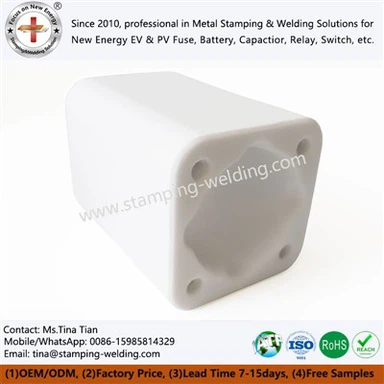
The Ceramic body for EV DC fuse is a core material for structural support and insulation protection, specifically developed for high-voltage DC protection systems in new energy vehicles. It uses high-purity special ceramics as the matrix and is made into a standard block structure through precision molding and high-temperature sintering processes. It is mainly used to support the molten material, arc-extinguishing medium, and metal end cap. In EV battery systems, vehicle high-voltage power distribution, and energy storage equipment, it realizes the core functions of normal electrical insulation, fault arc restraint, and high-temperature structural stability. It is a key structural component to ensure the breaking reliability of DC fuses and the electrical safety of the entire vehicle.
- Fast Delievery
- Quality Assurance
- 24/7 Customer Service
Product Introduction

In the high-voltage systems of electric vehicles, the ceramic body, as the "skeleton" of the fuse, must maintain stable electrical performance and mechanical integrity in systems with rated voltages of DC 750V~1000V or even higher. When an overload or short-circuit fault occurs in the circuit, the Ceramic body for EV DC fuse must not only withstand the transient high temperature and arc impact generated by the fuse melting within milliseconds, but also ensure that the arc energy is effectively confined and guided to the arc-extinguishing medium, ultimately achieving safe current disconnection. Its functional reliability directly determines the success rate of the fuse's protective action and the overall high-voltage safety of the vehicle.
Material advantages
High-strength and stable insulation
High-purity alumina ceramic insulation boasts excellent mechanical properties, effectively mitigating the risks of high-voltage leakage, creepage, and breakdown. The material is vibration- and impact-resistant, suitable for complex automotive operating conditions. The Alumina Ceramic Tube for High Voltage EV Fuse structure is robust and not easily damaged, ensuring long-term stable electrical performance.
Corrosion-resistant, anti-aging, and durable
Alumina ceramics are chemically inert, resistant to moisture, salt spray, and mild corrosion, and are not prone to aging and degradation over long-term use. This ensures the continuous stability of the fuse structure and electrical performance, extending service life and reducing equipment maintenance costs.
High-efficiency thermal conductivity and temperature control
Beryllium oxide ceramics have excellent thermal conductivity, making them suitable for high-power EV fuses. They can quickly dissipate high temperatures during normal operation and short circuits, preventing heat buildup that could damage the insulation and dielectric, ensuring stable operation of the high-voltage DC system.

Key engineering parameters
Insulation Resistance
≥1000MΩ. This ultra-high insulation resistance effectively prevents high-voltage DC leakage and creepage, ensuring the normal insulation safety of high-voltage electrical systems and avoiding vehicle malfunctions caused by Alumina Ceramic Tube for Electrical Automotive Fuse insulation failure.
Withstand Voltage Rating
The Alumina Ceramic Insulator Tube for Fuse covers a DC withstand voltage range of hundreds to thousands of V. Low-voltage specifications are suitable for small energy storage and vehicle auxiliary circuits, while high-voltage specifications meet the withstand voltage protection requirements of 800V high-voltage platform systems in new energy vehicles, adapting to all scenarios of DC high-voltage operating conditions.
Operating Temperature Range
Stable operation over a wide temperature range of -50℃ to 500℃. The Insulated Ceramic Tube in EV Fuses can withstand extreme vehicle operating conditions such as winter driving in extremely cold regions, high-temperature exposure in summer, and high-heat confined engine compartments, without deformation, cracking, or insulation attenuation under high and low temperature environments.
Dimensional Accuracy
Overall dimensions, hole positions, and slot tolerances are controlled, adapting to automated assembly lines and eliminating mass production defects such as assembly jams, poor sealing, and loose end cap connections caused by Ceramic body for EV DC fuse dimensional deviations.
(Note: Specific parameters can be designed and customized according to customer product requirements)

Frequently Asked Questions
Q: What are the core engineering causes of cracking in the ceramic body of EV DC fuses?
A: There are three main categories: 1) Insufficient material density and latent internal stress caused by sintering process defects; 2) Instantaneous short-circuit thermal shock exceeding the thermal shock resistance threshold of the substrate; 3) Structural cracking caused by unreasonable assembly tolerances and long-term vibration fatigue. These can be avoided by selecting high-purity substrates, standardizing processes, and precise material selection.
Q: What are the core differences between alumina and beryllium oxide ceramic bodies under EV operating conditions?
A: Alumina ceramics are characterized by high insulation, high strength, and high corrosion resistance, making them suitable for most general automotive energy storage applications. They offer the best cost-effectiveness and stability in mass production. Beryllium oxide ceramics' core advantage is ultra-high thermal conductivity, which can solve the problem of heat accumulation under high-power conditions, making them suitable for high-end, high-voltage, high-current EV systems.
Q: How to ensure assembly consistency across multiple batches of ceramic bodies?
A: Relying on four major systems-mold shaping, constant temperature sintering, full-size sampling inspection, and parameter solidification-the dimensional tolerances, structural flatness, and material properties of each batch of Alumina Ceramic Tube for High-Voltage Automotive Fuse are standardized, completely eliminating batch deviations and adapting to automated mass production assembly.
Q: Will the insulation degradation of the ceramic body affect the reliability of the fuse throughout its entire life cycle?
A: Qualified EV-grade ceramic bodies have extremely strong chemical and thermal stability. Under normal vehicle operating conditions, there is no insulation degradation or structural aging. As long as the selection matches the operating conditions, it can achieve stable performance with the same lifespan as the entire vehicle, requiring no mid-term maintenance or replacement.

Contact Us
For precise selection of a Ceramic body for EV DC fuse to match project operating conditions, acquisition of engineering test parameters and batch delivery solutions, you can contact our technical team at any time to complete one-on-one operating condition adaptation and parameter confirmation.

Hot Tags: ceramic body for ev dc fuse, China, manufacturers, suppliers, factory