

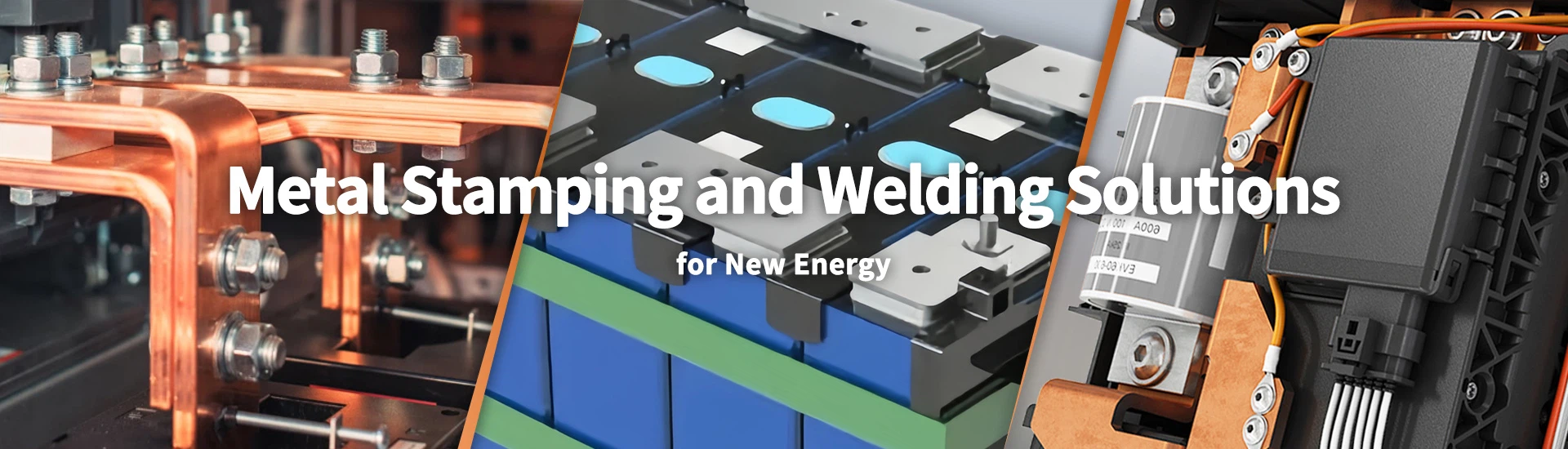


Insulated Copper Busbar
Xiamen Apollo focuses on the R&D and manufacturing of high-end insulating busbar technology, deeply integrates the laminated busbar structure design and diversified insulation process, and launches four core product lines: powder-coated Busbar, PVC Dipping Insulated Busbars, PET Insulated Busbars for EV Film Capacitor and Laminated Busbar. Relying on material science innovation and process technology breakthroughs, the products are widely used in new energy vehicle electric drive systems, energy storage devices, rail transit traction equipment, and industrial power electronic devices, providing global customers with high reliability, low inductance, and lightweight electrical connection insulation solutions.
- Fast Delievery
- Quality Assurance
- 24/7 Customer Service
Product Introduction
Overview Of Product Series
As an innovative leader in insulating busbar technology, our company is committed to the research development, and manufacturing of high-end insulating busbars, integrating laminated busbar structure design with a multi-layer insulation process system, and ingeniously creating four core product matrices: Powder Coated Busbars, PVC Dipping Insulated Busbars, PET Insulated Busbar for EV Film Capacitors, and Laminated Busbars. With material engineering innovation and process technology innovation, our products fully serve new energy vehicle electric drive systems, energy storage integrated equipment, rail transit traction devices, and industrial power electronics platforms, continuously delivering lightweight, low-inductance, and high-reliability electrical connection insulation solutions to global customers.

Product Classification And Characteristics
1. Laminated Busbar

1.1 Material and Process Advantages
Conductor: high-purity oxygen-free copper (C11000, copper purity ≥99.99%), conductivity ≥58 MS/m, copper busbar surface roughness ≤0.8μm, reducing skin effect loss.
Insulation layer: adopts double-layer or multi-layer composite structure (inner layer polyimide PI film + outer layer modified epoxy resin PET film), with a withstand voltage level of 3kV/mm, partial discharge <5pC (IEC 60270 standard), ensuring signal stability in high-frequency scenarios.
Structural design: supports multi-layer stacking, interlayer gap accuracy ±0.05mm, parasitic inductance reduced to <10nH/cm (1/5 of traditional busbar), adapting to SiC MOSFET high-frequency switching requirements.
Laminated busbar vs. single-layer copper busbar: In-depth comparison of heat dissipation performance
| Type | High-frequency loss (10kHz) | Skin effect Influence | Actual test case (300A current) |
| Laminated busbar | Reduced by 42% | Multi-layer copper foil (≤0.3mm) eliminates skin effect | Energy storage converter: temperature rise 38℃ (ambient 25℃) |
| Single-layer copper busbar | Base value 100% |
Solid copper busbar (≥2mm) Loss concentrated on the surface |
Same working condition: temperature rise 55℃ (ambient 25℃) |
| Principle: The thin copper foil (0.1-0.5mm) of the Laminated Copper BusBar makes the current evenly distributed, avoiding the surface overheating of the single-layer copper busbar due to the skin effect (skin depth ≈8.5mm@50Hz, only 0.66mm at 10kHz). | |||
1.2 Production process
Copper plate laser cutting (accuracy ±0.1mm) → Pre-coating of insulation layer (vacuum environment anti-bubble) → Hot pressing composite (180℃/5MPa pressure forming) → Three-coordinate detection (dimensional error <0.2mm) → Electrical performance test (withstand voltage, insulation resistance, temperature rise).
1.3 Application scenarios and customer value
| Application scenario | Optimal solution | Core reasons |
| High frequency and high power (>10kHz) | Laminated busbar | Low loss + temperature equalization design to avoid IGBT thermal failure |
| Large current and low frequency (<50Hz) | Single-layer copper busbar + milling slot | Low cost, sufficient single-point heat dissipation (such as traditional UPS) |
| Limited space + vibration environment | Laminated busbar | Three-dimensional heat dissipation + anti-fatigue (such as new energy vehicles) |

2. Powder Coated Busbar

2.1 Material and Process Advantages
Conductor optimization: T2Y2 copper powder spraying, contact resistance ≤0.1mΩ, current carrying capacity increased by 15% compared with bare copper (80℃ temperature rise).
Coating technology: electrostatic spraying epoxy powder (UL 94 V-0 certification), thickness 0.2-0.5mm controllable, adhesion up to level 1 (GB/T 9286 cross-cutting method), salt spray resistance >1000 hours (ASTM B117), suitable for coastal/chemical environment.
Cost advantage: Compared with the dipping process, the material utilization rate is increased by 30%, and the overall cost is reduced by 18-25%.
Key process chain (compared with traditional injection molding/painting)
| Link | Powder spraying process advantages | Measured data |
| Pre-treatment | Chemical etching + sandblasting (roughness Ra 3.2-6.3μm) | Coating adhesion > 5N/cm (ASTM D3359) |
| Powder selection | Epoxy resin (150-200μm) or polytetrafluoroethylene (80-120μm) | Temperature resistance 220℃ (epoxy resin) vs injection molding 180℃ |
| Curing control | 180℃×20min (fluidized bed electrostatic spraying) | Thickness uniformity ±15μm (industry standard ±25μm) |
| Core breakthrough | No solvent volatilization (VOC <50mg/m³), no dripping on the edge (minimum fillet R0.3mm) | The creepage distance is 28% shorter than that of the dip-painted busbar (IEC 60664-1 certification) |
2.2 Production process
Copper busbar laser cutting → CNC stamping/bending (Japan AMADA CNC equipment) → Surface sandblasting (Sa2.5 level cleanliness) → Electrostatic spraying (Robot automatically controls film thickness) → High-temperature curing (200℃/30 minutes) → Air tightness test (IP67 standard).

2.3 Application scenarios and customer value
| Application scenario | The core value of powder-sprayed busbar | Pain points of alternative solutions |
| 800V+new energy vehicles | Ultra-thin insulation (0.1-0.2mm) + smooth edges (anti-corona) | A thick injection layer (≥0.5mm) takes up space |
| Industrial and commercial energy storage (2000V) | CTI 600 anti-creeping, supports the dense arrangement | The impregnation layer is easy to absorb moisture, resulting in reduced insulation |
| Rail transit (vibration + oil pollution) | Impact-resistant coating + anti-oil penetration | Traditional insulating paint is easy to fall off |
| Photovoltaic inverter (outdoor) | UV-resistant powder (added TiO₂), 10-year yellowing index <5 | Ordinary coating bowdlerization in 3 years |
3. PVC Dipping Insulated Busbars

3.1 Material and Process Advantages
Substrate treatment: Chemical passivation of copper busbar (chromate process), no corrosion in salt spray test > 720h, ensuring reliability in tropical/marine environment.
Plastic layer performance:
PVC type: low-cost solution, flame retardant grade UL 94 V-2, suitable for low-voltage power distribution (AC 1000V or less).
Nylon 12 type: resistant to diesel/lubricating oil corrosion, impact strength > 50kJ/m² (ISO 179 standard), resistant to -40℃ low-temperature impact.
3.2 Production process
Copper busbar laser cutting → CNC stamping/bending (Japan AMADA CNC equipment) → copper busbar pickling and activation → preheating to 220℃ (enhancing the bonding strength of the plastic layer) → impregnation with plasticizing liquid (time/temperature automatic control) → water cooling and shaping → laser trimming of burrs → high-voltage insulation test (AC 3kV/60s without breakdown).

3.3 Application scenarios and customer value
Directly hit the pain point of procurement: "Terminator" of insulation failure
Compared with the fatal defects of traditional solutions (heat shrink tube/laminated insulation)
| Scenario | Heat shrink tube busbar problem | Dip plastic busbar solution | Data support |
| Battery pack vibration (5-500Hz) | Heat shrink tube cracking (failure after 30,000 cycles) | Dip plastic layer (Shore hardness 85A) tear strength 45MPa | 100,000 cycles without cracks |
| Coastal salt spray environment (500h) | Insulation layer blistering, copper busbar corrosion | Dip plastic layer (thickness 0.8-1.2mm) salt spray test 1000h without red rust | BYD Dolphin battery pack verification |
| Fast charging temperature rise (120℃ peak) | Insulation material softening (PVC heat deformation temperature 70℃) | Dip plastic material (PBT+glass fiber) temperature resistance -40℃~150℃ | The supercharging pile works continuously for 1000 hours without abnormality |
4. EV PET Insulated Busbar for EV Film Capacitor

4.1 Material and Process Advantages
Conductor innovation: ultra-thin copper strip (0.8mm thickness) + soldering or resistance brazing process, achieving a cross-section of 100mm² and a current of 300A, and 20% lighter than aluminum busbar.
Insulation breakthrough:
Biaxially oriented PET film: CTI ≥ 600V (50% increase compared to PI film), corona resistance life > 800h (IEC 61934 standard).
Composite structure: PET + glass fiber reinforced layer, tear strength > 80N/mm (DIN 53363 standard), avoiding the risk of battery pack puncture.
Automotive certification: passed AEC-Q200 reliability test, supporting ISO 26262 functional safety level ASIL-C.
4.2 Production process
Sample or small batch order: laser cutting → CNC stamping/bending → PET film pre-lamination → hot pressing compound (temperature/pressure closed-loop control) → die-cutting shape → online AOI detection (defect recognition accuracy 0.02mm²) → dynamic current carrying test (simulating vehicle working conditions).
Large-volume orders: continuous stamping of copper strip progressive die → PET film pre-lamination → hot pressing compound (temperature/pressure closed-loop control) → die-cutting shape → online AOI detection (defect recognition accuracy 0.02mm²) → dynamic current carrying test (simulating vehicle working conditions).
4.3 Application scenarios and customer value
Battery module connection: voltage sampling busbar impedance ≤ 0.5mΩ, temperature difference < 2℃ (800A continuous power on), improving BMS accuracy.
Customer results: After a new car-making force adopted it, the energy density of the battery pack increased by 7%, and passed the national standard thermal runaway diffusion test.

Insulation technology comparison and selection guide
| Dimension | Laminated busbar | Powder spray insulation | Dip-coated insulation | PET insulation for EV |
| Cost | High (precision lamination process) | Medium (batch automation) | Medium (mold amortization) | High (automotive grade material) |
| Environmental resistance | Excellent (vacuum packaging) | Good (IP67 protection) | Excellent (fully sealed) | Excellent (chemical corrosion resistance) |
| Applicable voltage | 3kV (high frequency insulation) | 1kV (power frequency scenario) | 1.5kV (medium voltage) | 1.5kV (DC system) |
| Delivery speed | 7-15 days (customization) | 3-7 days (standard products) | 5-10 days (mold adaptation) | 10-20 days (automotive grade verification) |

Our Production Strength
1. Hardware strength
Intelligent workshop: total area of 8,000 square meters, equipped with fully automatic busbar production line (progressive die continuous punching machine + laser cutting + CNC punching/bending), constant temperature and humidity dust-free area (in line with ISO 14644-1 Class 8 standard).
Mold center: 20 CNC processing equipment (accuracy ±0.005mm), support 48-hour rapid mold opening, with its mold design and production and processing capabilities.

2. Quality Commitment
Testing Equipment:
- High Voltage Tester (AC 10kV/DC 15kV withstand voltage)
- Industrial CT (3D imaging of internal defects)
- Programmable Constant Temperature and Humidity Chamber (-70℃~300℃ limit test)
Certification System:
- Automotive Industry: IATF 16949, PPAP Level 3
- International Standards: UL 467, CE, RoHS
contact us

Hot Tags: insulated copper busbar, insulated copper bus bars, insulated electrical busbar, copper busbar manufacturer, custom insulated busbar, EV battery busbar, energy storage busbar, PVC insulated copper busbar
No Information


