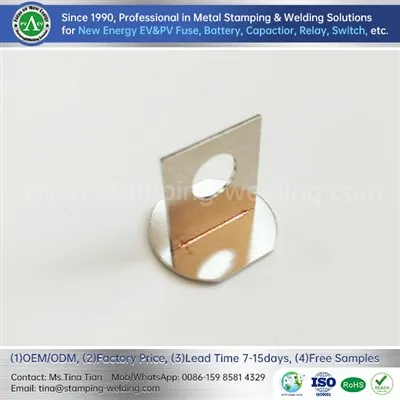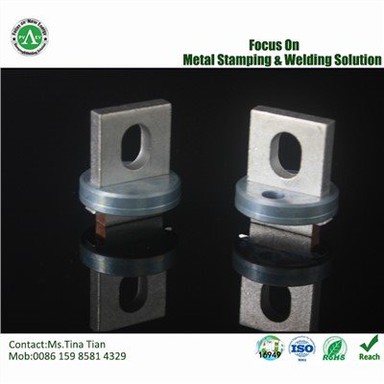


Electrical Fuse Contact
In new energy, power electronics, and industrial electrical systems, fuses are not only protective components but also core conductive nodes in high-current paths. The electrical fuse contact (copper contact blade), as a critical component in the fuse system that directly bears current and thermal shock, directly determines the reliability, stability, and lifespan of the entire electrical system through its material purity, structural design, and manufacturing consistency. This product is specifically designed for high-current, high-reliability applications, using high-purity copper as the base material. Through precision machining and strict process control, it ensures stable electrical and mechanical performance even under long-term operation, frequent load changes, and harsh environments.
- Fast Delievery
- Quality Assurance
- 24/7 Customer Service
Product Introduction

In modern high-voltage and high-current power distribution systems, every connection point is critical to performance. Our Electrical Fuse Contact series is not only the physical carrier of current but also the first line of defence for system safety.
As the core conductive component of a power fuse, the contact's performance directly determines the system's temperature rise control during normal operation and the reliability of current interruption during a fault. We focus on providing high-purity, highly consistent, and long-life contact products for global smart grids, new energy storage, and industrial automation.
Material Advantages – Based on the Electrophysical Properties of T2 Copper
1. Extremely High Conductivity and Thermal Conductivity
We select electrolytic copper (T2/C11000 grade), with a purity exceeding 99.9%. Physically, this high purity ensures extremely low resistivity.
Reduced Losses: During long-term full-load operation, extremely low internal resistance means less Joule heat generation, thus lowering the ambient temperature inside the cabinet.
Superior Heat Dissipation: Utilising the excellent thermal conductivity of copper, the contact blade can quickly conduct heat generated inside the fuse to the busbar system, preventing fatigue failure caused by thermal stress.
2. Optimised Mechanical Plasticity and Corrosion Resistance
The copper material undergoes a specific annealing treatment, maintaining good toughness. During installation and under electromagnetic impact, the contact blade can absorb minor stresses without easily cracking, ensuring the integrity of the contact surface.

Technical Features: Deep Optimisation of Thermal Management and Contact Resistance
Ultra-Low Contact Resistance
Contact resistance is the main culprit for overheating at electrical contacts. By controlling the surface roughness and flatness of the contact blade, and combining it with a highly conductive plating, we ensure "surface contact" rather than "point contact" when the contact blade contacts the socket, thereby controlling the contact resistance to the micro-ohm level and significantly reducing operating temperature rise.
Excellent Creep Resistance
Under long-term conditions of bolt tightening force or spring clamping force, ordinary metal materials are prone to plastic deformation (creep), leading to a decrease in contact pressure and subsequent overheating. Our copper contact blade undergoes a special annealing process, maintaining high conductivity while improving creep resistance, ensuring that the connection torque remains stable during long-term use.
Balanced Hardness and Softness
We strictly control the hardness (HV) of the copper. Materials that are too hard will wear down the copper clips of the fuse base, while materials that are too soft will cause the contact blade to deform. Through precise adjustments, we found the optimal balance point for hardness, ensuring that the contact blade does not deform during insertion and removal while also providing a slight "polishing" effect on the clamp, reducing contact resistance.
Current-carrying capacity redundancy design
The contact blade's cross-section has undergone rigorous ampere density calculations, allowing for ample temperature rise margin. Even under short-circuit current surges or instantaneous overloads, the contact blade maintains its structural integrity before the fuse trips, preventing melting or adhesion.

Main Functions: The Electrical Fuse Contact
High-Reliability Current Transmission
As part of the circuit, it must reliably carry the rated current year-round. Its low impedance characteristics ensure system efficiency.
Physical Carrier for Fuse Operation
When a short circuit or overload occurs, the fusible element inside the fuse melts. The contacts, supporting the two ends of the fusible element, must withstand the high temperature and electrodynamic force generated by the electric arc at the moment of melting, preventing welding and adhesion, thus ensuring a complete circuit break and isolating the fault point.
Heat Conduction Path
It rapidly conducts the heat generated inside the fuse to the outside air, helping to reduce the fuse's temperature rise and protecting the internal quartz sand filler and the stability of the fusible element's performance.
Electrical Isolation and Insulation Coordination
In conjunction with the insulating base, it maintains sufficient electrical clearance and creepage distance between different phase sequences or polarities to prevent arcing and short circuits.

contact us
If you are looking for a reliable, well-engineered, and manufacturable copper contact solution for your high-current fuse system, we excel at participating in the design and selection process from a system perspective, rather than simply providing a component.
We welcome you to discuss your specific application scenarios with our engineering team to achieve a more efficient and safer project-level match.

Hot Tags: electrical fuse contact, China, manufacturers, suppliers, factory
No Information