Common problems and solutions during 304 stainless steel punching process
Apr 21, 2026
Overview of quality control core for 304 stainless steel punching
Stamping 304 stainless steel is widely used in various industrial manufacturing fields due to its advantages of efficient molding and stable accuracy. However, stainless steel itself has a special material with obvious work hardening and high toughness. Due to multiple factors such as material properties, process parameters, mold accuracy, and auxiliary consumables, stamping production is prone to various appearance defects and dimensional defects.
Systematically sorting out common faults in Stainless steel sheet metal stamping, clarifying the mechanism of defect generation, and developing targeted improvement plans are important foundations for stabilizing production pace, controlling product yield, and improving sheet metal stamping processing quality.
Forming and surface defect problems and improvement measures
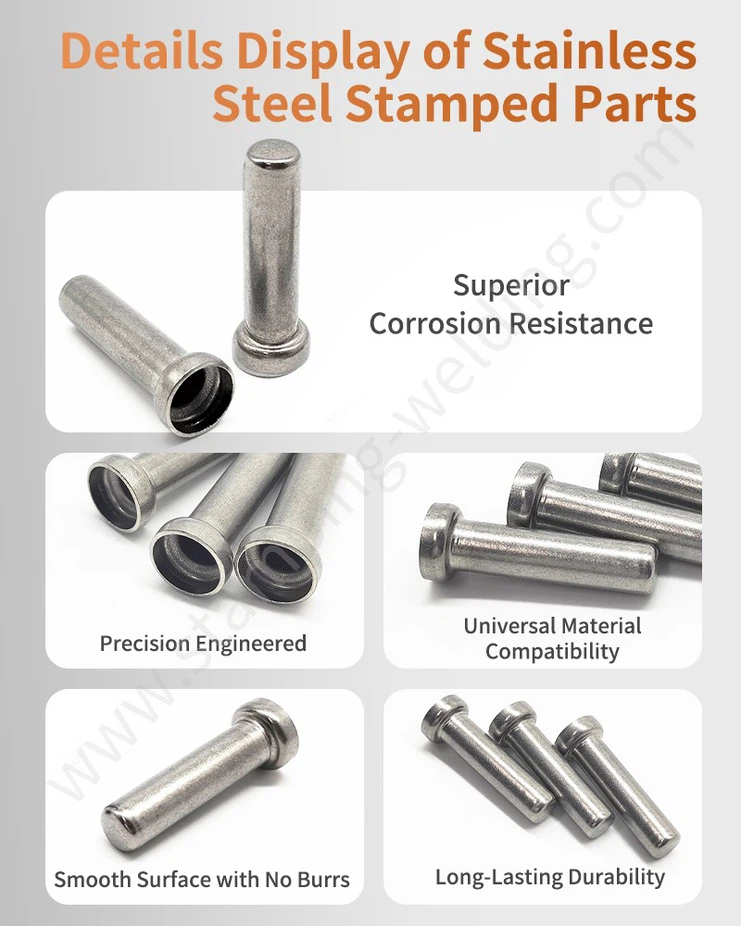
The stamping stage of 304 stainless steel punching is a high-risk area for defects, mainly including three typical problems: surface scratches, workpiece fracture, and springback deformation. Surface scratches are mainly caused by the continuous friction between the workpiece and the mold. The frictional heat generated by stamping and extrusion, as well as the accumulation of metal debris, will continue to scratch the surface of the sheet metal, damaging its appearance integrity and subsequent performance.
The cracking of workpieces is particularly prominent in Custom stainless steel stamping, which has a fast work hardening rate and is prone to brittle martensitic structure during plastic deformation. Combined with residual stress concentration, uneven plate material, and hindered material fluidity, the risk of cracking is greatly increased; At the same time, mold problems such as unreasonable clearance between molds, insufficient guiding accuracy, and uneven wear of punch heads can also accelerate part damage.
Rebound deformation is an inherent difficulty in Stainless metal stamping, as stainless steel has higher hardness and greater elastic recovery, and is prone to angular deviation and dimensional deviation after demolding. To address the above issues, stress can be dispersed by optimizing the annealing process of the sheet metal, improving material plasticity, and regulating stamping pressure reasonably; Calculate the rebound value in advance during the mold design phase, perform structural compensation and precision optimization, and reduce molding defects from the source.
Common hazards and control points of molds and auxiliary consumables
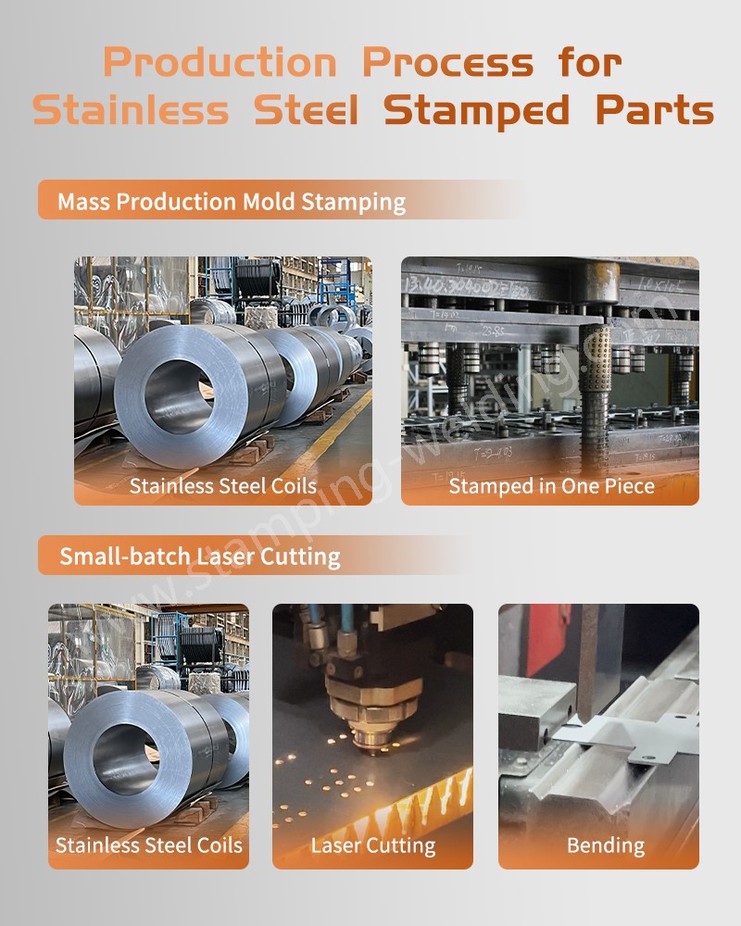
The status of the mold and the selection of auxiliary materials directly determine the efficiency of stamping production and the consistency of Stainless steel stamped parts. In progressive die production, mold blade passivation, feed size deviation, and unreasonable clearance between concave and convex molds can easily cause waste residue, feed lag, and interrupt the continuous production rhythm. Non specialized stamping lubricants are prone to oxidation, agglomeration, and abnormal viscosity, which can further exacerbate feeding failures and mold wear.
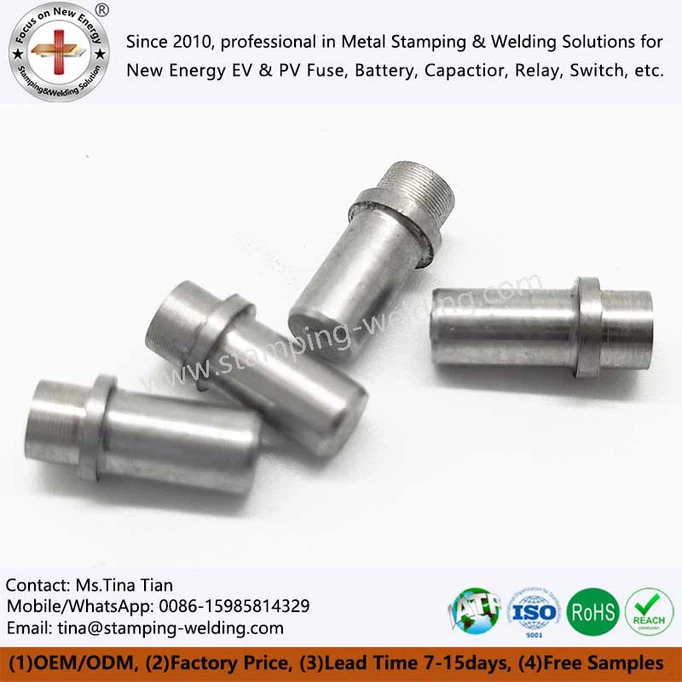
In addition, stainless steel material has a high hardness, and long-term stamping will continue to cause wear and tear on the cutting edge of the mold. If the selection of convex and concave mold materials is not matched, it is prone to problems such as cutting edge wear and cracking, which not only shortens the service life of the mold and increases the maintenance cost of OEM stainless steel stamping parts, but also causes batch size deviation and processing defects. In actual production, it is necessary to select high wear-resistant mold steel based on the hardness of stainless steel material, regularly inspect and polish the cutting edge, calibrate the mold gap, and use special anti rust and anti oxygen stamping oil to ensure stable operation of the mold.
Post processing and comprehensive quality control throughout the entire process
For high-strength Stainless steel zinc plating drawing stamping parts, the heat treatment process can easily cause secondary deformation problems. The difficulty of forming high hardness workpieces is high, and the processing method of forming first and then heat treatment is often adopted. However, high temperature heating and stress release can cause deformation of the parts, affecting the overall dimensional accuracy.
In this regard, it is necessary to predict the deformation law of heat treatment in the early stage of mold design, optimize the structural design of OEM stainless steel stamped, reserve deformation compensation, and weaken the dimensional deviation caused by temperature changes. At the level of overall production control, it is necessary to establish standardized management throughout the entire process, strictly screen qualified raw materials, match standardized stamping process parameters, and standardize key process operations such as lubrication, forming, and trimming.
From material selection, mold maintenance, process debugging to post-processing optimization, multi-dimensional collaborative control is implemented to comprehensively avoid stamping defects and continuously improve the processing stability and comprehensive quality of Stainless steel clip.
contact us
Thoroughly controlling the details of stamping processes and defect solutions is the core key to ensuring stable mass production of stainless steel components. If you have customized 304 stainless steel punching, process optimization, and production support needs, please feel free to consult at any time. We will provide you with professional stamping technology solutions and reliable processing support.