Liquid-cooled integrated energy storage cabinet: the temperature control core of high-density energy storage systems
May 29, 2026
product definition
The liquid-cooled integrated energy storage cabinet is a modular energy storage device that highly integrates the battery module and the liquid circulation temperature control system. Its core design concept is to efficiently transport and dissipate the heat generated during the battery charging and discharging process through an active liquid cooling circuit, thereby maintaining the long-term stable operation of the battery pack within the optimal operating temperature window. This type of equipment is usually composed of battery clusters, liquid cooling plates, circulation pumps, refrigeration units, plate heat exchangers and intelligent control units, forming a complete thermal management closed loop from heat source capture to heat dissipation. In terms of technical classification, an energy storage system cabinet is the collective name for this type of equipment.
According to different deployment scenarios, it can be subdivided into an outdoor cabinet energy storage system suitable for outdoor environments, an energy storage integrated cabinet that fully integrates batteries with temperature control and power conversion units, and an Integrated Energy Storage Cabinet that emphasizes integrated delivery capabilities. The significant difference between the liquid cooling solution and the traditional forced air cooling is that the coolant (usually a glycol aqueous solution or a special fluorinated liquid) can flow directly between the battery cells or through the cold plate close to the large surface of the battery. The heat exchange path is shorter and the thermal resistance is smaller, so it can support higher charge and discharge rates and more compact system integration.

Manufacturing process
The performance and reliability of liquid-cooled integrated energy storage cabinets largely depend on the selection of key materials and the level of manufacturing processes. In terms of structural materials, the cabinet shell is usually made of a galvanized steel plate or 304/316L stainless steel used in the Stainless Steel Outdoor Power Storage Enclosure Cabinet. The thickness is not less than 1.5mm, and it is electrostatic powder sprayed or passivated to meet the anti-corrosion and anti-UV aging requirements in the outdoor environment. The main body of the liquid cooling plate is mostly made of aluminum alloy (such as 6063 or 3003 series) extruded or stamped, and the internal flow channel needs to pass an air tightness test (the holding pressure is usually 0.8-1.2MPa, and the leakage rate is required to be less than 1×10⁻⁵ Pa·m³/s).
The coolant pipeline uses a combination of EPDM (ethylene propylene diene rubber) or PTFE (polytetrafluoroethylene) hose and aluminum alloy hard pipe, and the joints adopt a double ferrule or quick-plug leak-proof design. In the manufacturing process, the plate is first blanked through CNC punching and laser cutting, and then bent and welded (mainly argon arc welding) to form the cabinet frame; the thermal interface between the liquid cooling plate and the battery module needs to be filled with thermally conductive silicone pads of uniform thickness or on-site foamed thermal conductive glue to ensure that there are no air gaps; after the entire machine is assembled, a complete liquid line withstand voltage test, electrical insulation test and high and low temperature operation aging test must be carried out before it can be delivered from the factory.

The principle of details
The working process of the liquid-cooled integrated energy storage cabinet can be summarized as three links: "heat capture - medium transport - external loss". In the heat capture process, the Joule heat and chemical reaction heat generated by the battery module during the charge and discharge process are first transferred to the liquid cooling plate close to the battery core through a thermally conductive silicone pad or thermally conductive structural adhesive. Microchannels or serpentine flow channels are processed inside the liquid cooling plate. When the coolant flows through these flow channels driven by the circulation pump, heat is taken away from the wall surface of the liquid cooling plate through convection heat transfer. Subsequently, the coolant carrying heat is transported to the plate heat exchanger or air-cooled condenser integrated outside the cabinet or inside the cabinet, where the heat is released to the external environment. After the coolant temperature is reduced, it returns to the battery side again, forming a continuous cycle.
For equipment such as the Solar Wind Energy Storage Cabinet that needs to be operated in unattended conditions in the wild in conjunction with photovoltaic or wind power generation systems, the liquid cooling system usually needs to have the ability to adapt to a wide range of ambient temperatures - for example, it can prevent the coolant from freezing in a -30°C environment and still maintain rated heat dissipation power in a high temperature environment of 50°C. At the control logic level, the system collects data in real time through temperature sensors arranged at multiple locations in the battery module. The controller adjusts the speed of the inverter compressor, the opening of the electronic expansion valve, and the flow rate of the circulation pump according to a preset algorithm to achieve precise temperature control within ±1°C under typical operating conditions, thereby effectively suppressing problems such as local overheating and excessive temperature differences between batteries.

Application areas
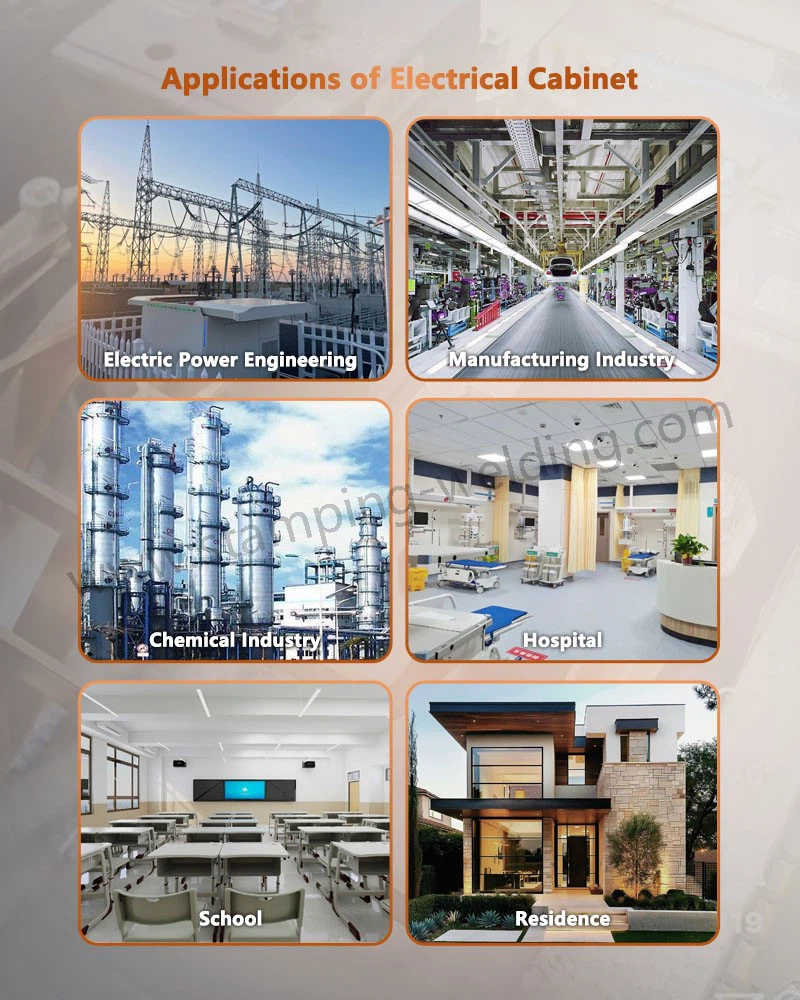
Liquid-cooled integrated energy storage cabinets have been widely used in many energy storage and power supply fields due to their high power density and environmental adaptability. On the grid side, large independent energy storage power stations use energy storage system cabinets deployed in arrays to participate in peak load regulation, black start and new energy consumption. The liquid cooling system ensures the temperature stability of the battery under frequent charging and discharging switching conditions. On the industrial and commercial user side, factories, data centers and commercial complexes use outdoor cabinet energy storage systems for peak and valley arbitrage and demand management. The liquid cooling solution allows cabinets to be safely placed in outdoor parking lots or on the side of buildings, eliminating the need to build a separate air-conditioned machine room.
In the field of renewable energy power generation, the Solar Wind Energy Storage Cabinet is deployed in photovoltaic power stations and wind farms to smooth output fluctuations and reduce wind and solar waste. Since wind farms are usually located in remote plateaus or offshore areas with harsh climates, the airtightness and wide-temperature working capabilities of the liquid cooling system are particularly important. In addition, in microgrid and off-grid power supply scenarios, Integrated Energy Storage Cabinet or All-in-One PV Power Storage System Cabinet integrates photovoltaic inverters, energy storage converters, battery systems and liquid-cooled temperature control units into the same cabinet, achieving "plug and play" rapid deployment and is suitable for areas such as islands, mines and villages without electricity.
contact us
We are committed to providing customers with full-scenario, high-reliability liquid cooled energy storage cabinet and system integration solutions. At the same time, we also pay attention to cutting-edge integrated energy storage technology and can provide modular energy storage solutions that benchmark international advanced levels. Welcome to contact us to obtain exclusive customized energy storage system solutions.