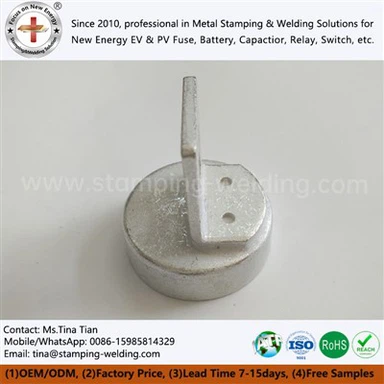
Why Do Solar Photovoltaic Devices Need Brass Inner Caps for Fuses?
Jul 17, 2024
Solar photovoltaic devices are increasingly used in modern society. In order to ensure the safe and efficient operation of these devices, brass inner caps for fuses play a key role. This article will explore in depth why solar photovoltaic devices need brass inner caps for fuses, and elaborate on them from multiple aspects such as material properties, protection mechanisms, manufacturing processes, and practical applications.
Advantages of material properties
1. Excellent conductivity of brass
Brass is an alloy of copper and zinc with excellent conductivity. For brass inner caps for fuses, good conductivity is one of the most important properties. In solar photovoltaic systems, current needs to be transmitted efficiently, and any resistance will lead to energy loss and potential overheating problems. The high conductivity of the brass inner cap ensures that the current is minimally lost when passing through the fuse, thereby improving the overall efficiency of the system.
2. Excellent mechanical strength
Brass has high mechanical strength and toughness, and can maintain a stable structure under various mechanical stresses. This makes the brass inner cap less likely to deform or damage during installation and use, ensuring its long-term reliability in the photovoltaic system.
3. Corrosion resistance
Solar photovoltaic equipment is often exposed to outdoor environments and faces challenges from various climatic conditions. Brass materials naturally have good corrosion resistance and can resist erosion by moisture, oxidation and other chemicals. This corrosion resistance enables the brass inner cap to maintain good performance and appearance for a long time under harsh environmental conditions.
Protection mechanism of the brass inner cap of the fuse
1. Overload protection
In solar photovoltaic systems, overload of current may cause serious damage to the equipment. The brass inner cap of the fuse (brass fuse cap) can respond quickly in overload conditions, cut off the current, and protect other parts of the system from the impact of overload current. This protection mechanism ensures the safety of the entire photovoltaic system.
2. Short circuit protection
Short circuit is a serious fault in an electrical system that may cause fire or equipment damage. The brass inner cap of the fuse can also quickly disconnect the circuit in the case of a short circuit to prevent the further spread of the short circuit current. Through this rapid response mechanism, the brass inner cap provides an effective safety barrier for the photovoltaic system.
3. Thermal protection
Solar photovoltaic equipment generates heat during operation. If the heat is too high, it may cause the equipment to fail. When the temperature of the fuse brass inner cap is detected to be abnormally high, it can be fused in time to cut off the current and prevent the equipment from overheating and damage. This thermal protection mechanism further improves the reliability and safety of the photovoltaic system.
Exquisite manufacturing process
1. Precision stamping
Precision stamping is a key step in the manufacturing process of the brass inner cap of the fuse. Through high-precision stamping equipment, the brass sheet is stamped into the preliminary shape of the inner cap. This high-precision manufacturing process can ensure that the size and shape of each inner cap meet the design requirements, thereby ensuring its reliability and stability during use.
2. Efficient welding technology
Welding is one of the important links in the manufacture of the brass inner cap of the fuse. Through efficient welding techniques such as spot welding and laser welding, it can ensure that the various parts of the inner cap are tightly connected, improving its mechanical strength and electrical performance. These advanced welding processes not only improve the quality of the inner cap, but also improve production efficiency.
3. Strict quality inspection
In order to ensure that each brass inner cap of the fuse meets high quality standards, strict quality inspection is implemented during the manufacturing process. From the selection of raw materials to the delivery of finished products, each link is strictly inspected and controlled to ensure that the product meets the expected standards in size, performance and appearance. This strict quality control system is an important guarantee for the high quality of products.
Advantages in practical applications
1. Reliability and stability
Due to the high conductivity, mechanical strength and corrosion resistance of the brass fuse cap, its application in solar photovoltaic systems is very reliable and stable. Whether in high temperature, low temperature or humid environment, the brass inner cap can maintain its excellent performance and ensure the continuous and efficient operation of the photovoltaic system.
2. Cost-effectiveness
The brass inner cap not only has significant advantages in performance, but also has a relatively low manufacturing cost and good cost-effectiveness. Compared with other high-performance materials, the price of brass is relatively reasonable and the production process is relatively mature. This allows the brass inner cap for fuses to effectively control costs while ensuring high performance, providing an economical solution for photovoltaic systems.
3. Wide range of applications
Due to its excellent performance, the brass inner cap for fuses is widely used in various types of solar photovoltaic systems. Whether it is a home solar power generation system or a large commercial photovoltaic power station, the brass inner cap can adapt to different application requirements and provide reliable electrical protection.
4. Environmental protection and sustainability
Brass is a renewable resource, and its production and recycling process has little impact on the environment. The use of brass inner caps can not only improve the performance and safety of photovoltaic systems, but also reduce the impact on the environment, which meets the requirements of modern society for environmental protection and sustainable development.
Through the above detailed analysis of material properties, protection mechanisms, manufacturing processes and practical applications, we can clearly see that the brass inner cap for fuses plays a vital role in solar photovoltaic equipment. Its excellent conductivity, mechanical strength and corrosion resistance enable the brass inner cap to provide reliable electrical protection for photovoltaic systems and ensure the safety and stability of the system. At the same time, advanced manufacturing processes and strict quality control systems further guarantee the high quality and consistency of the products. Whether from the perspective of performance, cost or environmental protection, the brass inner cap of the fuse is an indispensable and important component in solar photovoltaic equipment.
In the future, with the continuous development of the solar photovoltaic industry and the continuous advancement of technology, the application of the brass inner cap of the fuse will be more extensive and in-depth. We have reason to believe that through continuous innovation and optimization, the brass inner cap of the fuse will continue to provide efficient, safe and reliable electrical protection for solar photovoltaic systems and contribute to the development of renewable energy. If you are interested in our brass inner cap for solar photovoltaic fuses, you can click the link below to learn more:
https://www.stamping-welding.com/fuse-cap/inner-cap/brass-inner-cap-for-in-line-pv-fuse.html

Through the above introduction, you have a deeper understanding of brass inner cap for in-line PV fuse. As a high-quality manufacturer of brass inner caps for solar photovoltaic fuses, we will continue to be committed to technological innovation and product quality improvement to provide customers with the best products and services. Looking forward to working with you!