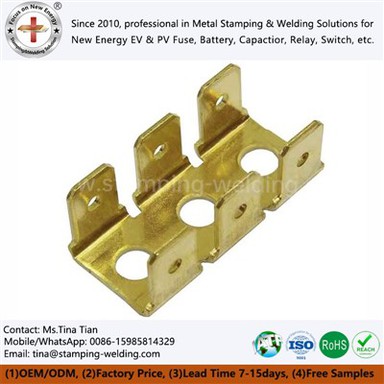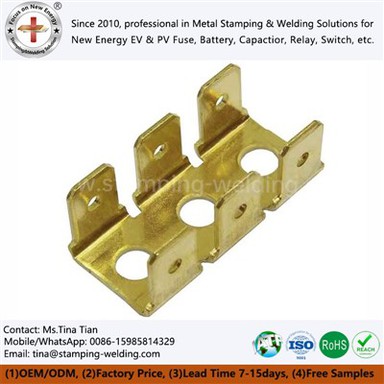


Brass Stamped Components For Industrial Manufacturing
Brass-stamped components for industrial manufacturing are precision-engineered elements crafted from high-quality brass materials, known for their durability, corrosion resistance, and electrical conductivity across diverse applications in sectors like automotive, electronics, and construction.
- Fast Delievery
- Quality Assurance
- 24/7 Customer Service
Product Introduction
PRODUCT INTRODUCTION
Brass-stamped components for industrial manufacturing are precision-engineered elements crafted from high-quality brass materials, known for their durability, corrosion resistance, and electrical conductivity across diverse applications in sectors like automotive, electronics, and construction.

MATERIAL
--
- Corrosion Resistance: Brass is highly resistant to corrosion, making it suitable for applications exposed to moisture and environmental elements. It doesn't rust, which enhances its longevity.
- Durability: Brass is a robust and durable material that can withstand wear and tear, ensuring that products made from brass have a long lifespan.
- Electrical Conductivity: Brass exhibits excellent electrical conductivity, making it an ideal choice for electrical connectors, terminals, and components.
- Machinability: Brass is relatively easy to machine, allowing for precise and intricate component manufacturing with minimal tool wear.
- Aesthetic Appeal: Brass has an attractive golden appearance that is often used in decorative elements, enhancing the visual appeal of products and structures.
- Low Friction: Brass has low friction properties, making it suitable for applications like bearings and valve components where reduced friction is essential.
- Recyclability: Brass is highly recyclable, contributing to sustainable manufacturing practices and reducing environmental impact.
- Heat Resistance: Brass has good heat resistance, making it suitable for applications exposed to high temperatures, such as plumbing and HVAC systems.
- Biocompatibility: Brass can be used in medical and food-grade applications due to its biocompatibility and resistance to bacterial growth.
- Versatility: Brass is a versatile material used in various industries, including construction, electronics, automotive, plumbing, and more, due to its unique combination of properties.

FUNCTIONS
--
Brass Stamped Components for Industrial Manufacturing serve a diverse range of functions, making them indispensable in various industries due to their unique combination of properties and versatility.
| Functionality | Description |
|---|---|
| 1. Electrical Conductivity | Facilitates efficient electrical connectivity in various applications, including connectors and terminals. |
| 2. Structural Support | Provides stability and reinforcement in assemblies and structures, enhancing overall durability. |
| 3. Fastening Solutions | Serves as reliable fasteners, securing components and structures in place with strength and precision. |
| 4. Decorative Elements | Adds aesthetic appeal to products and structures, enhancing their visual appeal in architectural design. |
| 5. Corrosion Resistance | Withstands harsh environmental conditions, maintaining integrity and longevity in challenging settings. |
| 6. Heat Dissipation | Assists in dissipating heat, particularly in electrical and electronic components, to prevent overheating. |
| 7. Mechanical Functionality | Contributes to mechanical operations in systems, such as hinges, latches, and moving parts. |
| 8. Sealing and Gasket Functions | Used as sealing elements and gaskets to prevent leakage and maintain containment in various applications. |
| 9. Electrical Contacts | Forms critical electrical contacts in switches, relays, and other devices, ensuring reliable performance. |
| 10. Wear Resistance | Offers resistance to wear and tear in applications subjected to repeated friction and stress. |

APPLICATIONS
--
| Application Area | Description |
|---|---|
| 1. Electronics and Electrical | Found in electrical connectors, terminals, switches, and circuit components due to their excellent electrical conductivity. |
| 2. Automotive | Used in various automotive parts, including electrical connectors, fasteners, engine components, and decorative elements. |
| 3. Construction | Utilized in architectural and structural applications, including decorative panels, hinges, brackets, and fasteners. |
| 4. Aerospace | Applied in aircraft and spacecraft components, harness connectors, and structural supports for their lightweight durability. |
| 5. Consumer Goods | Found in appliances, home decor, and consumer products as decorative elements, fasteners, and functional components. |
| 6. HVAC and Plumbing | Used in heating, ventilation, air conditioning (HVAC) systems, and plumbing as connectors, fittings, and fasteners. |
| 7. Machinery and Equipment | Found in various industrial machinery and equipment, including fasteners, mechanical components, and electrical connectors. |
| 8. Energy and Power Generation | Utilized in electrical power distribution and generation systems, serving as electrical contacts and connectors. |
| 9. Medical Devices | Applied in medical equipment and devices for their corrosion resistance and suitability in sterile environments. |
| 10. Marine and Maritime | Used in marine applications due to their corrosion resistance, including fasteners, fittings, and decorative elements. |

PROCESSING TECHNOLOGY
--
| Machining Process | Description |
|---|---|
| 1. Cutting and Trimming | Trim excess material and create precise edges using cutting tools, ensuring components meet specifications. |
| 2. Bending and Forming | Utilize press brakes and forming dies to shape components into desired configurations, such as angles or curves. |
| 3. Piercing and Punching | Create holes, perforations, or slots in stamped components using specialized piercing and punching machinery. |
| 4. Coining | Improve surface finish and dimensional accuracy by compressing the metal using coining dies and presses. |
| 5. Deburring | Remove any sharp edges, burrs, or excess material left from the stamping process to ensure safety and aesthetics. |
| 6. Threading | Add threaded features to components using threading machines, allowing for easy attachment of fasteners. |
| 7. Riveting | Join components together through riveting, creating strong and reliable connections for various applications. |
| 8. Surface Treatment | Apply surface treatments like plating, polishing, or coating to enhance appearance and provide corrosion resistance. |
| 9. Inspection and Testing | Conduct quality checks and functional tests to verify that components meet design specifications and industry standards. |

PRODUCT INSPECTION
--
| Inspection Stage | Description |
|---|---|
| 1. Dimensional Checks | Verify that the stamped components meet precise dimensional specifications and tolerances for proper fit and function. |
| 2. Material Integrity | Inspect for material defects, cracks, or inconsistencies that could compromise component strength and durability. |
| 3. Surface Finish | Check surface treatments (plating, coating, etc.) for uniformity, adherence, and appearance quality. |
| 4. Deburring Inspection | Ensure that deburring processes have effectively removed sharp edges, burrs, or excess material from the components. |
| 5. Visual Inspection | Visually assess components for any visual imperfections, irregularities, or surface defects that may affect aesthetics or functionality. |
| 6. Functional Testing | Conduct functional tests to verify that the components perform their intended functions as part of industrial equipment or systems. |
| 7. Corrosion Resistance | Evaluate components for resistance to corrosion, particularly if they will be exposed to harsh environmental conditions. |
| 8. Heat Treatment Assessment | If applicable, assess the effectiveness of heat treatments or annealing processes used to enhance component properties. |
| 9. Plating Adhesion Testing | Check the adhesion of plated surface treatments to ensure they remain intact under stress or environmental exposure. |
| 10. Final Quality Inspection | Perform a comprehensive final inspection to ensure all aspects meet design specs and industry quality standards. |
RELEVANT PRODUCTS
--
| Related Products | Description |
|---|---|
| 1. Brass Fasteners | Essential for joining components and structures, brass fasteners include screws, bolts, nuts, and washers. |
| 2. Electrical Connectors | Precision-engineered connectors for electrical and electronic systems, ensuring reliable conductivity. |
| 3. Decorative Brass Fixtures | Aesthetic elements are used in architectural and interior design, such as handles, knobs, and decorative panels. |
| 4. Stamped Brass Fittings | Fittings and connectors are used in plumbing, HVAC systems, and pipelines for their corrosion resistance. |
| 5. Brass Hardware Accessories | A wide range of hardware accessories, including hinges, locks, latches, and brackets, for various applications. |
| 6. Brass Terminals and Contacts | Components for electrical systems, including terminals, sockets, and contacts used in connectors and switches. |
| 7. Brass Valves and Manifolds | Components for controlling fluid flow, including valves, manifolds, and fittings used in plumbing and fluid systems. |
| 8. Stamped Brass Plates | Plates and tags for labeling, identification, and branding purposes in industrial and decorative applications. |
| 9. Automotive Brass Components | Specialized components for the automotive industry, including connectors, fasteners, and engine parts. |
| 10. Brass Electronic Hardware | Precision hardware components for electronics, such as standoffs, spacers, and inserts, ensure stability and reliability. |
OUR ADVANTAGES
--
Our company is focused on top quality Copper End Cap, Fuse Terminal Contacts, (ELECTRICAL VEHICLE) EV Film Capacitor BusBar, (SOLAR POWER) PV Inverter BusBar, Laminated BusBar, Aluminum Cases for new energy batteries, Copper/Brass/Aluminum/Stainless Steel Stamping Parts, and other electrical products Metal Stamping and Welding Assembly for over 18 years in China. We started as a small operation, but now have become one of the leading suppliers in the EV and PV industry in China.
Please refer to the bottom of the article for specific contact information.
- We have more than 18 years of metal stamping experience and 7 years of various welding technology experience. We have established business relationships with China's top 10 Fuse manufacturers, such as CHINA Bussmann, Sinofuse, Chnbel, etc.
- Completely imported top MIYACHI welding equipment, such as laser welding, resistance welding, brazing, micro-arc welding,sub-arc welding, TIG welding, and other welding processes; provide customers with different welding services and process validation.
- Cooperated with many fuse manufacturers for many years, experienced in providing not only qualified products but also product solutions and technical process experience for customers.
CONTACT US
Starting from 2010, our expertise has been focused on delivering specialized solutions in stamping and welding for a range of applications, including electric vehicle busbars and laminated busbars, contacts and caps for electric vehicles and photovoltaic systems, aluminum shells for power batteries, as well as steel and aluminum cans for power capacitors.

Brass Stamped Components For Industrial Manufacturing are widely used in industrial production. They are made by stamping techniques and include Relay Pin Brass Terminal and Electrical Connector Socket Brass Stamping. Used in electrical fields, these components play an important role.
Hot Tags: brass stamped components for industrial manufacturing, China, manufacturers, suppliers, factory