



Zinc-Coated Metal Stamped Components
Zinc-Coated Metal Stamped Components are metal parts that have undergone a process of galvanization, where a protective layer of zinc is applied to their surface. This zinc coating enhances their resistance to corrosion and provides durability, making them suitable for various industrial applications.
- Fast Delievery
- Quality Assurance
- 24/7 Customer Service
Product Introduction
Stamping
Material Selection: Stamping primarily employs metal sheets or strips as raw materials, and the choice of material depends on factors like the part's function, required strength, and corrosion resistance. Common materials include steel, aluminum, brass, and stainless steel.
Tool and Die Design: Custom-designed dies, often referred to as tooling, are crucial for shaping the metal. The dies are precision-engineered to match the desired shape of the final component. This tooling includes a punch (upper part) and a die (lower part), which work together to deform the metal.
Blanking: The process begins with blanking, where a flat piece of metal is cut from a larger sheet or coil. This blank serves as the starting material for stamping.
Forming: The blank is then placed between the punch and die, and the stamping press exerts force on the metal, forcing it to conform to the die's shape. This can involve bending, stretching, or drawing the metal to achieve the desired shape.
Bending: Bending operations create bends or angles in the metal to produce various geometric shapes. Precision bending is crucial for components like brackets or enclosures.
Embossing: Embossing adds raised or recessed features to the metal, such as logos or part numbers, for branding or identification purposes.
Coining: Coining is a precision stamping operation used to improve the surface finish, flatness, and dimensional accuracy of the part. It often involves high forces and tight tolerances.
Progressive Stamping: In cases where multiple operations are needed to create a complex part, progressive stamping is employed. This process uses a series of sequential dies to gradually form the part in stages.
Quality Control: Throughout the stamping process, quality control measures are implemented to ensure the final components meet design specifications. Inspections, measurements, and testing are conducted to maintain high-quality standards.
Scrap Management: Stamping generates scrap material, which must be efficiently managed and recycled to minimize waste and reduce costs.
Surface Finishing: After stamping, components may undergo additional processes like plating, coating, or polishing to improve their appearance and corrosion resistance.
Volume Production: Stamping is particularly well-suited for high-volume production, allowing for the rapid production of large quantities of identical parts with consistent quality.
Versatility: Stamping can produce a wide range of components, from simple flat washers to intricate automotive parts, making it a versatile manufacturing method.
Cost-Efficiency: Stamping is often cost-effective for high-volume production due to its speed and minimal material waste.
Industry Applications: Stamping is used across various industries, including automotive, electronics, aerospace, construction, and consumer goods, to create components for a multitude of applications.
Stamping is a versatile and efficient manufacturing process that plays a crucial role in producing precision metal components for countless products and industries.

Features
- Corrosion Resistance: Zinc coating provides excellent protection against corrosion, making stamped components suitable for outdoor and harsh environments.
- Durable: Stamped components are known for their durability, with the zinc coating enhancing their resistance to wear and tear.
- High Strength: Metal stamped components maintain their structural integrity and strength even under heavy loads, making them ideal for demanding applications.
- Precision: Stamping allows for precise shaping and forming of metal, ensuring tight tolerances and accurate dimensions in the final components.
- Complex Geometries: Stamping can create complex shapes and features in components, making it versatile for various design requirements.
- Cost-Effective: The stamping process is efficient for high-volume production, reducing per-unit costs and making it cost-effective.
- Rapid Production: Stamped components can be produced quickly and in large quantities, meeting tight production schedules.
- Versatile Materials: Zinc-coated metal stamped components can be made from various materials, including steel, stainless steel, and aluminum, to suit different applications.
- Surface Finish: The zinc coating can be further enhanced with various surface finishes, such as powder coating or plating, to improve aesthetics and performance.
- Lightweight: Despite their strength, stamped components tend to be lightweight, which can be advantageous in applications where weight is a concern.
- Customization: Stamped components can be customized to meet specific design requirements, including size, shape, and functionality.
- Low Material Waste: The stamping process minimizes material waste, contributing to cost efficiency and sustainability.
- Consistency: Stamping ensures consistent quality and dimensional accuracy in every produced component.
- Environmental Benefits: Zinc coating is an environmentally friendly option, as it is recyclable and minimizes the need for maintenance and replacement due to corrosion.
- Wide Range of Applications: Zinc-coated metal stamped components find use in various industries, including automotive, construction, electronics, aerospace, and more.
- These features make zinc-coated metal stamped components a reliable and versatile choice for numerous applications, combining durability, precision, and cost-effectiveness to meet diverse manufacturing needs
product field
- Automotive: Zinc-coated stamped components are extensively employed in the automotive industry for manufacturing various parts, including chassis components, brackets, fasteners, and electrical connectors. They provide durability, corrosion resistance, and precision in automotive assemblies.
- Construction: In construction, stamped components are used for structural elements, connectors, and fasteners, where their strength, reliability, and corrosion resistance are essential for building stability and longevity.
- Electronics: Precision-stamped parts are crucial in the electronics industry, particularly in circuit board assembly, connector manufacturing, and the production of electronic enclosures. Their ability to maintain tight tolerances is vital for electronic device performance.
- Aerospace: The aerospace sector relies on zinc-coated stamped components for aircraft assemblies, structural components, and critical fasteners. These components meet strict quality and performance standards while offering weight savings.
- Telecommunications: Stamped components are used in telecommunications equipment, such as connectors, housings, and brackets, where they ensure electrical conductivity, durability, and protection from environmental factors.
- Industrial Machinery: Manufacturing machinery, conveyors, and equipment often incorporate stamped components due to their strength, precision, and cost-effectiveness in high-stress environments.
- Renewable Energy: Stamped components are integral to renewable energy systems like solar panels and wind turbines, where they play roles in frame construction, electrical connections, and support structures.
- Medical Devices: The medical industry utilizes stamped components in devices and equipment, including surgical instruments, diagnostic tools, and patient monitoring systems. Their precision and biocompatibility are critical in medical applications.
- Consumer Goods: Everyday consumer products like appliances, furniture, and hardware contain stamped components, contributing to their structural integrity and functionality.
- Power and Energy: Power generation and distribution equipment, such as transformers, circuit breakers, and power converters, incorporate stamped components for electrical connections and structural support.
- Defense and Military: The defense sector employs stamped components in the manufacturing of military vehicles, weapons systems, and communication devices due to their durability and reliability in demanding conditions.
- Food and Beverage: In the food industry, stamped components are used in equipment manufacturing, such as conveyor systems and food processing machinery.
- Transportation: Stamped components are essential in the transportation sector for applications ranging from rail systems to marine vessels, offering strength and corrosion resistance.
- Environmental Technologies: Components used in environmental technologies like wastewater treatment systems and air pollution control equipment benefit from the durability of zinc-coated stamped parts.
- Oil and Gas: The oil and gas industry relies on stamped components in drilling equipment, pipelines, and offshore structures, where they withstand harsh environmental conditions.
- The broad range of fields where zinc-coated metal stamped components are utilized underscores their adaptability and importance in modern manufacturing across various sectors.

surface treatment
Zinc Coating: The primary surface treatment for zinc-coated metal stamped components is, of course, the zinc coating itself. This coating provides a layer of protection against corrosion, making the components suitable for various environments, including outdoor and industrial settings. It also imparts a visually appealing, shiny finish to the components.
Plating: In addition to the zinc coating, other plating processes may be employed to further enhance the surface characteristics. For instance, components may undergo nickel plating or chrome plating, which adds extra layers of protection against corrosion and wear. Nickel plating, in particular, can provide a smooth, shiny surface that offers aesthetic benefits.
Passivation: Passivation is a process that removes free iron from the surface of the metal. It is commonly used with stainless steel components but can also be applied to zinc-coated parts. Passivation enhances the component's resistance to corrosion and oxidation, increasing its lifespan.
Painting and Powder Coating: Some stamped components may require additional protection or color customization. In such cases, painting or powder coating is applied to the surface. This not only adds a layer of protection but also allows for various color options, making the components suitable for a wide range of applications.
Anodizing: While typically associated with aluminum, anodizing can also be used for zinc-coated components. This process creates a durable, corrosion-resistant, and electrically-insulating oxide layer on the surface, making it ideal for electrical connectors and components used in harsh environments.
Lubrication: In applications where stamped components need to move or slide against each other, lubrication may be applied to reduce friction and wear. This is especially important in automotive and machinery applications.
Chemical Treatments: Some specialized surface treatments involve chemical processes that modify the surface properties of the components. For instance, chemical etching can be used to create specific surface textures or patterns for improved grip or aesthetics.
Conversion Coatings: Conversion coatings like phosphate or chromate coatings may be applied to promote paint adhesion or enhance corrosion resistance, particularly in military or aerospace applications.
Surface treatment is a critical aspect of ensuring that zinc-coated metal stamped components meet the performance and quality requirements of various industries. The choice of surface treatment depends on the specific application, environmental conditions, and desired appearance and functionality of the components.
production workshop

Partners
We cooperate with many large enterprises, including some world-renowned automobile manufacturers, such as Mercedes-Benz, Tesla, Audi, Honda, etc. The selection of these partners fully reflects our reputation and professional knowledge in the industry.

contact us
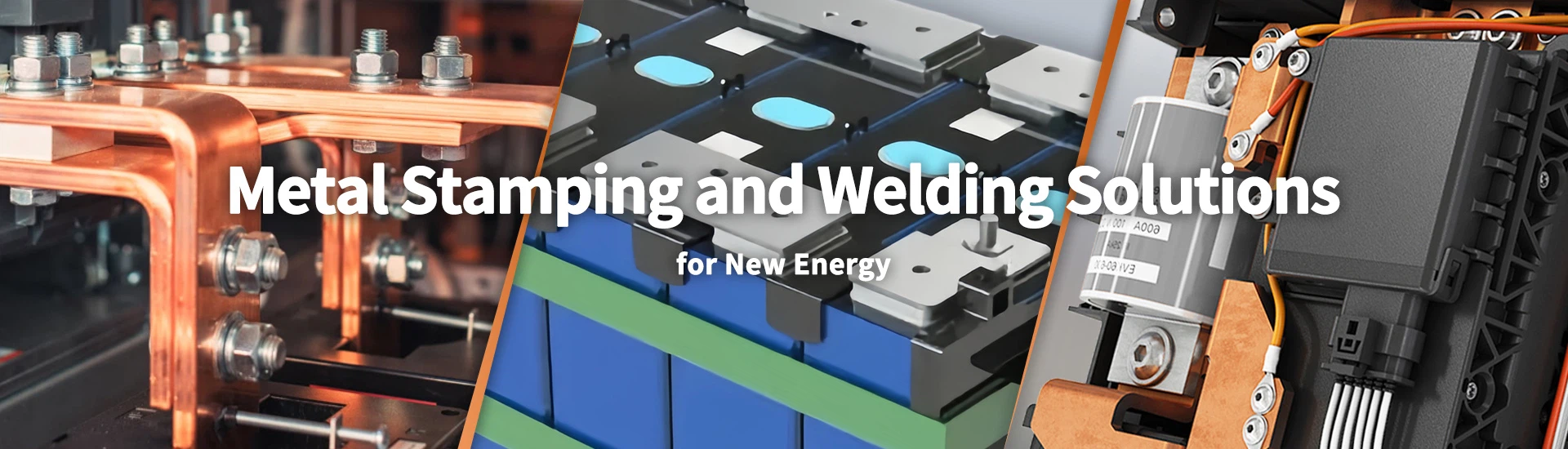
Starting from 2010, our expertise has been focused on delivering specialized solutions in stamping and welding for a range of applications, including electric vehicle busbars and laminated busbars, contacts and caps for electric vehicles and photovoltaic systems, aluminum shells for power batteries, as well as steel and aluminum cans for power capacitors.

Hot Tags: zinc-coated metal stamped components, China, manufacturers, suppliers, factory


