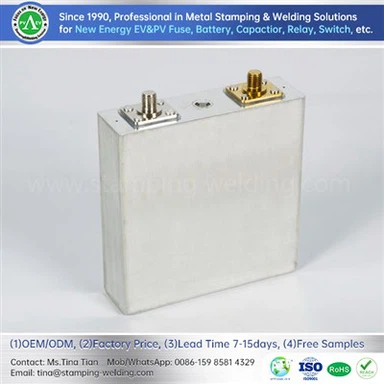


Electric Vehicle Lithium Battery Pack Casing
This electric vehicle lithium battery pack casing is specifically engineered for electric vehicles and energy storage systems. It utilizes high-strength aluminum alloy profiles and precision Friction Stir Welding (FSW) technology, seamlessly combining a lightweight design with robust, secure protection. The casing offers exceptional structural crashworthiness and efficient thermal management capabilities; fully supporting OEM/ODM customization, it provides safe and reliable battery integration solutions for global customers.
- Fast Delievery
- Quality Assurance
- 24/7 Customer Service
Product Introduction

What is an electric vehicle lithium battery pack casing?
As a critical component of the vehicle chassis and structural framework, the electric vehicle lithium battery pack casing must withstand extreme mechanical impacts, random road vibrations, harsh environmental exposure, and the pressure associated with high-voltage thermal runaway throughout its entire lifecycle. Our casings are constructed using high-strength extruded aluminum alloy profiles, high-pressure die-cast aluminum, and aerospace-grade aluminum sheet, utilizing advanced friction stir welding, automated robotic CMT welding, and modular sheet metal forming technologies.
Material Advantages of Customized Prismatic Battery Cell Casings
Superior Plastic Deformation and Crash Energy Absorption
Exhibits excellent cold-forming plasticity, preventing brittle fracture of the casing and ensuring zero intrusion into the safety zone of the internal battery cells.
Inherently Superior Thermal Conductivity and Heat Uniformity
In a LiFePO4 soft pack cell, high thermal conductivity facilitates the rapid dissipation and equalization of heat from localized sources, thereby reducing the risk of thermal propagation.
Outstanding Electromagnetic Shielding and Grounding Performance
Battery aluminum housing possesses excellent electrical conductivity, enabling the formation of a continuous, low-impedance metal Faraday cage.
High Corrosion Resistance and Electrochemical Stability
Aluminum casings easily pass the ASTM B117 Neutral Salt Spray (NSS) test for over 1,000 hours, ensuring full-lifecycle durability against de-icing agents, stone chip abrasion, and high-humidity, high-salinity environments.

Production Process for EV Battery Enclosures
Material Preparation and Profile/Sheet Cutting
1
>>
Structural Welding and Water-Cooling Channel Integration
2
>>
3D Correction and Large-Scale Gantry CNC Machining
3
>>
Surface Cleaning and Anti-Corrosion Coating
4
>>
Airtightness Testing and Full-Scale Metrology
5
>>
Seal and Accessory Installation and Packaging
6

Application Areas for Power Battery Casings
Battery Electric Passenger Vehicles and Light Commercial Vehicles
The prismatic cell case prioritizes extreme lightweighting and a low profile to support integrated chassis solutions (CTC/CTB).
01
Electric Heavy-Duty Trucks and Construction Machinery
The LiFePO4 battery pack emphasizes ultra-high load-bearing capacity, resistance to intense vibration, and reinforced underbody protection against heavy impacts.
02
Electric Marine Vessels and Rail Transit
Focuses heavily on material durability in highly corrosive marine environments (salt spray) and compliance with stringent fire, smoke, and toxicity standards.
03
Industrial, Commercial, and Outdoor Mobile Energy Storage
Balances long service life, high standardization, and modular scalability with all-weather outdoor weather resistance.
04

Frequently Asked Questions About Prismatic Cell Aluminum Battery Case
Can your company provide customized DFM and structural design based on our cell layout and chassis space?
Absolutely. We have a dedicated structural engineering team for automotive-grade battery packs. You simply need to provide the cell specifications (e.g., 280Ah LFP or NMC cells), target pack dimensions, energy density, and chassis mounting points. We can then submit a DFM report covering material selection, FSW (Friction Stir Welding) seam layout, and preliminary FEA stiffness simulations.
What significant advantages does Friction Stir Welding (FSW) offer over traditional welding methods for battery enclosure manufacturing?
FSW is a solid-state joining process in which the aluminum alloy does not melt. Consequently, it avoids defects common to traditional fusion welding-such as porosity, cracking, and high residual stress-and results in thermal deformation that is only 10%–20% of that seen in traditional arc welding. Furthermore, FSW produces highly dense welds that meet stringent airtightness requirements, making it the optimal process for joining water-cooling baseplates to long frame structures.
Is it necessary to invest in expensive tooling for the R&D phase involving small batches (1–5 sets) of prototypes?
No, it is not. During the prototype development stage (A-sample/B-sample), we manufacture samples using large-scale 5-axis CNC machining, high-precision welding, and simple forming/bending tools. This eliminates the need for costly production-grade extrusion or casting molds, thereby significantly reducing your upfront R&D CAPEX and shortening delivery times.
What are the integration solutions for water-cooling plates in battery enclosures, and how is the risk of leakage managed?
We offer two mainstream integration solutions: first, bonding a blow-molded or extruded aluminum water-cooling plate to the enclosure baseplate using thermally conductive adhesive; and second, using Friction Stir Welding (FSW) to weld the coolant channel cover plate directly to the enclosure baseplate as a single, integrated unit. To eliminate leakage risks, all water-cooling channels undergo a 1.2 MPa hydrostatic pressure hold test and periodic sampling for 100,000 thermal pulse cycles prior to shipment, ensuring zero leakage throughout the product's lifecycle.

Contact us
Leveraging our proprietary automotive-grade aluminum alloy structural welding process and rigorous control systems for 3D dimensional accuracy and airtightness, we specialize in supplying electric vehicle lithium battery pack casings that combine high safety margins with lightweight advantages-safeguarding your power battery systems with robust engineering expertise.

Hot Tags: Electric Vehicle Lithium Battery Pack Casing, Aluminum Battery Case, EV Battery Case Manufacturer, Lithium Battery Case Manufacturer, Custom EV Battery Case, OEM Battery Casing, Aluminum Battery Casing, Electric Vehicle Battery Housing, EV Battery Enclosure, Energy Storage Battery Case, Commercial EV Battery Case, Battery Case Stamping, Aluminum Battery Case Manufacturing