




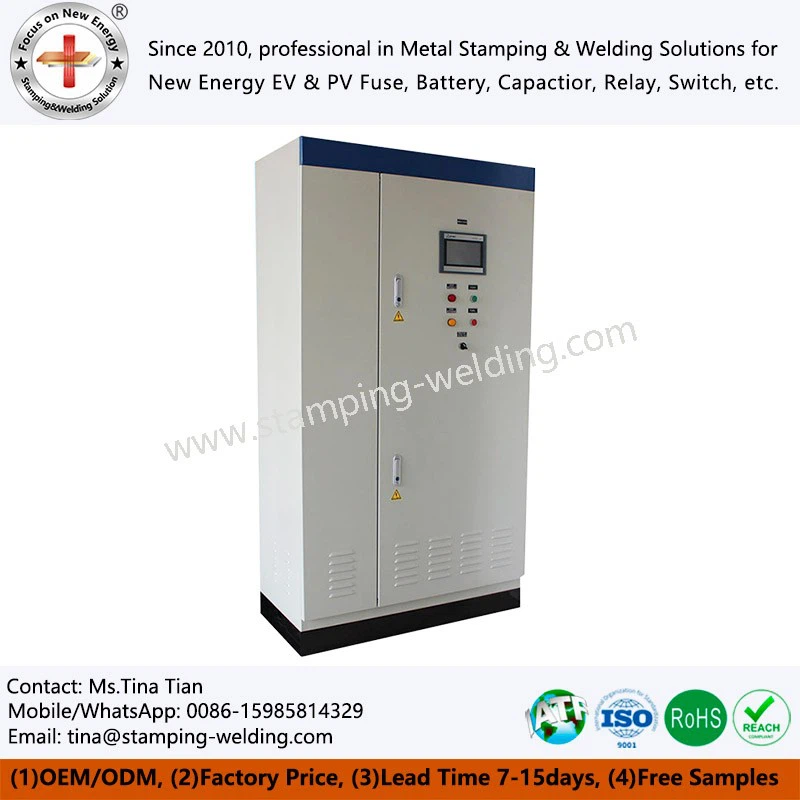

Control Panel Enclosure
Control Panel Enclosure provides a structured and reliable foundation for assembling, integrating, and maintaining control systems across industrial projects. By offering consistent mounting references, predictable interface positioning, and alignment with engineering documentation, it supports accurate fabrication and coordinated installation. This enclosure helps project teams improve build quality, streamline inspections, and maintain long-term system clarity throughout the operational lifecycle.
- Fast Delievery
- Quality Assurance
- 24/7 Customer Service
Product Introduction

A Control Panel Enclosure serves as the physical foundation that organizes, defines, and stabilizes complex control systems across industrial and commercial environments. Rather than acting as a passive container, this enclosure functions as a structured interface between control hardware, operational logic, and installation standards. Its design supports orderly component placement, predictable wiring paths, and consistent reference positioning that engineers rely on during planning and execution.
By providing a fixed spatial framework, the enclosure allows control systems to be assembled with repeatable accuracy across different projects and production batches. This consistency is especially valuable in multi-panel deployments where alignment between documentation, assembly steps, and inspection criteria must remain clear. The enclosure also plays a critical role in aligning procurement, fabrication, and installation timelines, ensuring that control infrastructure integrates smoothly into larger electrical and automation systems.
Structural Definition & Assembly Order
Component Zoning Clarity
A PLC System Enclosure enables clear internal zoning so components can be grouped according to function, voltage level, or maintenance priority. This structured separation simplifies assembly sequencing and reduces confusion during wiring and inspection. Engineers benefit from a predictable internal layout that mirrors schematic intent. Over time, this zoning approach supports easier upgrades and component replacement.
01
Mounting Plane Consistency
The standardized mounting surfaces within a Electrical System Cabinet ensure that rails, plates, and brackets align accurately during assembly. This consistency reduces the need for on-site adjustments and improvised drilling. Assemblers can follow predefined mounting patterns with confidence. The result is improved build repeatability across different production runs.
02
Mechanical Reference Stability
A PLC-Based Control Cabinet provides stable mechanical reference points that support precise alignment of internal hardware. These fixed references help maintain dimensional accuracy even when panels are populated at different stages. Consistent alignment improves fit between internal components and external interfaces. This stability contributes to cleaner final assemblies.
03
Assembly Workflow Efficiency
By defining clear boundaries and attachment points, a PLC Panel Cabinet
supports a logical assembly workflow from empty shell to completed panel. Tasks can be divided efficiently among teams without overlap or conflict. This improves production pacing and reduces bottlenecks. Assembly documentation becomes easier to standardize.
04

Integration with Control System Design
Drawing-to-Build Accuracy
A Standard PLC Cabinet helps translate design drawings into physical assemblies with minimal deviation. Engineers can rely on fixed enclosure dimensions when defining component spacing and routing paths. This alignment reduces interpretation errors during build-out. Final panels closely reflect approved design documents.
Interface Position Predictability
With a Modular PLC Cabinet, interface locations such as cable entry points and operator components remain consistent across installations. This predictability simplifies coordination with external systems and cabling plans. Installers can prepare connections in advance. Overall integration becomes more controlled.
Multi-System Compatibility
A Compact PLC Cabinet supports integration across different control architectures by offering a neutral, standardized platform. Whether panels are used for automation, monitoring, or distribution, the enclosure accommodates varied configurations. This flexibility reduces the need for custom housings. Engineering reuse is improved.

Project Coordination & Delivery Reliability
Procurement Alignment
Specifying a Automation Panel Cabinet early in a project allows procurement teams to align material availability with production schedules. Standardized enclosure selection reduces sourcing uncertainty. Suppliers and manufacturers can coordinate more effectively. Project timelines become more predictable.
Quality Inspection Readiness
A Industrial Panel Cabinet supports clearly defined inspection checkpoints during fabrication and final acceptance. Inspectors can verify dimensions, mounting accuracy, and layout compliance without ambiguity. This streamlines quality control processes. Acceptance criteria are easier to enforce.
Installation Sequence Control
During site installation, a PLC System Enclosure enables panels to be positioned and secured according to preplanned sequences. This reduces clashes with other equipment and trades. Installation teams work more efficiently. Commissioning preparation becomes smoother.
Long-Term Service Coordination
A Control Panel Enclosure contributes to consistent service practices by maintaining stable internal organization over time. Technicians can quickly understand panel layouts even years after installation. Maintenance tasks are less disruptive. System downtime is minimized.

contact us

Hot Tags: control panel enclosure, China, manufacturers, suppliers, factory


