Analysis of new energy vehicle busbar industry knowledge
May 27, 2026
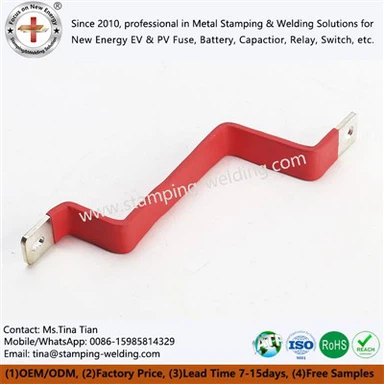
In the electrical architecture of new energy vehicles, the busbar is a crucial component inside the battery pack and in the high-voltage electrical connection system. Its core task is to effectively collect and distribute current to ensure that current can flow safely and smoothly inside the battery pack and between high-voltage components. Given that new energy vehicles rely on large-capacity battery packs to provide power, and the electric drive system needs to respond quickly within a wide power range, the design selection and manufacturing quality of the busbar are directly related to the performance and safety redundancy of the entire vehicle. Inside the battery pack, the busbar is responsible for connecting multiple single cells or battery modules in series and parallel to form a unified high-voltage DC power supply; outside the battery pack, the busbar transports power from the battery pack to high-voltage electrical equipment such as motor controllers, DC converters, and vehicle chargers. This series of connection tasks requires busbars with extremely low resistance, excellent current-carrying capacity and reliable insulation protection. Among them, the IGBT Bus Bar is a key component connecting the power module and the DC bus capacitor. It is responsible for transmitting pulsating large currents in the inverter unit. Its design and manufacturing accuracy directly affect the switching performance and thermal management of the power module.

Manufacturing process
From the perspective of the manufacturing process, the production of busbars usually includes blanking, punching, bending, surface treatment, insulation coating and quality inspection. In terms of dimensional accuracy control, the bending angle and hole position tolerance must strictly meet the design requirements; otherwise, it may cause installation difficulties or poor contact. For the laminated busbar with a multi-layer composite structure, the manufacturing process is more complicated. It is necessary to accurately align the multi-layer conductive copper bus and the insulating film according to the preset stacking sequence and then use the hot pressing process to tightly combine the layers to form an integrated component. This structure not only reduces the use of discrete wire harnesses but also reduces system parasitic inductance through the mutual inductance effect between large-area parallel conductors. In the selection and processing of the insulation layer, it is necessary to comprehensively consider the withstand voltage level, temperature resistance, flame retardant level and aging resistance. Common insulation materials include PET polyester film, polyimide film, and epoxy resin coating. In new energy high-voltage systems, the design of the Capacitor Busbar often requires a direct stacked connection with the DC bus capacitor to minimize stray inductance in the commutation loop, which is of great significance for reducing the voltage overshoot of IGBT or silicon carbide MOSFET during the turn-off process.

Key roles and performance requirements
In the electrical system of new energy vehicles, aluminum electrolytic capacitors play the role of stabilizing the beating of the "heart", especially in large-capacity aluminum electrolytic capacitors that can withstand high ripple current, their importance is even more prominent. This type of capacitor is specially designed to cope with the complex and harsh power environment of new energy vehicles, providing stable energy buffering and filtering protection for key components such as electric drive systems, on-board chargers, and DC converters. The so-called high ripple current capability refers to the characteristic that the capacitor can withstand the rapid fluctuation of current generated during the power conversion process for a long time without being easily damaged. In new energy vehicles, frequent acceleration, deceleration and energy recovery when driving the motor will generate huge ripple current on the DC bus. If the capacitor does not have sufficient ripple resistance, its internal heat will increase significantly, causing the electrolyte to volatilize and the equivalent series resistance to rise, eventually causing the capacitor to fail. Therefore, high ripple current capability is one of the core indicators for measuring the reliability of capacitors used in new energy vehicles.
The special demand for this type of capacitor in new energy vehicles is mainly due to the characteristics of their high-voltage electrical architecture. The motor controller converts the DC power from the battery into AC power to drive the motor. This process will generate high-frequency switching noise and large-amplitude pulsating current. Without a powerful reservoir and filter to smooth these fluctuations, it will not only affect the operating efficiency and smoothness of the motor, but the electromagnetic interference generated may also threaten the normal operation of other electronic equipment in the vehicle. The large-capacity aluminum electrolytic capacitor plays a role in energy storage and low-frequency filtering here, and its high ripple current capability directly determines the service life and reliability under severe working conditions. To meet these requirements, the capacitor manufacturing process needs to be enhanced in multiple aspects. First, the use of high-purity electrode foils and optimized etching processes can expand the effective surface area, thereby achieving greater capacitance and higher current throughput capabilities within the same volume. Secondly, the use of a special electrolyte formula with lower equivalent series resistance can effectively reduce the heating of the capacitor itself. In addition, the structure adopts a solid explosion-proof valve design and reliable sealing technology to ensure that the capacitor can safely release pressure when the internal pressure rises abnormally, preventing explosion accidents.
Technology development trends
With the iteration of new energy vehicle technology, the supporting requirements for busbars and capacitors are also increasing. Future development trends may focus on the following aspects: how to further reduce volume and weight while increasing current carrying capacity and ripple resistance to adapt to a more compact electrical layout; how to broaden the operating temperature range, especially to improve starting performance at extreme low temperatures and long-term reliability at high temperatures; and how to achieve longer service life through material innovation and design optimization to better match the life of the vehicle. In the field of busbars, laminated busbar technology will continue to develop in the direction of lower parasitic inductance, higher integration and better thermal management performance. By integrating the positive and negative busbars, insulation layers, temperature sensors and even some passive components in one component, the internal structure and assembly process of the inverter can be significantly simplified. The collaborative design of IGBT Bus Bars and EV Laminated Busbars will become an important starting point for the integration of electric drive systems, helping to reduce system costs and increase power density.
contact us
We provide full-process services from drawing confirmation, structural optimization, sample trial production, to batch delivery, and can cooperate with customers to analyze the automotive battery terminal bus bar. You are welcome to send technical drawings or performance requirements to our engineering team, and we will provide you with a professional connection solution design and reliable product delivery.