Copper Busbar for DC Link Film Capacitor of Hydrogen Fueled Car: Core Features Analysis
May 30, 2026
Product Positioning
In the powertrain architecture of hydrogen fuel cell vehicles, the DC-link film capacitor is a core component for voltage regulation and filtering in the electric drive inverter system, while the supporting copper bar directly determines the operating efficiency and stability of the entire power system. The Copper Busbar for DC Link Film Capacitor of Hydrogen Fueled Car, as a dedicated connection component adapted for hydrogen fuel cell vehicles, has undergone specialized structural optimization for the harsh operating conditions of high frequency, high current, and strong vibration in vehicles. Distinguished from traditional bar products, it has become an indispensable key component of the power control system of hydrogen fuel cell vehicles. The EV Capacitor Busbar, relying on its proprietary structural and process design, precisely adapts to the high-frequency switching characteristics of the hydrogen fuel cell vehicle's electric drive system, effectively ensuring the long-term stable operation of power devices.
low sensitivity and high frequency characteristics
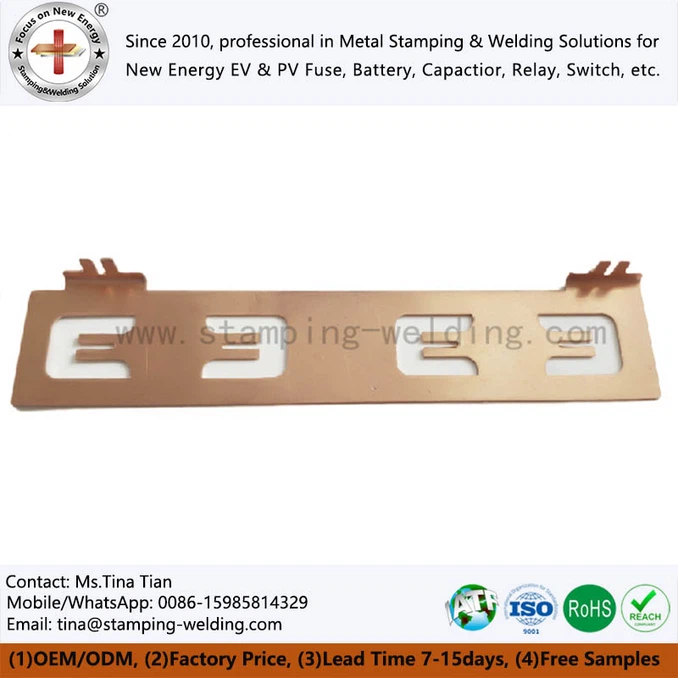
Low parasitic parameters and excellent high-frequency performance are the core characteristics of capacitor busbar for hydrogen fuel cell vehicles. These buses generally employ a laminated structure design, with tightly bonded positive and negative conductors and a sandwiched insulation structure. Utilizing the principle of mutual cancellation of reverse current magnetic fields, this minimizes the equivalent series inductance of the circuit, effectively suppressing voltage spikes generated during high-speed switching of power devices such as IGBTs and SiC, and avoiding device losses caused by high-voltage surges. Simultaneously, the product is constructed from high-purity copper, possessing extremely low equivalent series resistance, which significantly reduces heat loss during high-current transmission, ensuring stable and continuous current output under high-frequency conditions. The laminated insulation layout of the capacitor laminating bus bar further optimizes the overall electrical parameters, adapting to the high-precision operation requirements of hydrogen fuel cell electronic control systems.
Excellent heat dissipation
With its robust current-carrying capacity and excellent thermal conductivity, the New Energy Vehicle Film Capacitor Busbar is well-suited for high-power output conditions in vehicles. During acceleration and heavy-load operation, hydrogen fuel cell vehicles experience instantaneous high-current surges, placing extremely high demands on the bar's current-carrying capacity. The dedicated copper bar, with its optimized structure, can withstand high-current loads for extended periods, easily handling instantaneous power fluctuations and ensuring stable power output. Leveraging copper's inherent excellent thermal conductivity, the bar quickly dissipates heat generated by the capacitors and inverter modules, preventing localized high temperatures from causing aging and performance degradation of the film capacitor dielectric, effectively extending the lifespan of the entire DC link system. The New Energy Vehicle Film Capacitor Busbar, with its balanced current-carrying and heat dissipation performance, is ideal for the continuous high-load operation scenarios of hydrogen fuel cell vehicles.
Strong corrosion resistance
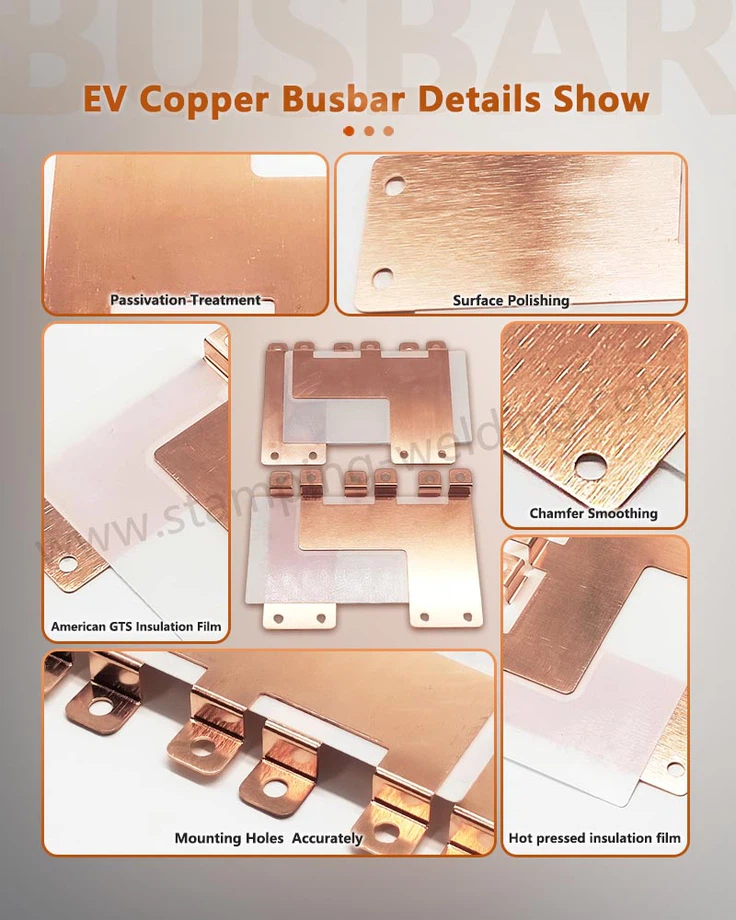
Stringent surface treatment processes adapt to complex automotive weathering conditions. The operating environment of hydrogen fuel cell vehicles is subject to complex interference factors such as high temperature, high humidity, and dust, which can easily cause oxidation and corrosion of metal conductors and increase contact resistance. Therefore, automotive-grade copper busbars employ automotive-grade surface treatment processes such as tin plating, nickel plating, and silver plating to comprehensively enhance the conductor's oxidation and corrosion resistance, stabilize the electrode contact interface, reduce contact resistance, and prevent malfunctions such as abnormal heating and poor contact during long-term operation, ensuring the long-term reliable operation of the electronic control system. Tin-plate Busbar Automotive's mature surface protection technology provides a solid guarantee for the long-term operation of the bar in vehicles.
Earthquake-resistant structural stability
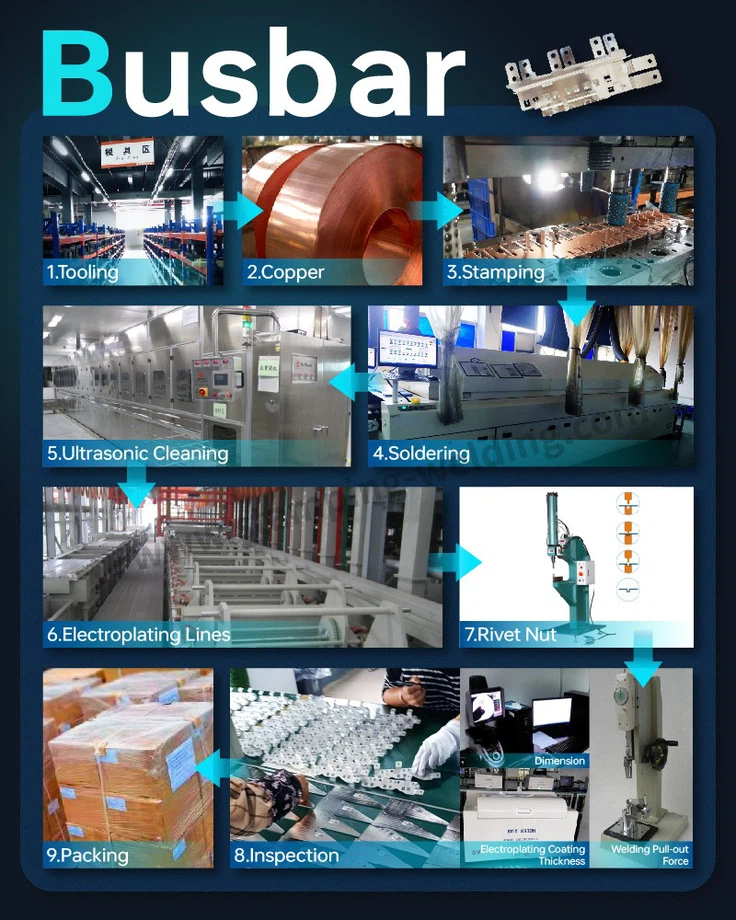
With high mechanical strength and vibration resistance, it is suitable for dynamic operating conditions in vehicles. The continuous bumps and vibrations during vehicle operation generate sustained mechanical stress on onboard power components. The Copper Busbar for DC Link Film Capacitor of Hydrogen Fueled Car, through optimized plate thickness, structural rigidity, and installation support structure, coupled with a flexible compensation bending design, effectively buffers mechanical impacts and vibration stresses during driving, preventing long-term fatigue damage and breakage failure of components, and possessing extremely strong adaptability to onboard operating conditions. Busbar insulation, combined with a robust mechanical structure design, provides dual protection of electrical insulation and mechanical protection, perfectly adapting to the complex operating scenarios of hydrogen fuel cell vehicles.
Contact Us
With a deep expertise in the field of electronic control connections for hydrogen fuel cell vehicles, we can provide customized solutions for low-inertia, high-reliability Copper Busbar for DC Link Film Capacitor of Hydrogen Fueled Car. We welcome inquiries and cooperation from customers in all sectors.