


Heat shrink tubing: core material for insulation protection and busbar protection
May 30, 2026
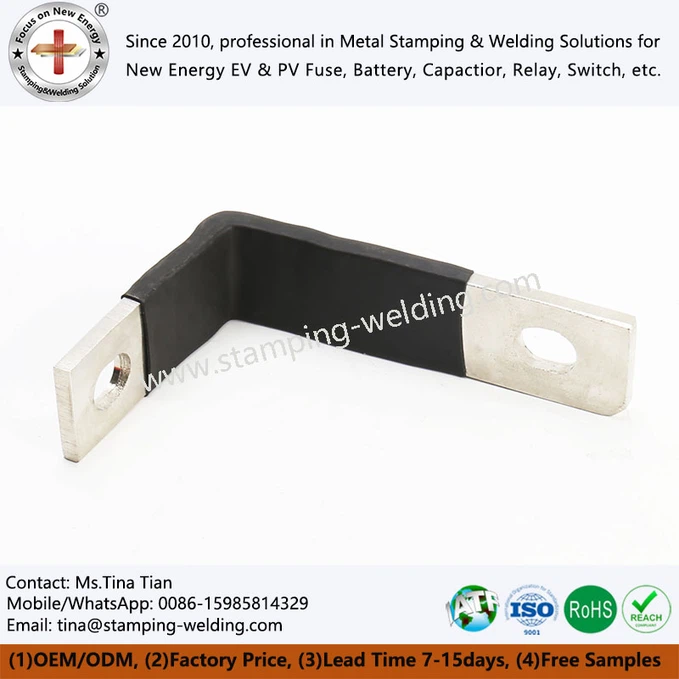
Heat shrinkable sleeves, also often called heat shrinkable tubes, are polymer insulating protective materials widely used in the fields of electricity, electronics, and new energy. They rely on unique material physical properties to achieve equipment protection and insulation sealing functions, and are suitable for various complex working conditions such as high and low temperatures, dryness, humidity, and dust. This type of casing is mainly made of polyolefin material. At the same time, different material categories such as PVC and silicone rubber are derived according to the differentiated needs of the scene. The core working principle relies on the elastic memory effect of polymer materials. In the industrial production process, the raw materials will go through a series of precision processes such as high-temperature heating, mechanical expansion, rapid cooling and shaping, so that the internal polymer structure of the casing is in an unstable expansion and high-elastic state. When it is subsequently heated to the specified temperature range, the casing will automatically retract to its original size and tightly fit around the surface of various protected workpieces such as wires, solder joints, busbars, connectors, etc., thereby achieving a comprehensive protection effect of insulation, sealing, dustproof, moisture-proof, and anti-aging. Among them, Heat Shrink Tubing BusBar is often used in bus protection scenarios to effectively improve the operational safety of power components.
Product classification
According to different materials, heat shrinkable sleeves can be divided into three major categories, each with its own focus on performance indicators and application scenarios. Polyolefin heat-shrink tubing is the most widely used type on the market. Its base material is polyolefin copolymer, which has excellent insulation properties, corrosion resistance and flexibility after being cross-linked by radiation. The operating temperature range is usually -55°C to 125°C, and it is suitable for wire and cable insulation protection, solder joint protection and wire harness arrangement in most indoor and industrial environments. Polyolefin casing also has good flame retardant properties, and some models can pass UL VW-1 or CSA FT1 flame retardant grade certification.
PVC heat-shrinkable sleeves use polyvinyl chloride as the main raw material, are relatively low-priced, and have certain flexibility and insulation properties. However, its temperature resistance is poor. The long-term use temperature is generally limited to between -10°C and 85°C, and PVC materials may release hydrogen chloride gas when heated, so they are not suitable for confined spaces or equipment sensitive to corrosive gases. PVC heat-shrinkable sleeves are usually used for marking ordinary electrical wires that do not have high temperature requirements, solder joint protection for low-end electronic products, etc.
Silicone rubber heat-shrinkable sleeves use silicone rubber as the base material and have excellent high-temperature resistance and weather resistance. They can be used for a long time in high-temperature environments from -60°C to 260°C. The silicone rubber material itself has good flexibility, UV aging resistance and ozone resistance, and the smoke generated during combustion is low in toxicity. This type of casing is often used to protect wires and cables in extremely high-temperature environments such as aerospace, high-temperature furnaces, and automobile engine compartments. From the perspective of use, heat shrinkable sleeves can also be subdivided into insulation type (mainly used for electrical insulation), sealed type (moisture-proof and dust-proof, often equipped with inner wall hot melt adhesive) and identification type (text, barcode or color ring can be printed on the surface, used for cable identification and traceability).
manufacturing process
The production of heat shrinkable sleeves involves multiple processes such as raw material formulation, extrusion molding, irradiation cross-linking, expansion and shaping, and printing and packaging. The process control of each link directly affects the performance consistency of the final product. Raw material selection and formula design: The performance of the base polyolefin resin determines the basic characteristics of the casing, and additives are used to improve specific performance indicators - such as adding flame retardants to improve the fire protection level, adding antioxidants to extend the thermal aging life, and adding color masterbatch to achieve color differentiation. The formula design needs to be accurately proportioned according to the target application scenarios (such as busbar insulation requiring high-voltage resistance, automotive wiring harness requiring oil resistance, and aerospace requiring low smoke and non-toxicity).
Extrusion molding: Add the uniformly mixed raw materials into a single-screw or twin-screw extruder, and then extrude them into a tube shape through a die of a specific shape after heating and melting. The extrusion temperature, screw speed, traction speed and cooling water tank temperature need to be accurately linked to ensure the uniformity of the wall thickness of the pipe (the tolerance is usually required to be within ±0.05mm) and the smoothness of the internal and external surfaces. For sleeves used in Copper Busbar PVC Insulated or Busbar With PVC Insulation, sizing is required after extrusion to ensure that the inner diameter meets the design requirements. Irradiation cross-linking: This is a key process that gives the heat-shrink sleeve the "elastic memory" effect. The extruded sleeve is irradiated with high-energy electron beams through an electron accelerator or with gamma rays using a cobalt source. Irradiation causes cross-linking bonds between polyolefin molecular chains to form a three-dimensional network structure, thereby significantly improving the material's temperature resistance, environmental stress cracking resistance and mechanical strength. The degree of cross-linking is usually controlled by gel content testing - the gel content of high-quality heat shrink sleeves should be between 50% and 80%. If it is too low, the shrinkage performance will be unstable, and if it is too high, the material will become brittle.
Expansion and cooling shaping: After the irradiation cross-linked casing is heated to the high elastic state of the material (polyolefin is about 120°C-150°C), the tube diameter is expanded to the target size (usually 2-4 times the original diameter) through vacuum expansion or mechanical mandrel expansion. The expanded casing is quickly shaped through a cooling water tank or an air-cooling channel, so that the expanded state is "frozen". This step determines the final shrinkage ratio of the casing and the resulting wall thickness, which is approximately a multiple of the original wall thickness. Printing and packaging: For products that require marking functions, printing is performed on the surface of the casing. Printing methods include ink jet coding (applicable to light-colored casings) and laser engraving (applicable to dark-colored casings, the writing is more durable). Printing content can include specifications, voltage levels, production batch numbers or customer-customized logos. The packaging form can be plated (continuous length), strip (cut to fixed length) or bagged (packed according to quantity) according to customer needs.

Application areas
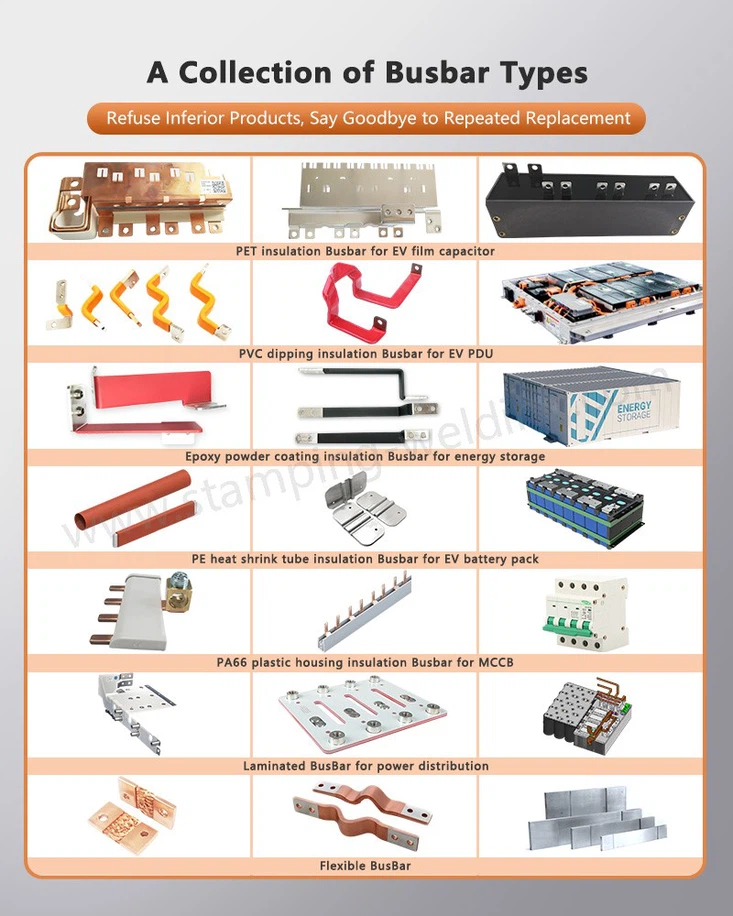
The insulation protection of low-voltage busbar systems is one of the important application directions of heat-shrinkable sleeves. Bare copper or bare aluminum bars need to be insulated after installation to prevent phase-to-phase short circuit, phase-to-ground short circuit and accidental electric shock. Solid Insulation Tubing Busbar represents a solution that uses thick-walled heat shrink tubing to insulate the busbar as a whole - the tubing shrinks and tightly wraps the copper bar, forming a continuous, seamless layer of solid insulation. Compared with traditional wound insulation tape or brush-coated insulation paint, the insulation layer of heat shrink sleeves has the significant advantages of uniform thickness, no air gaps, scratch resistance and aging resistance. Insulated Copper Busbar with Heat Shrink Tube and Heat Shrink Tubing BusBar describe the same technical solution: a polyolefin or silicone rubber heat shrink sleeve with a high shrinkage ratio (usually 3:1 or 4:1) is placed on a rectangular or special-shaped copper bar, and after heating and shrinkage, an insulating layer is formed close to the surface of the copper bar. For different voltage levels and application environments, bushings with different wall thicknesses and withstand voltage levels can be selected - 400V systems usually use polyolefin bushings with conventional wall thickness (0.6-1.0mm after shrinkage), and the dielectric strength can reach more than 20kV/mm, which is enough to meet the power frequency withstand voltage test requirements; for busbars that may be exposed to high temperature environments (such as close to engines or heating equipment), silicone rubber bushings should be selected.
Heat Shrink Sleeves BusBar emphasizes the "sleeve" form of the bushing - a pipe section pre-cut to a specific length, suitable for insulating specific areas in the busbar system, such as elbows, connectors or branch nodes. In these parts with complex geometries, it is necessary to use sleeves with high shrinkage ratios and good flexibility to ensure that they can fit irregular contours without creating wrinkles or gaps after shrinkage. Customized Busbar Insulating Tube represents a customized product for a specific busbar size - according to the cross-sectional shape (rectangular, L-shaped, T-shaped) and size of the copper bar provided by the customer, the heat-shrinkable sleeve with corresponding inner diameter and wall thickness is customized and produced. After shrinking, it can achieve the best fit and insulation consistency. Customized services are especially suitable for non-standard busbar systems or high-voltage (such as 1500V DC) energy storage buses. PVC Busbar Heat Shrink Sleeves are suitable for simple power distribution scenarios that are cost-sensitive, have low operating temperatures (≤85°C), and have no flame retardant requirements. PVC bushings have obvious price advantages, but their temperature resistance and mechanical strength are lower than those of polyolefin products. They are usually only used for temporary protection or low-load branch circuits in busbar systems.

contact us
If you need to customize a high-precision Heat Shrinkable Busbar Insulating Tape solution for your power distribution system or battery pack project, our technical team can provide detailed technical parameters and sample support to assist you in completing the entire process from selection to batch application.


