Analysis of the core reasons why multi-process insulated busbars have become the mainstream power transmission solution in the new energy industry
Jul 13, 2026
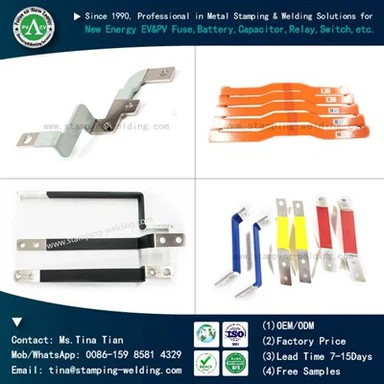
Against the backdrop of the large-scale and high-power development of the new energy industry, the requirements for current-carrying capacity, operational safety, environmental adaptability, and space utilization of power transmission systems are continuously upgrading. Multi-process Insulated BusBar, with their comprehensive performance advantages, are gradually replacing traditional cables and conventional bar products, becoming the core power transmission carrier in scenarios such as wind power, photovoltaics, energy storage, data centers, and new energy vehicles. Compared to traditional power transmission solutions, multi-process insulated busbars effectively solve common industry pain points such as limited high-current transmission, weak environmental adaptability, high losses, and cumbersome operation and maintenance. They meet the high-density, high-reliability, and long-cycle operation requirements of new energy equipment. Among them, insulation products such as Plastic Dipping Copper Bar provide diverse insulation protection options for different operating conditions.

Current carrying capacity
The continuous upgrading of single-unit capacity of new energy equipment is driving the transmission system towards ultra-high current and high power density, making the technological advantages of multi-process insulated busbars increasingly prominent. Currently, the single-unit capacity of onshore wind turbines has reached the 8-10MW level, and the clustered layout of large-scale photovoltaic power plants means that the system operating current generally reaches 4000A to 5000A or more. Traditional parallel cable laying methods are limited by the skin effect and bending radius, making it unable to stably carry ultra-high currents, easily leading to uneven heating and reduced transmission efficiency. In contrast, insulated busbars adopt a rigid integrated structure, significantly weakening the skin effect and significantly improving current-carrying capacity. Conventional 10kV products can stably carry 4000A of current, while high-performance models can carry up to 8000A, fully meeting the high-power, high-current transmission needs of new energy scenarios.
Protective performance
New energy power plants are often deployed in complex and harsh environments such as outdoors, coastal areas, and chemical plants, placing extremely high demands on the protection capabilities and operational stability of transmission equipment. Multi-process insulated busbars adopt a fully enclosed integral structure, combined with multi-layer composite insulation technology, achieving IP68 high-level protection. They can operate stably for extended periods under harsh conditions such as humidity, salt spray, strong corrosion, and extreme temperature differences, and support long-term underwater operation, effectively avoiding safety hazards such as foreign object short circuits, line corrosion, and mechanical damage. The failure rate of this type of bar equipment is far lower than that of traditional transmission products, with an insulation service life of up to 30 years. This significantly reduces the economic losses caused by power plant downtime and equipment maintenance, ensuring the long-term safe and stable operation of the system. Relying on superior busbar isolation protection capabilities, it comprehensively strengthens the safety defense line for power transmission.

Space adaptation
Compact design is a key development trend in new energy equipment. Installation space is extremely limited in scenarios such as wind turbine towers and equipment rooms, making the compact design of multi-process insulated bars a perfect fit for this demand. These busbars have a small diameter; products with only 150mm diameter can achieve 4000A high-current transmission, saving 40% of installation space compared to traditional rectangular bars. Simultaneously, the rigid bar, combined with a dedicated flexible connection structure, can withstand high-frequency dynamic bending and torsion, achieving a fatigue test life of over 5 million cycles, effectively solving the problems of cumbersome cable laying, large space occupation, and poor adaptability associated with traditional cables. For special scenarios such as equipment passing through walls and complex path laying, the Plastic Dipping Copper Busbar can flexibly adapt to irregular installation paths, significantly improving overall installation adaptability and construction flexibility.
summary
Overall, multi-process insulated busbars, with their comprehensive advantages of high current carrying capacity, high protection, space saving, low loss, long lifespan, and customizability, precisely match the core demands of the new energy industry for safe, efficient, compact, and economical power transmission systems. They are not simply a replacement for traditional cables, but rather a new type of power transmission solution adapted to the large-scale, intensive, and lightweight development of new energy. With the continuous expansion of global new energy installed capacity and the steady development of the wind power and photovoltaic industries, the market application breadth and depth of multi-process insulated busbars will continue to steadily increase.
Contact Us
For customized Insulated BusBar solutions tailored to specific operating conditions, please consult our team for professional selection and technical support.