


Low-voltage busbar system: core equipment for power distribution
May 30, 2026
The low-voltage busbar is the core infrastructure equipment responsible for the collection and distribution of electric energy in the power distribution system. It is fully adapted to low-voltage power systems of 1,000 volts and below, and is widely used in industrial production, commercial buildings, residential buildings and various public power supporting scenarios. Guangdong has dense industries and high commercial and economic activity. The region's overall electricity load is huge and the electricity consumption scenarios are complex and diverse. It has extremely high requirements for the stability, safety and adaptability of low-voltage power distribution equipment. It has also made low-voltage busbars a highly popular core power distribution equipment in local power engineering construction. As a key carrier connecting distribution transformers with various low-voltage distribution cabinets and terminal power equipment, low-voltage bus bars can effectively optimize power transmission paths, significantly reduce line transmission losses, improve overall power distribution efficiency, and at the same time achieve centralized management and control of power lines, greatly reducing the difficulty of later power operation and maintenance. High-quality electrical copper bus bars are the core key components to ensure the stable operation of low-voltage distribution systems.
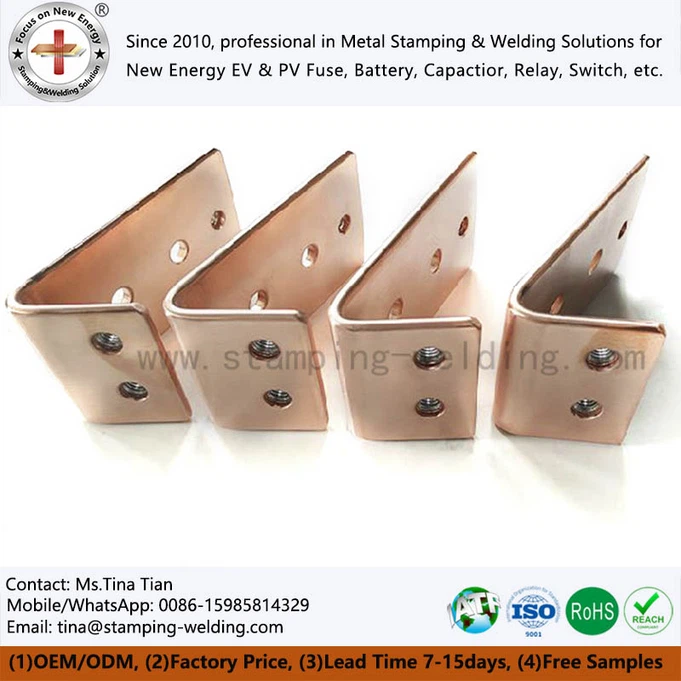
structure Details
The low-voltage busbar system usually consists of four core parts: conductor material, insulation layer, metal shell and connecting parts. The conductor material is the conductive core of the busbar and is generally made of electrolytic copper or aluminum alloy. Electrical copper bus bar and cu busbar represent busbar products made of copper. The electrical conductivity of copper is as high as 98% or above IACS, the resistivity is low, and it can carry greater current under the same cross-sectional area. Copper has excellent ductility and is easy to be processed into various cross-sectional shapes. Electrolytic copper busbar specifically refers to a high-purity copper busbar produced by an electrolytic refining process. Its copper content is not less than 99.95% and its impurity content is extremely low. It is not prone to local overheating or electrochemical corrosion during long-term energized operation. Although aluminum busbars are lower in cost and lighter in weight, they require a larger cross-sectional area under the same current carrying capacity, and an oxide film is easily formed on the aluminum surface to affect contact resistance. Therefore, copper busbars are still the first choice in scenarios that require higher reliability.
Insulation is used to prevent electrical shorts between conductors or between conductors and enclosures. Common insulation materials include polyvinyl chloride (PVC) and cross-linked polyethylene (XLPE). The PVC insulation layer has good flexibility and corrosion resistance, and is suitable for general environments; XLPE has a higher temperature resistance level (long-term operating temperature can reach 90°C, and the allowable short-circuit temperature can reach 250°C), and has lower dielectric loss, making it suitable for high current or high temperature conditions. For fire-resistant busbars, the insulation also needs to have the ability to maintain electrical integrity under flame conditions. The shell is mostly made of galvanized steel plate, aluminum alloy or stainless steel, which plays the role of mechanical protection, support and fixation and auxiliary heat dissipation. The protection level of the shell is selected according to the use environment - IP40 can be used in indoor dry places, and IP54 or above is required in humid or dusty places. At the same time, the shell also assumes the function of grounding protection. The shell of the entire bus duct should form a continuous electrical path and be reliably connected to the grounding system.
The connection components include plug-in boxes, elbows, tees, crosses, brackets and telescopic joints, etc., which are used for the steering, branching, fixing and temperature compensation of the busbar. The plug-in box is the interface between the bus system and the terminal load. It is equipped with a circuit breaker or fuse to protect the branch line from overload and short circuit. The expansion joint is used to compensate for the thermal expansion and contraction of the busbar due to temperature changes. It is usually installed every 30-40 meters in a straight line.
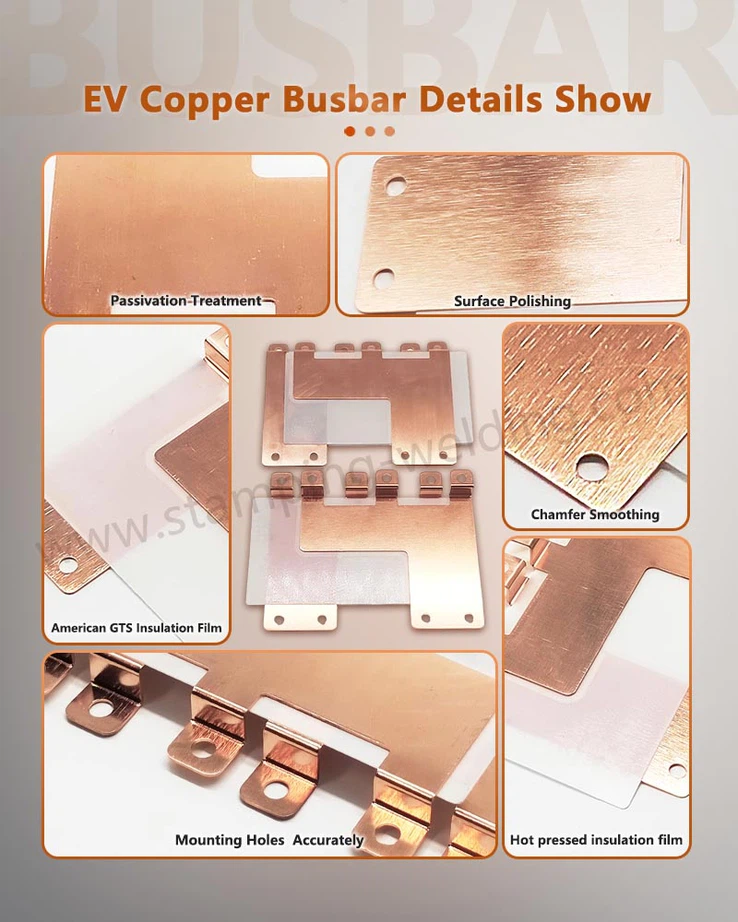
Manufacturing process
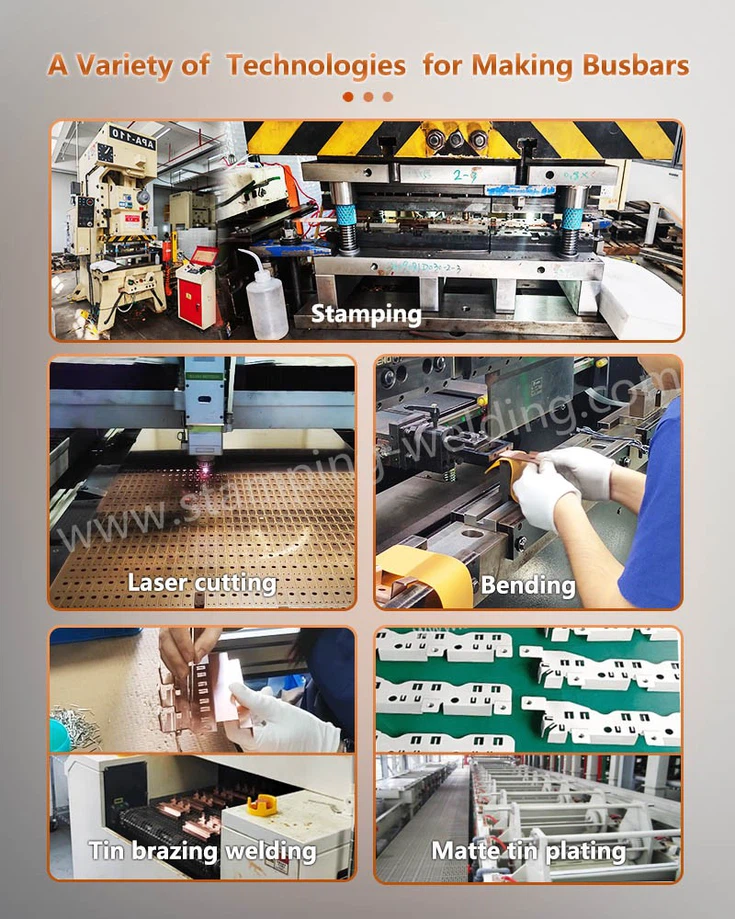
The manufacturing of low-voltage busbars involves multiple links such as conductor processing, insulation treatment, shell molding, and final assembly testing. Its process level directly determines the current carrying capacity, temperature rise characteristics, and service life of the product. Conductor processing technology: The basic raw material of copper busbar is an electrolytic copper plate, which is made into the required cross-sectional shape (rectangular, trapezoidal or L-shaped) through casting, hot rolling, cold drawing and other processes. Bending copper busbar and copper busbar bending represent the bending process of copper busbars - in actual engineering, busbars often need to bypass obstacles or turn along building structures, which requires the copper material to have good ductility so that it can be bent at a precise angle on the bending machine without cracks or cross-sectional mutations. The bending radius is usually not less than 2-3 times the thickness of the copper bar, and the bending angle error is controlled within ±1°. The bent busbar needs to be visually inspected (no wrinkles, no cracks) and resistance tested (the resistance increase at the bend does not exceed 3% of the original value).
For copper busbars that require surface treatment, tin plating or silver plating can be used. The tin plating layer can prevent oxidation of the copper surface and reduce contact resistance, making it suitable for conventional power distribution scenarios; silver plating has lower contact resistance and better wear resistance and is often used in connection parts with high current or frequent plugging and unplugging. Insulation treatment process: For dense busbars, the conductor coating insulation layer is usually electrostatic powder spraying or heat shrinkable sleeving process. In electrostatic powder spraying, epoxy resin powder is electrostatically adsorbed on the surface of the conductor and baked at high temperature to solidify into a uniform insulation layer. The thickness is controlled between 0.1- 0.2 mm and must pass a withstand voltage test (power frequency 3750V for 1 minute without breakdown). Heat shrinkable casing is a cross-linked polyolefin casing placed on the conductor. After heating, the casing is tightly attached to the surface of the conductor. It is suitable for the insulation of conductors with special-shaped cross-sections.
Shell forming process: The busbar shell is formed by CNC stamping, bending and welding of galvanized steel plates. The key dimensional tolerance needs to be controlled within ±0.5mm to ensure the accuracy of the connection between multi-section busbars. Welding uses carbon dioxide gas-shielded welding or resistance welding. The welding seam must be continuous, free of pores, and polished. The surface of the shell can be further electrostatically sprayed (the color is usually RAL7035 light gray) with a coating thickness of 60-80μm and a salt spray test endurance of ≥500 hours.
Application scenarios
Industrial plants: Provide backbone power supply for automated production lines, electroplating equipment, high-power motors, etc. Since industrial loads have the characteristics of frequent starts and stops and large inrush current, the busbar needs to have strong dynamic and thermal stability withstanding capabilities. The short-circuit current peak value should be calculated when selecting the type to ensure that the short-time withstand current (Icw) of the busbar is not lower than the maximum short-circuit current peak value that may occur in the system.
Commercial complexes: Shopping malls, office buildings, hospitals and other buildings have high electricity density and many floors. The busbar system serves as a vertical trunk line and runs through the power distribution shafts on each floor, and then leads to branch circuit power supply through plug-in boxes. Such scenarios have higher requirements for the fire protection performance and ease of installation of the busbars. Dense busbars should be given priority and equipped with fire-resistant specifications. Data center: Server cabinets have extremely high requirements on power supply reliability, and the cabinet layout needs to be adjusted frequently. As a form of data center power distribution bus, Copper Power Bar is usually installed above the cabinet and provides power to each cabinet through a movable plug-in unit to achieve flexible adjustment and hot-swappable maintenance. This type of busbar needs to have low impedance, low harmonics, high protection level (dustproof) and intelligent monitoring functions.
Public facilities: Subway stations, airports, stadiums and other crowded places have strict safety requirements for power distribution systems. The busbar system should pass the national compulsory product certification (CCC) and the corresponding fire protection and earthquake resistance certification. In terms of grounding protection, isolated ground bus bar and telecom ground bus bar have clear application value in such scenarios - the former is used for independent grounding of medical equipment or precision instruments, and the latter is used for lightning protection and working grounding of communication equipment rooms.

contact us
Our company focuses on the research and development, processing and customized production of various high-quality copper busbars and Low Voltage BusBar supporting products. We have been deeply involved in the field of power distribution supporting products for many years and provide safe, stable and high-quality copper busbar supporting solutions for various power projects.


