Analysis of polymer diffusion welding technology for Multilayer Copper Foils Flexible BusBars
Apr 24, 2026
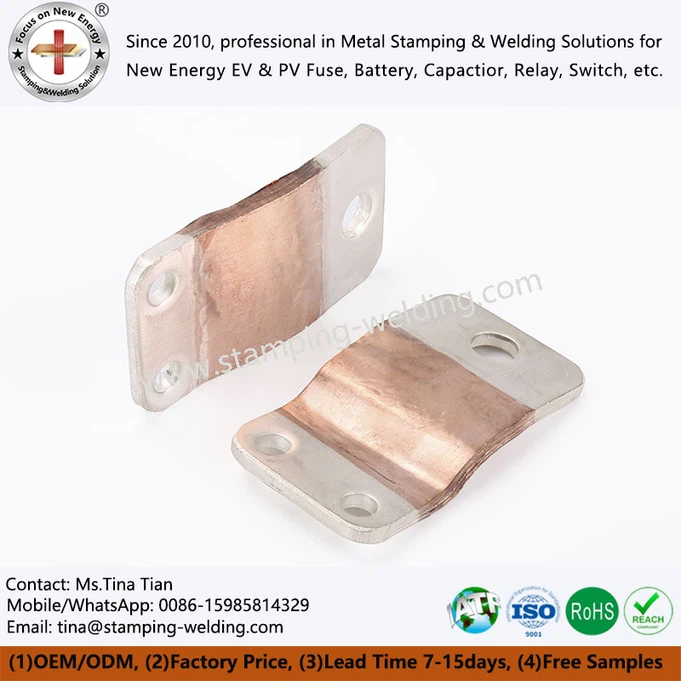
Copper foil soft connection polymer diffusion welding is a key solid-phase connection technology in the electronics and electrical industry. Its core is to use copper foil as a conductive base material, and through precisely controlled temperature and pressure parameters, multi-layer copper foil can achieve atomic-level metallurgical bonding under solid-state conditions. In the field of new energy and power transmission and distribution, Copper Flexible BusBar products are increasingly relying on this process to ensure the stability and reliability of large current transmission. This technology abandons traditional soldering's reliance on solder and demonstrates irreplaceable technical value in the field of high-end electronic equipment manufacturing.
process principles
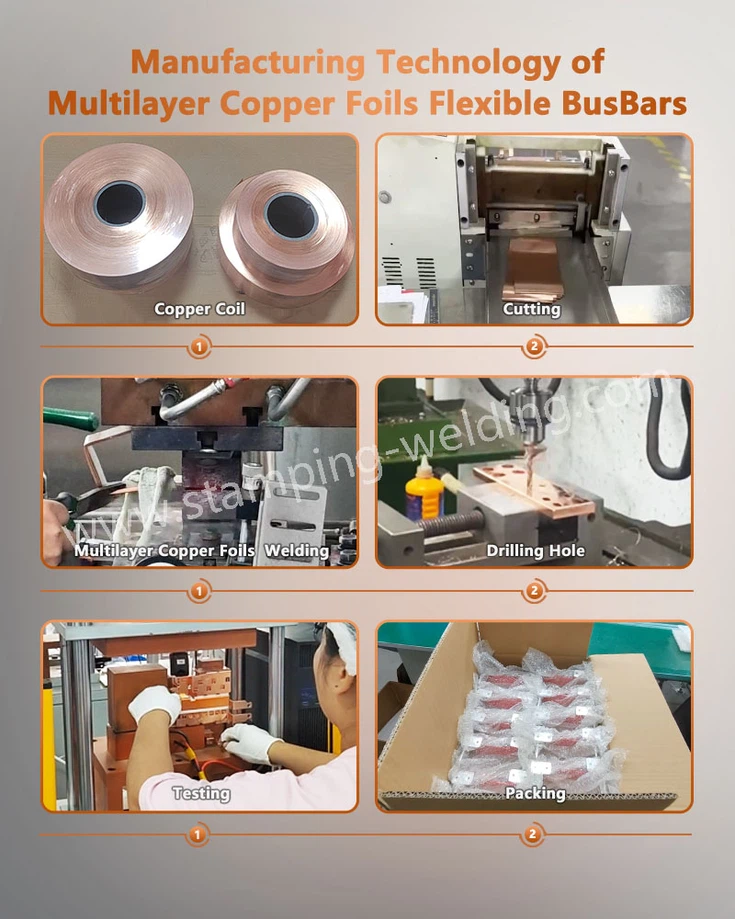
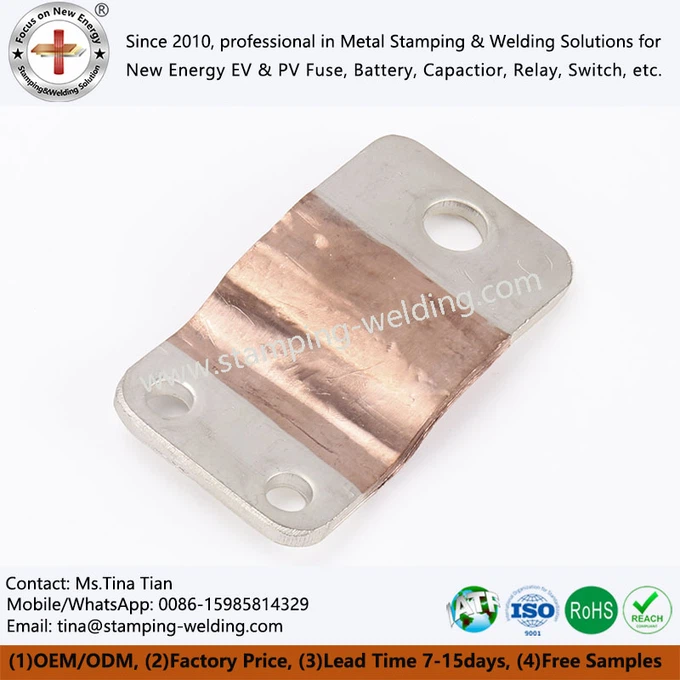
From the perspective of process principles, polymer diffusion welding belongs to the category of solid-phase welding. During the welding process, the multi-layer T2 copper foil is placed in the welding station after being laminated and leveled. The equipment applies specific pressure to make the surface of the copper foil closely adhere to each other. At the same time, the welding area is heated to a critical temperature range below the melting point of the copper material through induction heating or resistance heating. Under the dual effects of temperature and pressure, the metal atoms on the Flexible Copper BusBar surface obtain enough thermal activation energy to break through the original lattice constraints, mutual diffusion and penetration across the interface occur, and ultimately form a stable metallurgical bonding layer at the atomic level. This connection method not only retains the excellent conductive properties of copper itself, but also ensures the structural continuity of the joint area, fundamentally avoiding defects such as pores and cracks that may occur in traditional fusion welding. For Flexible BusBar, this atomic-level fusion means that while the soft connection part remains flexible, the welding areas at both ends have a mechanical strength close to that of the base material.
significant advantages
Compared with conventional welding processes, copper foil soft connection polymer diffusion welding has many significant advantages. First, there is no need to add any solder or flux during the welding process. The joint component is made of pure copper, and the conductivity can be maintained at a very high level, effectively reducing contact resistance and power loss. Secondly, the solid-state soldering temperature is much lower than the melting point of copper, and the heat-affected area is small, which can minimize the damage of thermal stress to surrounding components. It is especially suitable for high-density electronic packaging scenarios that are sensitive to temperature. Third, the welding interface is smooth and flat, and can meet precision assembly requirements without subsequent mechanical processing. The overall production efficiency and finished Multilayer Bus Bar consistency are significantly improved. Fourth, the soft connection part in the middle maintains good flexibility and can withstand multiple bends and twists, while the welding areas at both ends form rigid joints, taking into account the dual requirements of flexible conductivity and reliable fixation. Flexible Copper BusBar, manufactured using polymer diffusion welding technology, has better tensile strength and fatigue resistance than traditional brazing products, and can maintain the integrity of the connection even under frequent vibration conditions.
application fields
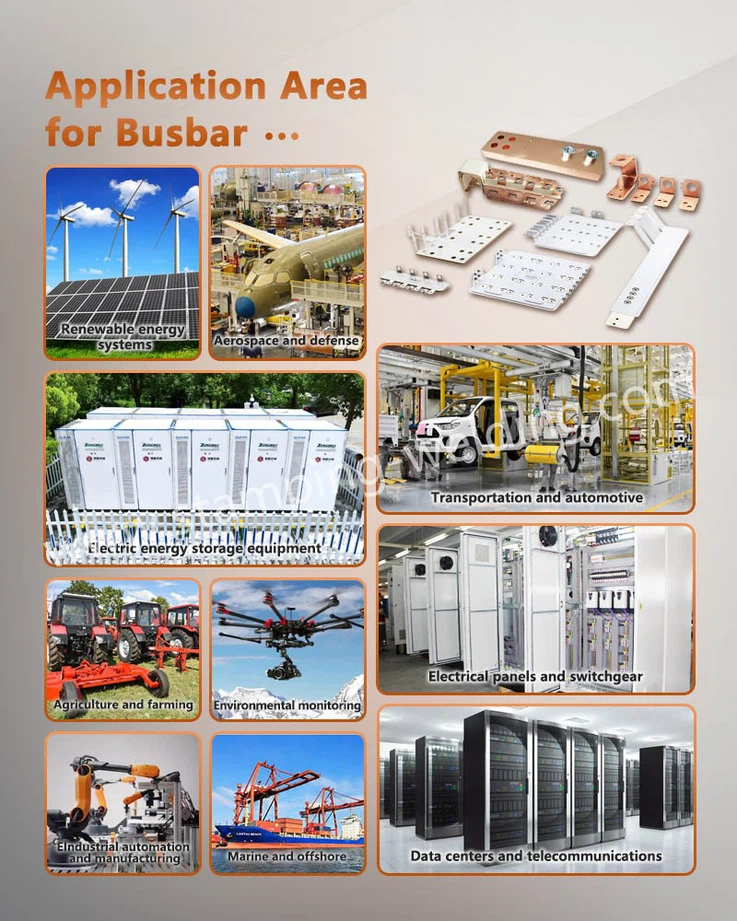
In terms of application fields, copper foil soft connection polymer diffusion welding technology has deeply penetrated many high-end manufacturing industries. In new energy vehicle power battery modules, this technology is used for flexible conductive connections between cell tabs and busbars, which can absorb vibration and displacement during vehicle driving and ensure stable transmission of large currents. In power transmission and distribution systems, this process is widely used for soft busbar connections inside transformers, switch cabinets, bus ducts and other equipment, which can effectively compensate for equipment installation errors and provide shock absorption and buffering functions. In the fields of photovoltaic energy storage and wind power generation, copper foil soft connections undertake the key conductive task between the inverter and the battery cluster. Its weather resistance and long-term reliability directly affect the operating life of the entire energy storage system. In addition, this technology also plays an important role in scenarios with stringent requirements for conductive connections, such as rail transportation, industrial robots, and aerospace. It is worth noting that the surface treatment process can further improve product performance. Tinned Copper BusBar has enhanced anti-oxidation and anti-corrosion capabilities through tin plating, making it suitable for long-term operation in humid or salt spray environments.
contact us
Our company focuses on high-performance electrical connection solutions, providing a series of Multilayer Copper Foils Flexible BusBars, including flexible copper busbars, tinned copper busbars, multi-layer copper foil soft connections and other products to meet the connection needs of various electronic and electrical systems. If you have specific needs, please welcome further consultation.