

Aluminum Battery Housings
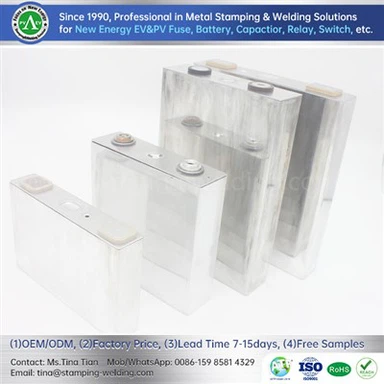
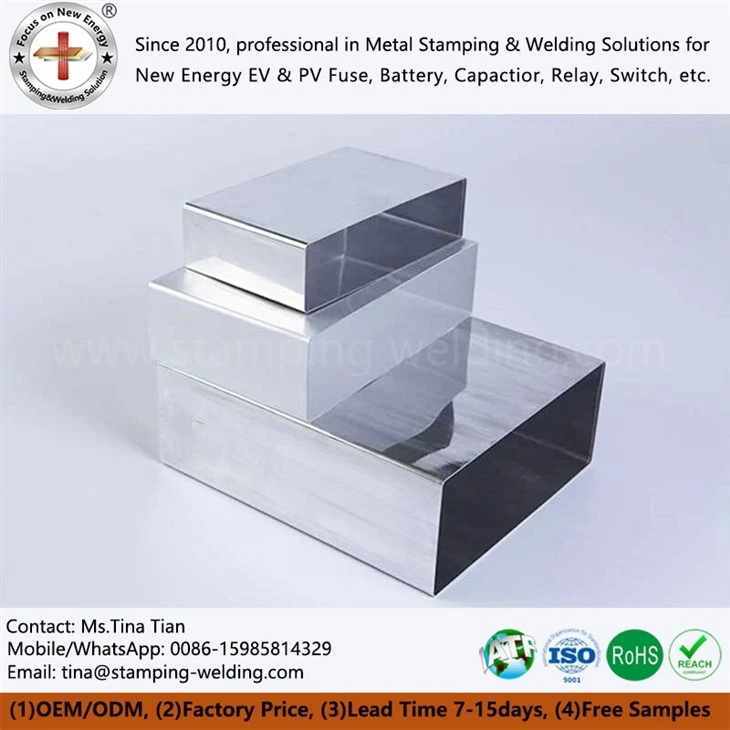
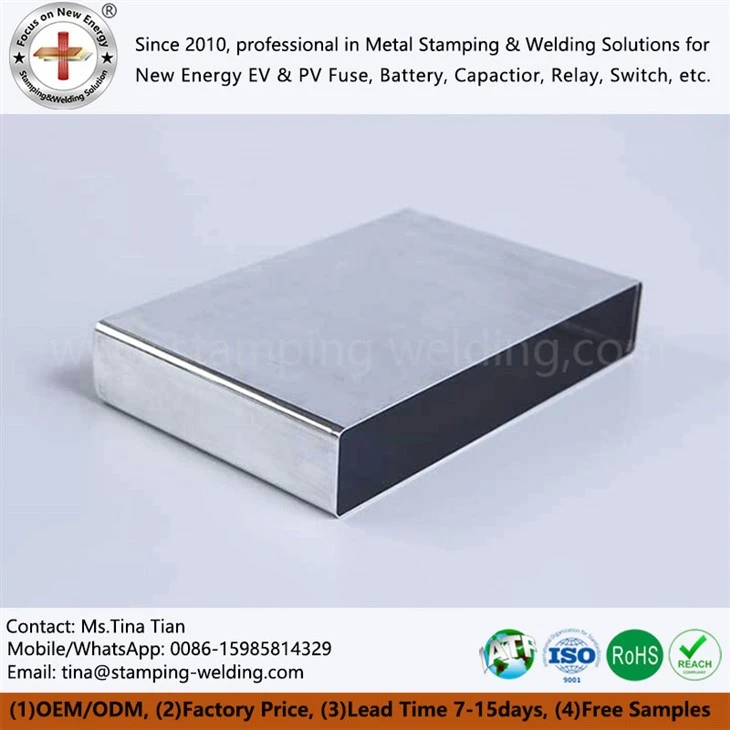
An Aluminum Battery Housings are a rigid aluminum alloy casing designed for prismatic lithium-ion cells; it serves key functions such as structural support for the cell, encapsulation of internal components, external mechanical protection, and integration into the battery system. Unlike pouch cells, which utilize flexible composite films, prismatic cells typically rely on a metal casing to establish a stable external structure, enabling them to be arranged and assembled in a uniform rectangular configuration. For power batteries in new energy vehicles, energy storage batteries, and other high-power lithium battery systems, the battery housing is far more than a simple "metal box." Factors such as casing dimensions, sheet metal forming characteristics, bottom structure, corner transitions, opening designs, welding zones, and sealing interfaces directly impact subsequent cell assembly and the overall consistency of the battery system.
- Fast Delievery
- Quality Assurance
- 24/7 Customer Service
Product Introduction
Prismatic lithium-ion batteries exhibit mechanical behaviors that differ significantly from those of cylindrical or pouch cells. Prismatic cells undergo volumetric changes during charge and discharge cycles, exerting periodic expansion forces on the casing sidewalls; modules operating in vehicles or energy storage cabinets are subjected to continuous vibration and thermal cycling; and internal air pressure fluctuations can trigger a "breathing effect" within the battery pack. These operating conditions impose several core requirements on the casing:
A balance between constraint and cushioning: The casing must limit excessive cell expansion without causing stress concentrations due to excessive rigidity.
Thermal interface stability: Thermal pads or adhesives typically connect the cell surface to the aluminum casing, and the uniformity of contact pressure determines thermal resistance.
Long-term sealing reliability: Flange rigidity, seal groove design, and bolt distribution collectively determine whether the IP protection rating is maintained after thermal cycling.
Electrical safety redundancy: Insulation, creepage distances, grounding, and explosion-proof pressure relief must be holistically managed at the casing level.

Aluminum Laminate Pouch for Li-ion Batteries Design Advantages: Collaborative DFM (Design for Manufacturability) rather than mere print-to-part processing
Draft angles and internal corner radii
Defined in conjunction with the cell-stack insertion process to prevent separator scratching and shedding of electrode edge materials;
01
Wall thickness distribution
Determined by back-calculating deformation per forming stage based on burst pressure and rigidity targets, rather than simply specifying a "nominal wall thickness";
02
Can-opening welding surface
Flatness and roughness are designed to match the top-cover material and laser welding parameters, minimizing cold welds and porosity at the source;
03
Explosion-proof structure
Score location, residual thickness, and geometric consistency determine the variance in pressure-relief thresholds across batches, making this a critical safety design element;
04
Integrated features
Features such as stacking alignment guides, lifting/clamping surfaces, liquid-cooling contact interfaces, and marking zones can be formed in a single step during the can-manufacturing stage, reducing the total number of pack-level components.
05

Application Advantages for EV Battery Pouch Cell Aluminum Case: Engineering Priorities by Scenario
| Power Battery Packs | Electric vehicles and electric marine vessels demand exceptional lightweighting, rigidity, and thermal management. Housings must withstand vibration, impact, and thermal cycling while meeting vehicle-level sealing and safety standards. |
| Energy Storage Systems | Industrial/commercial and grid-scale energy storage systems prioritize weather resistance, corrosion resistance, and long-term reliability. Housings must endure outdoor temperature fluctuations, humidity, and salt spray environments while maintaining sufficient structural strength. |
| AGVs and Industrial Equipment | In operating conditions involving frequent movement and vibration, mounting points and connection structures must exhibit high fatigue resistance. |
| Communication Base Stations and Backup Power Supplies | With limited space in outdoor cabinets, housings require compact designs alongside effective heat dissipation and protective capabilities. |
| Specialized Power Supplies and Drones | In weight-critical applications, the lightweight advantage of aluminum alloy housings is particularly significant, while structural integrity and electrical safety must also be ensured. |

Frequently Asked Questions for Aluminum Deep Drawing Stamping Battery Case
1. What is an aluminum battery housing?
-
An aluminum battery housing is a rigid aluminum alloy casing designed for prismatic lithium-ion battery cells. It serves primarily for cell encapsulation, mechanical protection, structural support, and subsequent integration into battery systems.
2. What aluminum materials can be used for prismatic battery cases?
-
Depending on the product structure and forming requirements, aluminum alloys such as AL1060, AL3003, AL5052, and AL6061 can be used. The specific alloy grade is determined based on factors including casing structure, forming process, strength requirements, and welding specifications.
3. Can the aluminum battery housing be customized?
-
Yes. Prismatic battery cells typically lack standardized casing dimensions; therefore, OEM/ODM customization is available based on customer 2D drawings, 3D CAD models, physical samples, or specific cell dimensions.
4. What manufacturing processes are used for Prismatic Cell for BYD brand?
-
Depending on the design, processes such as material cutting, stamping, deep drawing, sizing, trimming, punching, welding, and surface treatment are employed, with mass production achieved through mold development.
5. Can you develop a battery housing based on a new battery cell design?
-
Yes. For new battery cell projects, we conduct engineering evaluations covering material selection, casing structure, forming processes, and welding requirements. We verify structural manufacturability during the prototyping stage before proceeding to mass production.

contact us
If you are seeking a supplier of aluminum casings for prismatic lithium batteries capable of simultaneously addressing requirements for materials, tooling, precision forming, and welding, we invite you to submit your engineering drawings and technical specifications. We will develop an OEM solution based on manufacturing feasibility and long-term mass-production consistency, rather than relying solely on low pricing as the basis for procurement.

Hot Tags: Aluminum Battery Housings, Aluminum Battery Case, Prismatic Lithium Battery Case, Aluminum Battery Enclosure, Aluminum Battery Cell Housing, Prismatic Battery Housing, Lithium Battery Aluminum Case