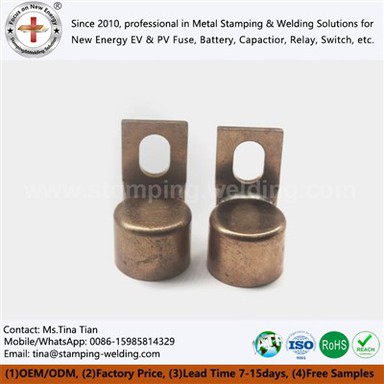
Application analysis of copper stamping parts in chemical polishing of Precision Copper Stamping Parts
Jan 04, 2026
Precision Copper Stamping Parts are widely used in various fields such as electronic components, power equipment, and decorative products due to their excellent conductivity and ductility. Copper chemical polishing, as a key process for enhancing the surface quality of copper, effectively complements stamping and forming technology. The surface of copper parts after copper stamping is prone to residual oil and oxides, and the copper chemical polishing process can specifically address this issue, significantly improving the surface glossiness of copper parts and optimizing surface performance.

Core applications in the field of precision electronics
In the field of precision electronics, chemical polishing plays a pivotal role in the processing of Precision Copper Stamping Parts. Taking the manufacturing of micro connectors as an example, chemical polishing effectively eliminates microscopic burrs generated during the stamping process of copper sheets, removes surface oxides, and smoothes out the surface roughness of copper products. It simultaneously achieves multiple effects, including degreasing, removing oxide layers, and mirror polishing, laying the foundation for subsequent assembly and use.
In the field of precision electronics and communications, components such as micro connectors and crystal oscillators, which are produced through Custom Copper Stamping, exhibit significantly reduced contact resistance after undergoing chemical polishing treatment. Relevant data indicates that the resistance of components like Type-C interfaces can decrease by 38%. This fully meets the stringent requirements of electronic devices for high conductivity and high cleanliness, with copper ion leaching being controlled below 0.08 ppm.
In the power and cooling system, components such as power copper bars and cooling modules made of Copper Sheet Stamping can have their thermal conductivity increased by 12% after chemical polishing treatment. Specifically, the cooling efficiency of 5G base station heat sinks can be improved by 25%, effectively ensuring the stable operation of power equipment and communication base stations.
In the field of decoration and industrial products, copper stamping parts processed through chemical polishing exhibit a significantly enhanced mirror effect and greatly improved aesthetics. Additionally, after being treated with chromium-free passivation technology, their salt spray resistance can reach 96 hours, balancing decoration and practicality.

Basic process steps
The chemical polishing of Electrical Copper Stamping Parts must adhere to a standardized process flow. The initial step involves pretreatment, encompassing degreasing, acid pickling, and rinsing. The core objective is to ensure that the surface of the copper parts is free from oil stains and oxide layers, providing a clean substrate for subsequent polishing processes.
After the pretreatment, the chemical polishing process begins. The Metal Stamping Parts Electric Copper workpieces need to be soaked in the polishing solution preheated to 45-50℃ for 1-4 minutes. This temperature range is more suitable for the polishing needs of copper materials. During this process, a brown oxide film will form on the surface of the workpieces.
After the oxide film is formed, it is necessary to perform a film removal process on the Copper Pressed Components. This is usually done by soaking them in a 5-8% sulfuric acid solution or a dedicated film removal solution for 8-15 seconds. After the oxide film is completely removed, rinse the parts to complete the core polishing process.

Precautions and optimization suggestions
The chemical polishing process for copper stamping parts involves numerous key points that require attention. In terms of process optimization, large-area workpieces should be placed upright to avoid uneven polishing caused by overlapping. For small workpieces, the use of a mesh basket to agitate them can ensure uniform polishing results.
Waste liquid management is a crucial aspect of environmental compliance. Copper-containing waste liquid generated during chemical polishing must be centrally collected and treated. Direct discharge is strictly prohibited to avoid environmental pollution.
Special attention should be paid to the storage of polishing materials related to Copper Strip Stamping. The polishing solution should be stored in a dark environment, with the ambient temperature controlled below 45°C. Its shelf life is typically 12 months, and standardized storage can ensure stable performance of the polishing solution. For the chemical polishing process optimization of Copper Stamped Components, parameters need to be precisely adjusted based on the characteristics and application scenarios of the workpieces. For example, due to the customized requirements, OEM Factory Customized Copper Metal Stamping Parts have variations in size and structure. The polishing time and temperature need to be flexibly adapted to ensure that the polishing effect matches the performance requirements of the workpieces. For workpieces with complex structures such as Pressing Copper Stamping Bending Connecting Parts, special attention should be paid to the treatment of edges, corners, and bends during the polishing process to avoid insufficient polishing caused by structural obstruction. For the chemical polishing of workpieces related to Precision Copper Stamping Parts, in addition to ensuring surface glossiness and flatness, it is also necessary to consider the conductivity and wear resistance of the connecting parts. Precise control of process parameters can achieve balanced performance.

Contact Us