Capacitor shell industry knowledge analysis
May 28, 2026
The capacitor shell is the core external structural component used to support the capacitor body in the field of electrical engineering. Its main function is to completely encapsulate the internal core, electrode structure and insulating medium of the capacitor, and provide physical protection, insulation isolation and environmental adaptability for the capacitor core components. It is the basic supporting structure to ensure the safe, stable and long-term operation of the capacitor. From the perspective of material system, capacitor shells are available in a wide range of materials, covering metal materials, ceramic insulation materials, bakelite materials, engineering plastics and other types. Different materials have their own advantages and disadvantages in terms of mechanical strength, insulation performance, corrosion resistance, and heat dissipation efficiency.
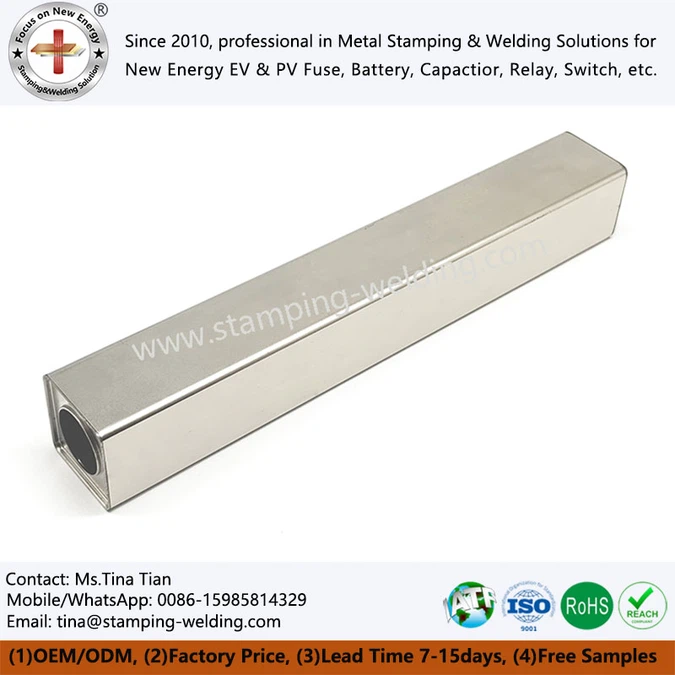
They can be adapted to different application scenarios such as low-voltage civil use, high-voltage industry, energy storage, rail transit, etc. In order to meet the flame-retardant safety regulations of electrical equipment, the surface of conventional capacitor shells is sprayed with special flame-retardant protective paint, and structural accessories such as outlet bushings, fixed hangers, and grounding bolts are standardized and integrated, so that the shell has multiple functions of packaging, installation, grounding, and protection. In industrial high-voltage and energy storage scenarios, corrosion-resistant and high-strength stainless steel structures have outstanding advantages. Among them, Stainless Steel Can has become the preferred structural type for high-end capacitor casings due to its excellent sealing and structural stability.
Material advantages
The material selection of the capacitor shell directly determines the insulation performance, mechanical strength, corrosion resistance and heat dissipation efficiency of the capacitor. Different materials are suitable for different working conditions and cost requirements. In terms of metal materials, aluminum alloy is the most common choice. It has low density, good thermal conductivity, and is easy to process and form. The top of the aluminum-shell electrolytic capacitor is usually equipped with an explosion-proof valve in the form of a concave and convex fan-shaped or ravine form. When a large amount of gas is generated internally due to overload or aging, causing the pressure to rise abnormally, the explosion-proof valve will rupture as a priority and release the pressure to avoid the overall explosion of the shell causing greater harm. For applications that require higher mechanical strength and corrosion resistance, the Stainless Steel Can for Storage Capacitor becomes an ideal option. Energy storage capacitors will withstand large pulse current impacts during the charge and discharge process, and the shell needs to have sufficient fatigue resistance to cope with long-term thermal cycle stress.
Stainless steel materials perform better than ordinary aluminum alloys under such working conditions. Stainless Steel Can for High Voltage Film Capacitors is specifically designed for ultra-high voltage applications such as high-voltage DC transmission and static var compensator. This type of capacitor is filled with insulating oil or inert gas. The stainless steel shell needs to have extremely high air tightness and resistance to electrochemical corrosion. The seal between the shell and the end cover is usually argon arc welded instead of simple crimping or glue sealing. In terms of non-metallic materials, insulating materials such as unsaturated polyester, epoxy resin and bakelite barrels are also used in the manufacture of low-voltage capacitor casings. This type of material itself has excellent electrical insulation properties and can meet ground insulation requirements without additional processing. However, its thermal conductivity is poor and its temperature resistance level is low, making it unsuitable for large-capacity or high-frequency working conditions. When selecting housing materials, engineers need to comprehensively weigh multiple factors such as the capacitor's rated voltage, rated current, working environment temperature, installation space, and expected service life, rather than pursuing the ultimate performance in one aspect.

Technical points
Modern capacitor housings have evolved from simple "containers" to technology carriers integrating multiple functions. In terms of heat dissipation function, since the capacitor inevitably generates heat due to dielectric loss and ohmic loss during operation, the housing needs to have sufficient heat dissipation capacity to control the internal temperature within the allowable range. An effective design is to inlay aluminum or copper plates in the bottom plate of the casing, using the high thermal conductivity of the metal to quickly conduct the heat generated by the capacitor core to the surface of the casing, and then take it away by natural air convection or forced air cooling. In terms of electromagnetic compatibility, some capacitor shells are designed to lay out ceramic capacitor groups on the edge of the shell and install independent ground terminals. By bypassing the common-mode high-frequency current to the ground, it can effectively suppress common-mode interference in the circuit. This is particularly critical for equipment containing high-frequency switching devices such as switching power supplies and inverters. In terms of noise control, power capacitors will produce vibration noise at audible frequencies due to harmonic currents during operation. The new noise reduction design installs soundproof covers through sealing gaskets on the top and bottom of the capacitor housing. The inside of the soundproof covers is filled with sound-absorbing materials or noise-reducing cores are installed. This can reduce harmonic noise by several decibels and meet the requirements for use in residential areas or noise-sensitive indoor places.
In terms of safety protection, the Rail Transit Power Capacitor is a key component in the rail transit vehicle converter, and its casing must also have flame-retardant, vibration-resistant, and impact-resistant properties. Continuous vibration during train operation may cause fatigue cracking of ordinary welded joints. Therefore, the casing of this type of capacitor usually adopts a reinforced structure and uses thicker plates. All welded parts have been inspected by non-destructive testing. In addition, the smart capacitor housing can be integrated with a temperature monitor, including a temperature measuring rod and a temperature display screen attached to the surface of the housing. Together with the temperature control fan blades that automatically adjust start and stop, it can realize real-time monitoring and automatic adjustment of the capacitor's operating temperature. When it is detected that the temperature exceeds the set threshold, an early warning signal can be sent to the external control system to avoid early failure of the capacitor due to long-term overheating.

Development trends and technological innovation
Capacitor housing technology is continuing to evolve towards integration, intelligence and high performance. In terms of structural integration, the new shell design inlays aluminum plates in the shell and optimizes the layout of the electrode copper bars, making the heat dissipation path of the capacitor core shorter and the thermal resistance smaller. At the same time, a ceramic capacitor group is arranged on the edge of the shell and connected to the ground terminal, so that the shell can simultaneously undertake the functions of heat dissipation and electromagnetic interference suppression, reducing the number of peripheral components. In terms of noise control, in order to solve the problem of audible noise caused by harmonic currents, the technical solution of adding sound insulation covers on the top and bottom of the capacitor shell and installing noise reduction cores inside has been verified in the industry. It can reduce the noise level when the capacitor bank is running and meet the environmental noise limit requirements of urban substations and distribution rooms near residential areas. In terms of intelligence, smart capacitor housings that integrate temperature monitors, display screens, and automatic temperature-control fans have entered the engineering application stage. They can display the hot spot temperature of the housing in real time and automatically adjust the ventilation volume according to temperature changes.
At the same time, the temperature data is uploaded to the monitoring system through the communication interface to provide a basis for predictive maintenance. In terms of manufacturing process, the special forming device and drying tooling for stainless steel shells improve the consistency of the shell size and internal cleanliness - the cleaning and drying process after stainless steel stretching is crucial to the long-term reliability of the capacitor, and any remaining tiny metal shavings or oil may cause partial discharge during use. In terms of connection technology, in order to solve the problem of the bonding strength between plastic shell and metal terminals, the embedded structure with multiple bosses on the bolt base significantly enhances the embedding force and prevents the terminals from loosening or falling off after long-term vibration or thermal cycle. It is worth emphasizing that stainless steel case products such as Stainless Steel Can, Rail Transit Power Capacitor, Stainless Steel Can for Storage Capacitor, Capacitor stainless steel case and Stainless Steel Can for High Voltage Film Capacitors are gradually expanding their share in the high-power, high-reliability capacitor market. With the continued advancement of new energy grid integration, rail transit construction and industrial automation, the demand for stainless steel capacitor cases is expected to maintain steady growth.

contact us
If you are developing new specifications of Capacitor Stainless Steel Can or looking for a shell supplier with stable delivery capabilities, you are welcome to submit technical drawings and technical requirements. Our engineering team will provide professional advice on material selection, drawing passes and heat treatment parameters.