Copper Solid Bus Bar Cost Factors
Aug 18, 2025
In electrical power distribution systems, copper solid bus bar plays a critical role as a high-conductivity conductor, efficiently transmitting large currents between components. These rigid copper strips are essential in switchgear, substations, and industrial panels, ensuring stable power flow. This article explores the key factors influencing their costs, including raw material impacts, manufacturing processes, specification variations, market dynamics, and application-specific requirements. It also introduces Xiamen APOLLO's cost-effective solutions.
Raw Material Costs: The Foundation of Pricing
1. Copper Price Changes
Copper busbar prices go up and down often. This happens because copper mining changes, world events affect supply, and industries like solar power need more copper. When these things change, your busbar costs change too. To save money, watch copper market trends and buy when prices drop. Many buyers stock up when copper is cheap.
2. Pure Copper Matters
Good busbars need very pure copper (over 99.9%). This pure copper costs more but works better for moving electricity. It wastes less energy as heat. For important power systems, don't use cheap copper - the small savings aren't worth the problems. Always check purity reports from suppliers.
3. Special Copper Mixes
Sometimes we add other metals to copper. This makes busbars stronger or stops rust. But these special mixes cost more than normal copper. Only use them when really needed, like near saltwater or where buses get lots of vibration. For most indoor jobs, regular copper works fine and saves money.
Manufacturing Processes and Their Cost Impacts
| Precision Machining Costs | Cutting solid copper busbars needs special machines. The more exact the cuts must be, the more it costs. Complex shapes take longer to make than straight cuts. Good machines cost more but make cleaner edges. This prevents fitting problems during installation. Always check the cutting tolerances your project really needs. |
| Protective Coatings Expense | Adding tin plating or anti-rust coatings costs extra. Workers must carefully prepare and apply these layers. But they help busbars last longer outdoors or in wet places. Without coating, copper turns green and conducts less electricity. Choose coatings based on where the busbar will be used. |
| Required Quality Testing | All busbars must pass strict tests. These check how well they conduct electricity and how strong they are. Tests follow international rules (IEC/ASTM). Testing costs money but prevents failures later. Good factories test every batch, not just samples. Always ask suppliers for test reports. |
Specification and Customization Influences
1. Cross-Sectional Dimensions
Larger copper solid bus bar need more material, which increases the cost. Thinner bars are cheaper and are used for low-current applications.
2. Length and Form Factor
Custom lengths or bends in copper bus bars cost more to make than standard straight ones produced in bulk.
3. Hole Punching and Drilling
Pre-drilled mounting holes for easy installation add processing steps, with higher precision requirements leading to greater cost increments.
Application-Specific Cost Considerations
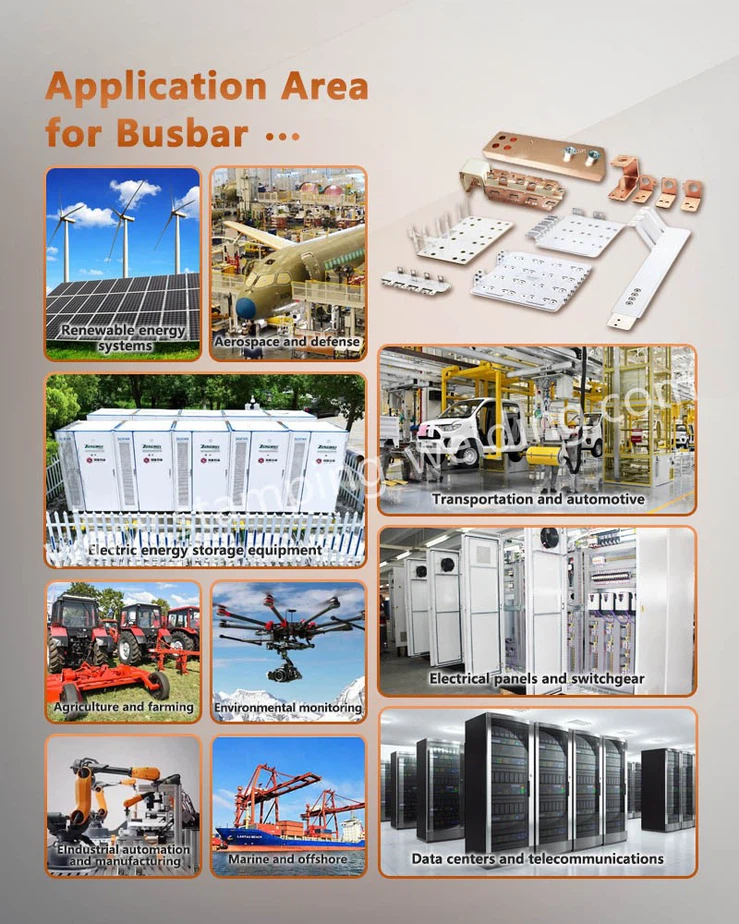
High-Voltage Substations
Large copper bus bars with thick insulation are used for safety. They cost more because of the materials and safety checks.
Renewable Energy Systems
Electrical copper busbar in solar and wind energy systems need to resist rust. This makes them more expensive but helps them last longer.
Industrial Machinery
Compact solid copper bus bar in factory machines are good for conductivity and save space. Custom sizes can make them cost more.
Market Dynamics and Supply Chain Factors
Copper busbar prices depend on several things. Being close to copper smelters cuts transport costs, while shipping from far away costs more. When demand grows quickly, like for wind and solar projects needing lots of copper, prices can rise because supply gets tight. Factories with more copper in stock may offer better prices. Buying large amounts usually costs less per piece than small orders. All these things work together to change prices often. This makes choosing the right time to buy important for saving money. Prices move up and down based on location, how much people want copper, how much is available, and order sizes. Watching these factors helps get better deals.
Xiamen APOLLO's Bus Bar Solutions
Xiamen APOLLO offers high-quality copper solid bus bar optimized for cost-efficiency without compromising performance. Our electrical copper busbar uses high-purity copper (99.95%+) for excellent conductivity, reducing energy loss in applications. Busbar copper products feature precision manufacturing, with customizable dimensions and surface treatments to meet specific project needs-from standard straight bars to complex bends.
We control costs through efficient supply chain management, sourcing copper from reliable smelters to mitigate price volatility. Our advantages include strict quality testing (conductivity, mechanical strength) and a global logistics network with sea, land, and air transportation, ensuring timely delivery of copper busbars worldwide. With advanced production technology and flexible customization, we provide cost-effective solutions for substations, renewable energy, and industrial systems. Choose Xiamen APOLLO for copper busbars that balance quality, performance, and value.

contact us