Installation and use guide for Laminated copper busbar: standardized operation to release efficient conductivity
Mar 24, 2026
Core structure and application characteristics of Laminated copper busbar
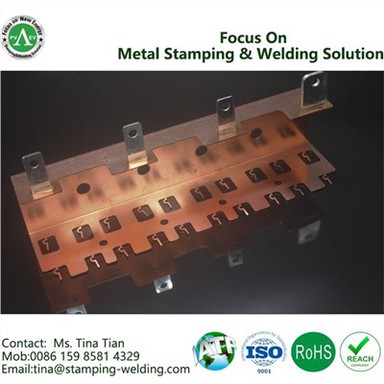
Laminated flexible busbar is an efficient conductive core component in the field of power transmission and distribution. It is formed by alternately laminating multiple layers of highly conductive copper/aluminum substrates and insulation materials, and is widely suitable for scenarios such as power electronics, new energy vehicles, industrial automation, and renewable energy.
The core advantage of Laminated copper bars comes from their structural design: a compact multi-layer structure significantly reduces circuit inductance and effectively suppresses electromagnetic interference (EMI); High conductivity substrates achieve low resistance transmission and reduce power loss; Multi layer structure evenly disperses heat and has excellent heat dissipation performance; Integrated design significantly reduces installation volume and adapts to high-density integration requirements, which is a key foundational component for improving the stability and efficiency of power systems.

Standardized installation and operation process for Laminated copper busbar
The installation of Laminated bus bar for telecom must strictly follow the standardized process to ensure electrical performance and operational safety.
Firstly, complete the preliminary preparation: verify that the specifications, dimensions, and electrical parameters of the busbar are consistent with the design requirements, clean the installation environment to avoid foreign objects affecting the connection, and prepare specialized tools such as torque wrenches and insulation testers.
Next, determine the installation location, plan the layout according to the drawings, ensure convenient connection with peripheral equipment such as capacitors and IGBT modules, and reserve sufficient heat dissipation space. Subsequently, fix the busbar using specialized brackets or bolts, strictly control the bolt torque, and avoid damaging the insulation layer due to over tightening or causing poor contact due to over loosening.
After fixing, connect external devices using compatible connectors or wiring terminals. For high current scenarios, it is recommended to use silver/tin plated joints to enhance conductivity and corrosion resistance.
After connection, use an insulation tester to detect the interlayer insulation and insulation status with the cabinet, to eliminate the hidden dangers of short circuit and leakage. For high current operating conditions, the Laminated inverter busbars needs to be equipped with heat sinks or fans to optimize heat dissipation.
Finally, a low voltage power on test is carried out, and the load is gradually loaded to verify that the temperature rise and voltage drop meet the design standards. After confirmation, it is officially put into use.
Key precautions for use and maintenance
To ensure the long-term stable operation of the Capacitor laminated bus bar for IGBT-based motor drive, it is necessary to strictly control the details of use and maintenance. In terms of electrical performance, ensure that the working current does not exceed the rated value, regularly monitor temperature rise, and avoid overheating damage in high load and high temperature environments; At the level of mechanical protection, excessive bending, compression and other mechanical stresses should be avoided on the busbar. Special tools should be used for installation and disassembly to prevent damage to the insulation and conductive layers. In terms of environmental adaptation, high protection level products should be selected for humid, corrosive, and high vibration scenarios, and the appearance should be checked regularly to identify corrosion, oxidation, and damage issues.
In daily maintenance, regularly clean the surface of the Laminated bus bar for high current inverter, tighten the connection points, and prevent loosening from causing poor contact and heating; Follow safety regulations throughout the operation, perform power-off operations, wear insulation protective equipment, and avoid the risk of electric shock in high voltage and high current scenarios.
Summary of Industry Applications and DevelopmentTypical application scenarios and value summary
The Laminated bus bar for high current circuit board IGBT plays a core role in multiple fields due to its low inductance, low loss, and high reliability. In power electronic equipment, it provides high current and efficient transmission for frequency converters, inverters, and UPS; In the field of new energy vehicles, adapting to the power distribution needs of battery packs, motor controllers, and charging stations; Stable power supply for supporting servo drives and robot control systems in industrial automation scenarios; In the field of renewable energy, it serves the DC bus transmission of photovoltaic inverters and wind power systems.
As an efficient conductive component of the power system, the installation and use of Laminated bus bar for spacecraft power inverter must strictly follow the specifications. Through standardized operation, regular maintenance, and reasonable selection, its performance advantages can be fully released, system reliability and operational efficiency can be improved. In practical applications, suitable products should be selected based on specific working conditions, and technical manual requirements should be followed to ensure the safe and stable operation of the system.

Contact us
If you have any requirements regarding the selection, customization, or installation of Laminated copper busbars, please feel free to contact us for consultation at any time. We will provide you with professional technical support and customized solutions to help your power system achieve efficient and stable operation.