Lithium battery industry professional knowledge popularization
May 29, 2026
product definition
Lithium-ion batteries are a type of rechargeable secondary battery system that uses lithium alloy metal oxide as the positive electrode material, graphite as the negative electrode material, and uses a non-aqueous electrolyte solution. Its core working principle is based on the reversible intercalation and deintercalation of lithium ions between the positive and negative electrodes during charge and discharge, rather than relying on the redox reaction of metallic lithium. This gives lithium-ion batteries significant advantages over traditional lithium metal batteries in terms of safety, cycle life and energy density. From the perspective of product form, Lithium-ion Battery Cell is the basic unit that constitutes various types of battery packs. When multiple cells are combined and packaged in series and parallel, a Lithium Battery Pack or Lithium-ion Battery Pack is formed.
For terminal application scenarios, special products developed for the photovoltaic and energy storage fields include Lithium-ion Batteries for Solar Products, Solar Energy Storage Systems Lithium Batteries Pack, and Lithium Ion Battery for Solar Energy System. In addition, Lithium SuperPack Batteries represent a type of special battery product with high-reliability packaging and wide-temperature adaptability, while Battery Pack Kit provides modular component solutions for system integrators. From the perspective of engineering classification, lithium batteries can be divided into three types: cylindrical, square and soft package according to packaging form. Each form has its own emphasis on grouping efficiency, heat dissipation capacity and mechanical strength, and is suitable for different application scenarios.
Structure and manufacturing process
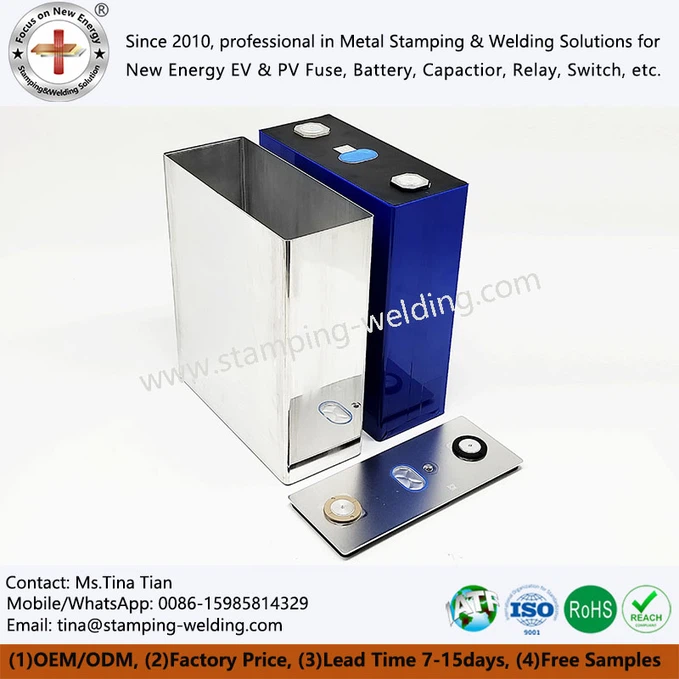
Lithium batteries usually have two shapes: cylindrical and square, with spirally wound or stacked electrode groups inside. The positive electrode is composed of lithium cobalt oxide, lithium manganate, lithium iron phosphate or ternary materials coated on aluminum foil, and the aluminum foil serves as the positive current collector; the negative electrode is composed of artificial graphite or natural graphite coated on copper foil, and the copper foil serves as the negative current collector. A layer of extremely thin and highly permeable polyethylene or polypropylene microporous film is used as an isolation material between the positive and negative electrodes. The inside of the battery is filled with organic electrolyte solution. In addition, a safety valve and PTC element (used in some cylindrical types) are installed on the top of the battery core to protect the battery from damage in time when the battery is in an abnormal state or the output is short-circuited. The nominal voltage of a single lithium-ion battery is 3.7V (lithium iron phosphate system is 3.2V). Due to the limited capacity of a single battery, in practical applications, multiple cells are often connected in series to increase voltage and in parallel to increase capacity to meet the voltage platform and energy capacity requirements of different devices.
From a manufacturing process perspective, the production of specialized energy storage products such as Battery for Lithium-Ion Energy Storage System requires dozens of processes such as pole piece coating, rolling, slitting, winding/lamination, liquid injection, formation, and volume separation. Among them, the pole piece manufacturing process has extremely high requirements for coating thickness uniformity (tolerance controlled within ±1.5 μm), pole piece alignment (deviation not exceeding 0.5 mm), and burr control (burr height not exceeding 15 μm). Laser welding is used to seal the shell and cover. The welding penetration must be accurately controlled within the range of 0.3-0.8mm, and there must be no penetrating pores or spatter defects. The formation process is the first electrochemical process to activate the battery and needs to be carried out in a strictly temperature-controlled environment. The first charging current is usually set at 0.05C to 0.1C to promote the formation of a stable solid electrolyte interface film.

Application areas
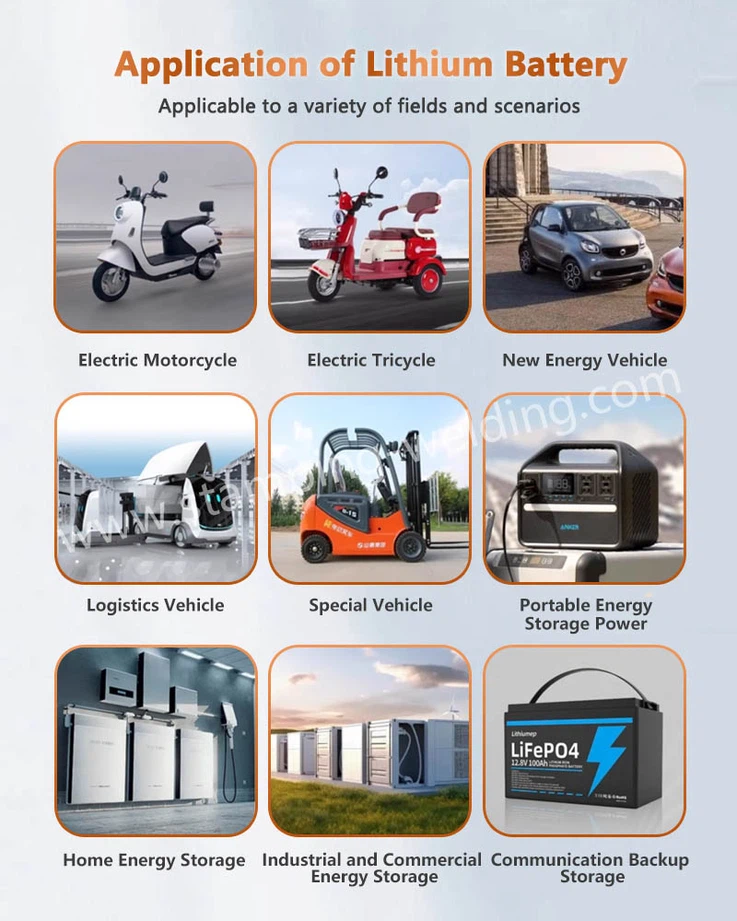
Solar Home System Lithium Ion Batteries are specially designed for household photovoltaic energy storage systems. Its core requirements include a wide operating temperature range (-20°C to 60°C), a cycle life of no less than 6,000 times, and a protection level of IP65 or above to adapt to outdoor installation environments. Lithium Solar Batteries are widely used in off-grid photovoltaic power stations, backup power supplies for communication base stations and microgrid systems in remote areas. Their capacity specifications are usually between 2.5kWh and 20kWh, and can be flexibly expanded in parallel according to load demand. In the field of large-scale energy storage power stations, Solar Energy Storage Systems Lithium Batteries Pack is deployed in container or cabinet style. The capacity of a single system can reach the MWh level, participating in power grid frequency and peak regulation and renewable energy grid integration and consumption.
Lithium Ion Battery for Solar Energy System emphasizes communication compatibility with photovoltaic inverters, energy storage converters and energy management systems, and usually supports multiple protocols such as CAN bus, RS485 and Modbus. Lithium SuperPack Batteries are suitable for harsh working conditions such as unattended base stations, polar scientific research equipment and special vehicles due to their excellent low-temperature discharge performance (more than 70% of the rated capacity can be discharged in a -30°C environment) and highly reliable sealed structure. The Battery Pack Kit provides system integrators with standardized battery modules, BMS slave boards, structural parts and wiring harness components, significantly reducing the complexity and cycle of integrated development.
In the field of power batteries, lithium-ion batteries are widely used in electric passenger cars, electric buses, logistics vehicles and special engineering vehicles. The energy storage field covers three major market segments: large power stations, industrial and commercial energy storage, and household energy storage. The consumer electronics field includes smartphones, laptops, wearable devices, and drones. As the final product form for the above-mentioned types of applications, Lithium-ion Battery Pack's design needs to comprehensively consider multi-dimensional indicators such as energy density, power density, thermal management, mechanical protection and electrical safety. It is a highly integrated product of electrochemistry, mechanical engineering and power electronics technology.
Performance Characteristics and Engineering Tradeoffs
Compared with traditional lead-acid batteries and nickel-metal hydride batteries, lithium-ion batteries show significant advantages in multiple performance dimensions. In terms of energy density, lithium-ion batteries can reach 460-600Wh/kg, which is about 6-7 times that of lead-acid batteries, which means that more electrical energy can be stored under the same weight. In terms of cycle life, batteries using lithium iron phosphate cathodes can achieve more than 6,000 cycles under 1C charge and discharge and 100% discharge depth conditions, and their service life can reach more than 6 years. In terms of rated voltage, the operating voltage of a single cell is 3.7V or 3.2V, which is approximately equal to the series voltage of three nickel-metal hydride or nickel-cadmium batteries, making it easier to form a higher voltage battery pack. In terms of high power endurance, the power lithium iron phosphate battery can support an instantaneous discharge rate of 15-30C to meet vehicle acceleration and climbing needs. The self-discharge rate is extremely low and can usually be controlled below 1% per month, which is less than 1/20 of that of nickel-metal hydride batteries. In terms of weight, the weight of the same volume is only 1/6 to 1/5 of lead-acid products. In terms of high and low temperature adaptability, it can be used in environments from -20°C to 60°C, and can reach -45°C after special processing.
In terms of green environmental protection, it does not contain toxic and harmful heavy metals such as lead, mercury, and cadmium, and basically no water resources are consumed during the production process. However, lithium-ion batteries also have several engineering limitations. First, all lithium-ion batteries need to be equipped with protection circuits to prevent overcharge, over-discharge and over-current, which increases the complexity and cost of the system. Second, lithium cobalt oxide system batteries cannot be discharged at high currents and have poor safety. Third, the production conditions are extremely demanding - key processes such as electrode coating, winding and liquid injection need to be carried out in a drying room with a dew point below -40°C, resulting in high equipment investment and operating costs. Fourth, there are restrictions on the use conditions. Use at too high or too low temperatures will accelerate aging and even cause safety risks.

contact us
If you need to customize high-reliability Flash Battery lithium batteries and supporting system solutions for your new energy project, our engineering team can provide detailed technical specifications and application support to help you build the most competitive energy storage architecture.