Principles And Applications Of Power Capacitors
Jan 06, 2025
Classification of power capacitors
Power capacitors can be divided into indoor and outdoor types according to the installation method; they can be divided into low voltage and high voltage according to their rated operating voltage; they can be divided into single-phase and three-phase according to their number of phases, except for low-voltage parallel connection. Except for the capacitor, the rest are single-phase; according to the shell material, they can be divided into metal shells, porcelain insulated shells, bakelite shells, etc.
It can be divided into the following 8 types according to use:
1) Parallel capacitor. Originally called phase-shifting capacitor. It is mainly used to compensate the reactive power of inductive loads in power systems to increase power factor, improve voltage quality, and reduce line losses.
2) Series capacitor. It is connected in series in power frequency high-voltage transmission and distribution lines to compensate for the distributed inductive reactance of the line, improve the static and dynamic stability of the system, improve the voltage quality of the line, lengthen the power transmission distance and increase the transmission capacity.
3) Coupling capacitor. It is mainly used for high-frequency communication, measurement, control, and protection of high-voltage power lines and as components in devices that extract electrical energy.
4) Circuit breaker capacitor. Originally called voltage equalizing capacitor. The parallel connection plays a voltage equalizing role on the fractures of the ultra-high voltage circuit breaker, making the voltage between the fractures uniform during the breaking process and when disconnecting, and can improve the arc extinguishing characteristics of the circuit breaker and increase the breaking capacity.
5) Electric heating capacitor. It is used in electric heating equipment systems with a frequency of 40 to 24,000 Hz to increase the power factor and improve the voltage or frequency characteristics of the circuit.
6) Pulse capacitor. It mainly plays the role of energy storage and is used as basic energy storage components such as impulse voltage generators, impulse current generators, and oscillating circuits for circuit breaker tests.
7) DC and filter capacitors. Used in high voltage DC devices and high voltage rectifier and filter devices.
8) Standard capacitor. It is used in power frequency and high voltage measurement dielectric loss circuits as a standard capacitor or as a capacitive voltage dividing device for measuring high voltage.
application of power capacitors
Solar Photovoltaic Power Generation System
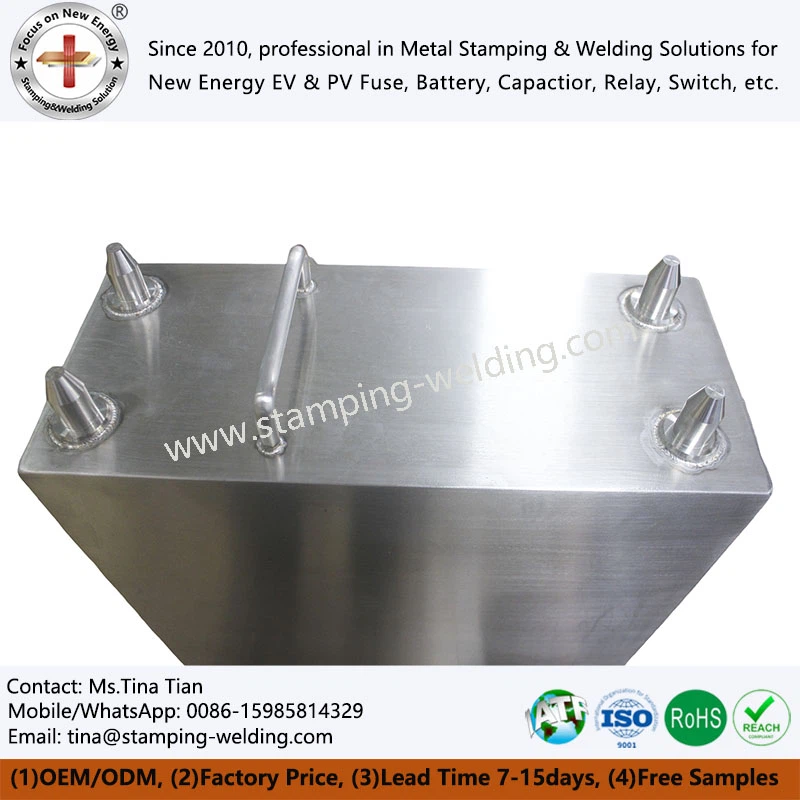
In solar photovoltaic power generation systems, power capacitors are mainly used for reactive power compensation and filtering. The DC power generated by solar panels needs to be converted into AC power by an inverter before it can be integrated into the grid. During the working process, the inverter will produce a large number of harmonics, which affects the power quality. Power capacitors can effectively filter out these harmonics, improve power quality, and ensure stable operation of photovoltaic power generation systems. At the same time, the stainless steel shell can adapt to the outdoor working environment of the solar photovoltaic power generation system, resist erosion by natural factors such as ultraviolet rays and wind and sand, and provide reliable protection for the capacitors.
Wind Power System
Power capacitors in wind power systems are mainly used for energy storage and reactive power compensation. Due to the instability of wind power, the output power of wind turbines will fluctuate frequently, which has a certain impact on the stability of the power grid. Power capacitors can store electrical energy when the wind turbine output power is low and release electrical energy when the output power is high, thus smoothing power fluctuations. In addition, the stainless steel casing can withstand complex mechanical vibrations and harsh climatic conditions in wind power systems, ensuring the safe operation of the capacitor.
Energy Storage System
Energy storage system is an important part of the new energy field. It can store electric energy when new energy generation is in excess and release electric energy during peak power consumption, thus regulating the balance between power supply and demand. Power capacitors are mainly used in energy storage systems to improve the charging and discharging efficiency of batteries and extend the service life of batteries. The stainless steel shell can provide good protection for the capacitor, prevent the gas and electrolyte generated by the battery during the charging and discharging process from corroding the capacitor, and ensure the safe and reliable operation of the energy storage system.

Customer cases and successful experiences
The stainless steel shells of power capacitors produced by our company have been widely used in many new energy projects and have achieved good results. For example, in a large-scale solar photovoltaic power generation project, we provided customers with customized stainless steel housing solutions, which met the customer's requirements for capacitor housings such as corrosion resistance, good heat dissipation performance, and beautiful appearance. After long-term operation testing, the performance of the capacitor is stable and the outer casing is free of any corrosion and damage, which has been highly recognized by customers.

contact us