New energy vehicle busbar: technological application and industry prospects of combining copper and aluminum
May 12, 2026
In the electrical system of new energy vehicles, as the voltage level is significantly higher than that of traditional fuel vehicles, conventional components such as high-voltage connectors, high-voltage wiring harnesses, fuses, and relays have become well-known. However, there is a type of non-standard component that also plays a key role in the transmission of large currents and high voltages, namely the EV BusBar. The busbar is not a new device. It has existed since the birth of high-voltage power transmission technology and is currently widely used in fields such as electric power, communications, new energy vehicles, energy storage, and the military industry. Among new energy vehicles, BusBar Car is mainly used for power distribution and management in high-voltage and high-current scenarios. Its role is not limited to the automotive industry, but also extends to energy storage systems and communication equipment.

Structural advantages
Busbar Automotive has the advantages of compact structure, high space utilization, easy installation and maintenance, low impedance and good heat dissipation characteristics. At the same time, it helps suppress voltage spikes, reduce system electromagnetic interference, and supports flexible input and output methods for easy integration with connectors, wiring harnesses and other components. The high current density and multi-layer stacking capability also make it more suitable for automated assembly processes. However, Automotive Power Connectors type busbars face the problem of difficulty in standardization. They usually need to be customized and designed according to specific projects, which increases technology and time costs. Due to the structural differences of different projects, it is difficult to achieve unified production and relies on the input of a large number of technical personnel. Overall, busbars are suitable for short-distance power transmission, and the industry generally believes that their application prospects in electric vehicles are better than traditional cables.

material classification
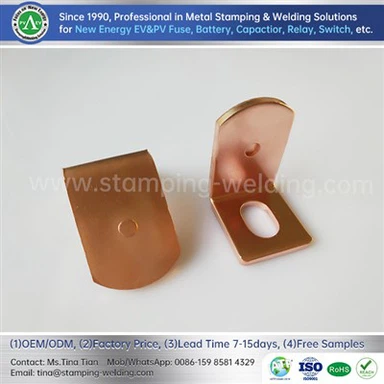
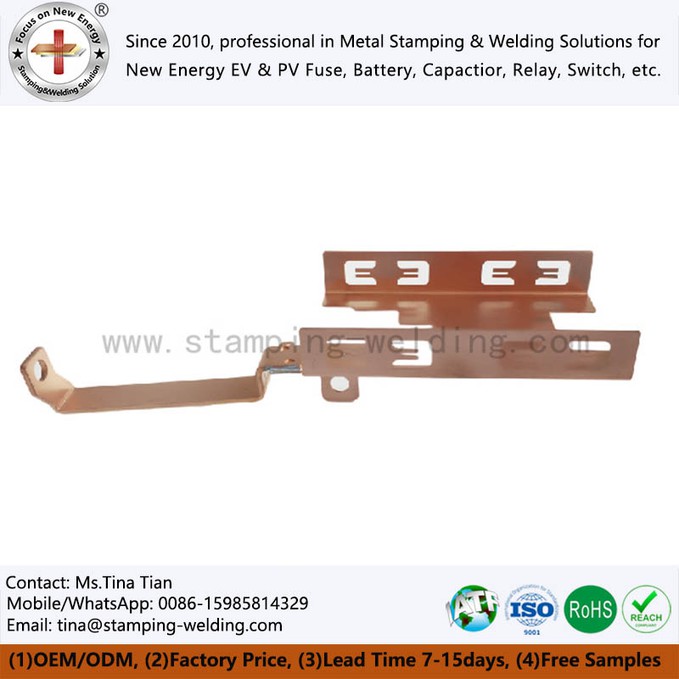
According to material classification, busbars mainly include copper busbars, aluminum busbars and copper-aluminum composite busbars. According to the processing properties, it can be divided into hard and soft. In new energy vehicle battery packs and energy storage battery systems, commonly used EV battery busbars include copper and aluminum structural parts, such as copper bars, aluminum bars, copper-aluminum composite bars and welded busbars. Copper-aluminum composite materials combine the high conductivity of copper with the lightweight characteristics of aluminum. The surface is a copper layer and the inner core is aluminum. The reliability is improved through a special process and overcomes the problems of easy oxidation and creep of aluminum. After reliability verification and engineering practice, the safety and service life of copper-aluminum composite busbars are equivalent to those of copper busbars, and it has the advantages of lighter weight and lower cost.
Application value
The lightweight value of aluminum busbars is becoming increasingly prominent in the automotive field. The density of aluminum is about 70% of copper, which can effectively reduce the weight of the workpiece and improve installation convenience. As the proportion of aluminum conductors (cables) used increases globally, especially in developed countries, the driving factors behind it include cost, weight, resource distribution and technological progress, especially the solution to the problem of copper-aluminum transition connections. For the new energy automobile industry, the increase in voltage and current puts forward higher requirements for integration and space optimization, and further tests the reliability and durability of the busbar. How to evaluate current-carrying capacity, adapt to automated assembly, and enhance the value of products in power batteries and motor electronic control systems has become a direction that the industry continues to pay attention to.
contact us
We focus on the R&D and manufacturing of high-performance power transmission solutions and are committed to providing high-quality busbar and power connector products for the Capacitor Busbar and energy storage industries. Welcome to contact us to discuss the innovative future of electrical connections.