How to Select Laminated Busbar Connectors for Energy Storage PCS and Inverters? An Analysis Covering Current, Low Inductance, Insulation, and Manufacturing Capabilities
Aug 11, 2026
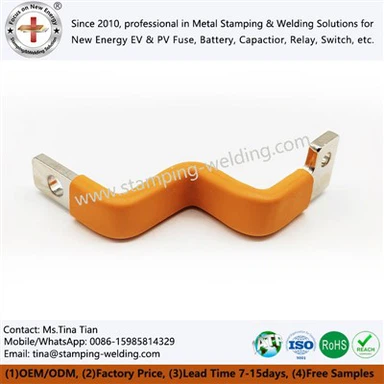
Laminated Busbar Connectors used in energy storage PCS and inverters not only facilitate high-current transmission but also influence system temperature rise, switching performance, and long-term operational reliability. Proper selection requires a comprehensive assessment of operating current, voltage ratings, stray inductance, insulation schemes, and manufacturing capabilities, rather than relying solely on product dimensions or price. For high-power power electronics equipment, the structural design of laminated busbars for energy storage PCS must be tailored to the specific application environment to ensure long-term, stable operation.

Why do energy storage PCS and inverters require laminated busbars?
Traditional busbars typically employ a discrete structure with significant spacing between the positive and negative conductors; this configuration tends to create a large current loop area, thereby increasing stray inductance and electromagnetic interference. In applications involving high-speed switching devices such as IGBTs and SiC components, excessive parasitic parameters can lead to voltage spikes, increased device losses, and reduced system efficiency.
Laminated busbars utilize a composite structure of multiple conductor layers and insulating materials to position the positive and negative conductors in close proximity. This arrangement enables magnetic field cancellation, reduces loop inductance, and enhances power density. Consequently, laminated low-inductance busbars are widely used in energy storage PCS units, photovoltaic (PV) inverters, motor controllers, and high-power conversion equipment.
Different application scenarios-such as energy storage system (ESS) cabinets, PV inverters, and electric vehicle (EV) electronic control systems-require the selection of an appropriate structure based on factors like installation space, current ratings, and thermal management requirements. For instance, laminated busbars designed for electric vehicles differ from those used in energy storage PCS units regarding current density, mechanical structure, and insulation specifications, necessitating application-specific designs.
Four Key Parameters for Selecting Laminated Busbars
1. Determine the thickness and cross-sectional area of the copper layer based on the operating current
The thickness of the copper layer of the laminated busbar directly affects the current carrying capacity and temperature rise performance. When selecting, it is necessary to comprehensively consider the continuous operating current, peak current, ambient temperature and cooling conditions, rather than simply increasing the copper thickness.
It is usually necessary to determine the current density through thermal analysis so that the busbar can maintain a reasonable temperature rise during long-term operation. At the same time, the copper material type, processing method and surface treatment will also affect the conductive performance. For example, Copper Laminated Bus Bars need to match the appropriate cross-sectional area according to different current levels.
For high-power PCS systems, the DC-Link area usually adopts a high current-carrying structure to reduce local hot spots and improve system reliability by optimizing the copper layer layout.
2. Control stray inductance based on switching frequency
Modern energy storage inverters increasingly use IGBT and SiC power modules, and the high-frequency switching environment places higher requirements on the low inductance performance of the busbar.
Low inductance design is mainly achieved through the following methods:
- Shorten the distance between the positive and negative electrodes and reduce the current loop area;
- Optimize the interlayer arrangement to offset the magnetic field generated by the reverse current;
- Reduce connection path length and reduce parasitic parameters.
For example, Customized Laminated Busbar for IGBT needs to be designed according to the power module layout so that the bar inductance can meet the high-speed switching requirements.
For SiC applications, Laminated Busbar SIC Application has become an important design direction for high-frequency and high-power conversion equipment, which can effectively reduce the impact of switching transients and improve system stability.
3. Select an insulation solution based on system voltage
Energy storage PCS usually involves voltage levels of hundreds of volts or even higher, so insulation design is key to the reliability of laminated busbars.
Common insulation materials include:
- PET insulation film;
- PI/Kapton high temperature insulation film;
- Nomex heat-resistant insulation material.
The insulation solution needs to be selected based on rated voltage, withstand voltage requirements, partial discharge performance and operating temperature. For example, BusBar with PET Insulating Paper is suitable for conventional power electronic equipment, while high-voltage systems require higher-level insulation designs.
At the same time, the thickness of the insulation layer not only affects the voltage resistance performance, but also affects the overall size and heat dissipation capacity, which requires a balance between safety and compactness.
4. Determine the structural design according to the installation environment
Different application environments have different requirements for laminated busbars.
Indoor energy storage cabinets usually focus on space utilization and heat dissipation performance; outdoor energy storage systems need to consider humidity, anti-corrosion and long-term environmental changes.
For example, High Voltage Explosion-Proof Inverter Busbar needs to meet the insulation and safety requirements in special environments, while Laminated Bars for complex Bar Installations require customized designs based on the internal space of the equipment.

Manufacturing processes determine the long-term reliability of laminated busbars
The performance of Laminated Busbar Connectors depends not only on the design but also on critical manufacturing factors such as dimensional accuracy, interlaminar bonding, and connection quality.
Precision copper processing requires consistent conductor dimensions, with edge quality and mounting precision controlled through methods such as stamping and CNC machining.
During the lamination process, parameters such as material positioning, hot-pressing temperature, pressure, and interlaminar bond strength must be strictly controlled to prevent reliability issues like air bubbles or delamination.
Regarding connection techniques, various methods-such as laser welding, resistance welding, or silver brazing-may be employed depending on the application. For instance, laminated busbars used in compact IGBT DC power systems require low electrical resistance and long-term thermal cycling stability in the connection zones.
Furthermore, a robust manufacturing system must integrate dimensional inspection, electrical testing, and reliability verification-including CMM inspection, withstand voltage testing, and temperature rise testing-to ensure product consistency across mass production.
How do you choose a reliable supplier of laminated busbars?
For manufacturers of energy storage PCS and inverters, selecting a laminated busbar supplier requires looking beyond procurement costs; it is essential to evaluate whether the supplier possesses comprehensive manufacturing and engineering support capabilities.
An excellent supplier should offer:
1. Product Design Support
The ability to optimize structural designs-including low-inductance configurations, insulation coordination, and DFM (Design for Manufacturability) analysis-based on the customer's specific voltage, current, installation space, and application environment.
2. Multi-Process Manufacturing Capabilities
Capabilities spanning copper processing, insulation lamination, welding, plating, and precision inspection to meet requirements ranging from prototype development to mass production.
3. Project Delivery Capabilities
The ability to support prototyping, small-batch validation, and long-term mass production, backed by a robust quality control system.
For customers requiring high-reliability interconnect solutions-such as laminated busbars for variable frequency drives (VFDs), power distribution units (PDUs), or DC-link capacitors-suppliers must possess specialized design and manufacturing expertise tailored to these specific applications.

Alignment of Laminated Busbar OEM Manufacturing Capabilities
For applications involving energy storage PCS, inverters, and new energy power electronics, the manufacturing of laminated busbars encompasses multiple stages, including copper processing, insulation lamination, precision welding, and performance testing.
As a supplier with comprehensive manufacturing capabilities, we provide integrated support tailored to customer needs-spanning structural design, prototype development, and mass production-and offer services such as precision stamping, laser welding, electroplating, automated inspection, and quality system management.
Through stable manufacturing processes and collaborative engineering, we help customers reduce development risks, enhance product consistency, and meet the requirements for the long-term operation of new energy equipment.
Contact Us
If you are developing projects for energy storage PCS, PV inverters, motor controllers, or other high-power power electronics equipment and require a suitable Laminated Busbar Connectors solution, please provide your product specifications, structural drawings, or application requirements. We will offer professional selection recommendations based on current, voltage, and the installation environment.