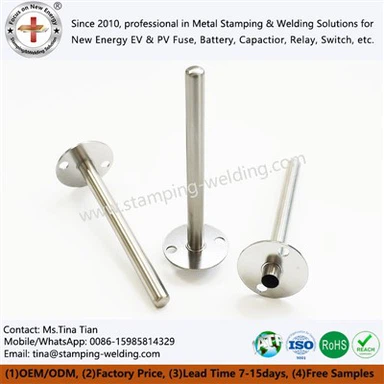
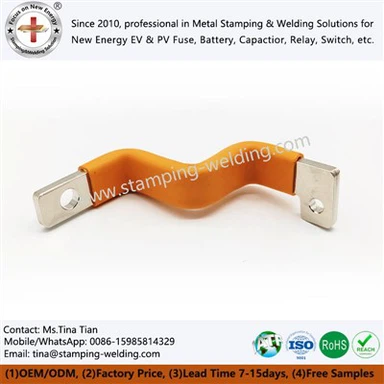
Red-forged technology enables fuse upgrades, with Fuse Blade becoming a core component in low-voltage power distribution
Feb 28, 2026
In the field of power distribution and electrical equipment, short-circuit protection components serve as the "last line of defense" for circuit safety, and the performance of their core parts directly determines the level of circuit safety protection. With the continuous increase in requirements for high breaking capacity and reliability in new energy, industrial power distribution, and other fields, Fuse Blade, manufactured using the hot-forging process, have gradually become core components of NH low-voltage high-breaking-capacity short-circuit protection devices due to their excellent conductivity and mechanical properties. As a core product category, Fuse Contact has also undergone technological iteration along with industry upgrades, contributing to the high-quality development of the short-circuit protection component industry.

Material advantages: Copper material forms a solid conductive core
The superior performance of the hot-forging contact knife relies heavily on the high-purity copper material. Copper, as the core conductive material, perfectly matches the characteristics of the hot-forging process, becoming the key to the contact knife's effectiveness. High-purity copper possesses excellent conductivity, enabling rapid current conduction and reducing power loss, thus meeting the high breaking capacity and high current requirements of fuses. Simultaneously, copper's excellent ductility and toughness perfectly complement the hot-forging process, allowing for precise shaping under high-temperature plasticity, ensuring the contact knife's structural integrity. Furthermore, copper's good corrosion resistance and thermal conductivity extend the contact knife's lifespan and quickly dissipate heat generated during operation, preventing overheating from affecting the overall performance of the fuse. This is the core reason why Copper Contact and Copper Knife have become the mainstream choice in the industry.

Process and Structure: Hot Forging Technology and Tool Characteristics
The hot-forging process, also known as "red hot stamping," is the core technology supporting hot-forging contacts. Its core process involves heating a metal material (usually high-purity copper) to a plastic state, then stamping it in one go using a die on a press. This processing method for fuse copper parts hot-forging parts has significant technological advantages compared to traditional casting and machining processes. Structurally, the hot-forging contact appears as a flat metal strip with exposed ends, resembling a "blade." It can be precisely inserted into the fuse base or the contact seat of a disconnector to achieve stable current conduction. The material properties of copper knife further enhance its conductivity and mechanical properties.
Application scenarios: Adapting to industrial needs across multiple fields
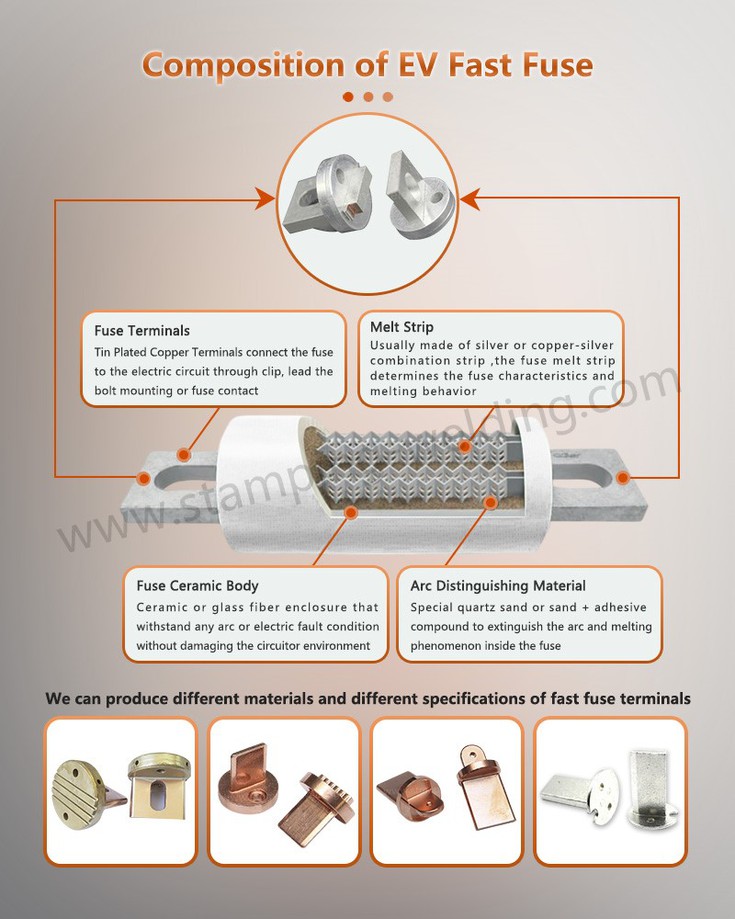
Currently, high-strength contact blades are mainly used in industrial-grade fuses with extremely high requirements for conductivity and reliability, covering multiple power distribution and protection scenarios. In the low-voltage power distribution field, the RT36N series and NRT36 series knife-type contact fuses are equipped with these high-strength contact blades for short-circuit protection in power distribution and motor control systems. In the new energy field, in electric vehicle (EV) battery circuits, EV Fuse Copper Contacts, with their advantages of high conductivity and high stability, have become a core component adaptable to high current and fast-breaking requirements, contributing to the upgrade of circuit safety protection for new energy vehicles.

Industry Outlook: Market Growth and Technological Iteration
Industry analysis indicates that with the increasing global electrification and the continued growth of the new energy industry, the demand for Fuse Blade is steadily rising. In the future, with continuous optimization of the red-pointing process and technological iterations of related products such as Copper Contact and Blade Contact, red-pointing contacts will be further adapted to higher voltage and higher current applications, continuously empowering the fuse industry towards higher efficiency and reliability, and providing core support for the safe and stable operation of power distribution, new energy, and other fields.
contact us
If you have any needs regarding Fuse Blade products, adaptation selection, or other related products, please feel free to contact us at any time to obtain professional solutions and technical support.