Stainless Steel Stamping Parts and Molding Technical Guide
May 08, 2026
Material selection and characteristic analysis
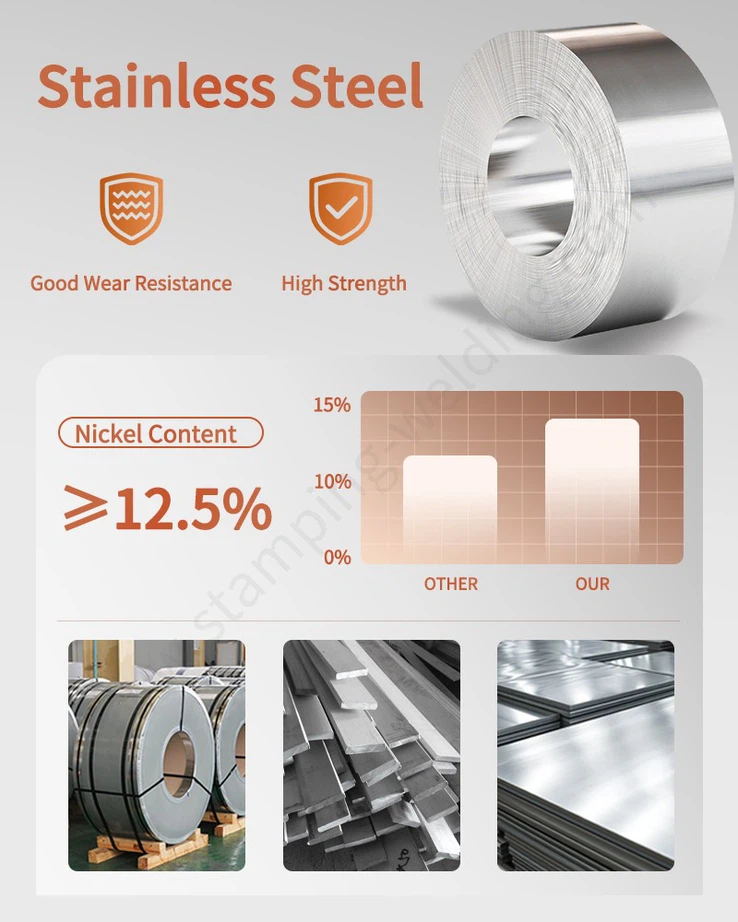
The first step in stainless steel stamping modeling is to choose the right material. Different types of stainless steel have different characteristics in hardness, ductility and corrosion resistance. 304 stainless steel has become a commonly used material for stamping due to its good comprehensive properties, while 316 is more suitable for highly corrosive environments. The material thickness is usually 0.5-3mm. If it is too thin, it will easily deform, and if it is too thick, it will be more difficult to stamp. In precision metal stamping, material selection directly determines the mechanical properties and durability of the final product.
Process classification and technical points
Metal Stamping covers a variety of forming processes, each with its own technical characteristics. The drawing process uses a punch to drive the sheet material to flow into the concave mold, and relies on the fluidity and elongation of the material to form open hollow parts; the bulging process uses the mold to force the thickness of the sheet material to become thinner and increase the surface area, and the blank is crushed by the edge ring and cannot flow into the concave mold. The flanging process turns the hole edge or outer edge of the blank into a vertical edge, in which the hole expansion is the intermediate stage of round hole flanging; the bending process is used to bend the sheet, bar or pipe material into a specific angle and shape. For Precision Metal Stamping, the deformation amount and stress distribution of each process need to be strictly controlled.
Processing flow and quality control
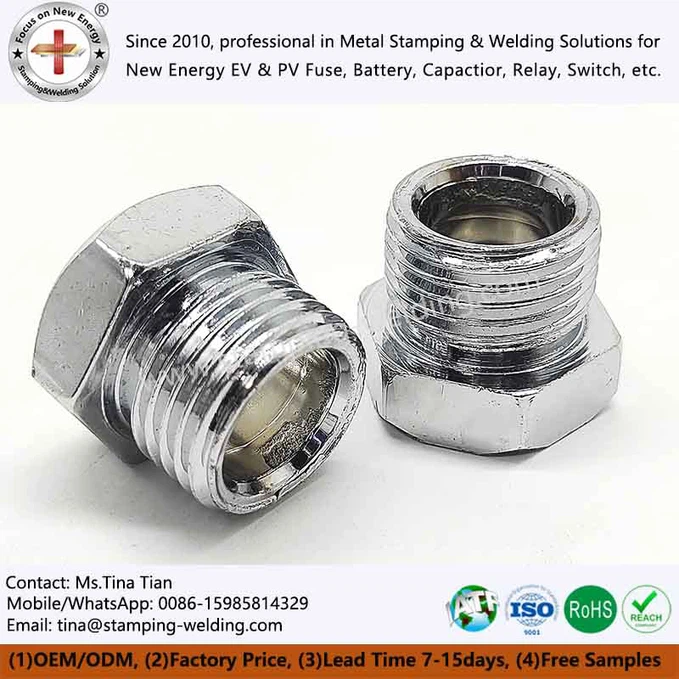
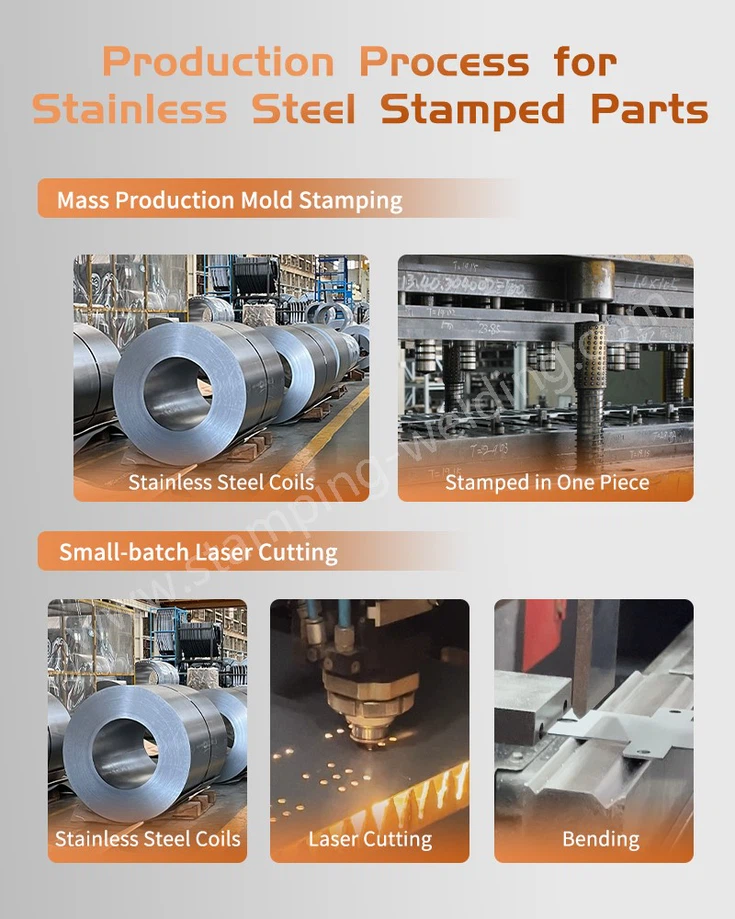
The processing of stainless steel stamping parts mainly relies on the synergy of molds and presses. Typical processes include blanking, punching, stretching, forming, welding and surface treatment. Laser processing technology can achieve high-precision cutting and drilling, with tolerances controlled within 0.01mm. In Custom Metal Stamping, the prototyping stage usually takes 3 days to verify the feasibility of the design, and the batch processing stage strictly implements each process. The surface treatment uses a grinding and polishing process, which can not only remove processing traces, but also improve the surface finish of the parts. Each batch of products must pass dimensional inspection and strength testing to ensure that it meets industrial assembly requirements.
Frequently Asked Questions and Optimization Solutions
Defects such as cracking and wrinkling are prone to occur during the stamping process of stainless steel. Progressive Die Stamping can be improved by the following methods: adjusting the stamping speed, too fast will cause cracking, and too slow will affect efficiency; optimizing the lubrication method to reduce friction between the mold and the material; adopting multi-process progressive forming to avoid excessive single deformation; and regularly maintaining the mold to maintain the sharpness of the cutting edge. In addition, for stainless steel micro-hole processing, it is necessary to achieve a small hole diameter, no burrs, uniform and stable precision, so as to take advantage of the stamping process to "reduce costs, improve quality, and increase efficiency".
contact us
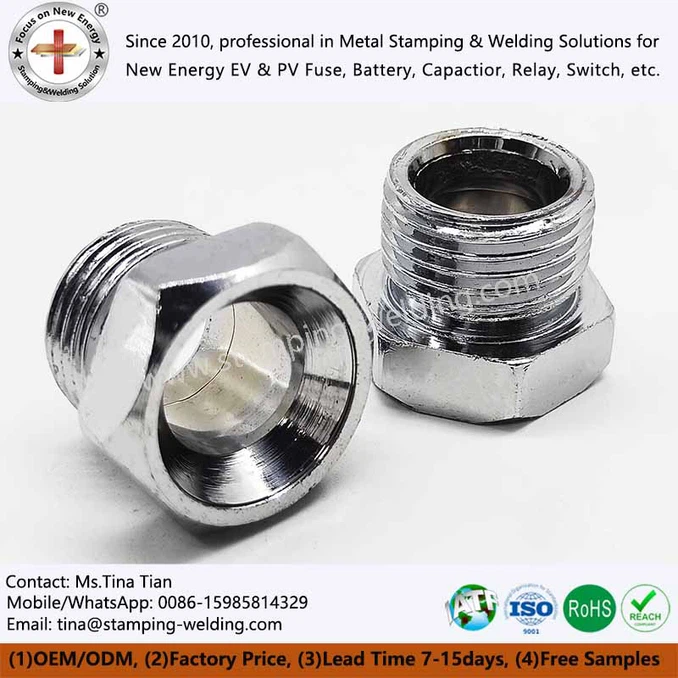
We focus on providing high-quality Stainless Steel Stamping Parts services, from 304 stainless steel stamping to complex stainless steel plate stamping. We can meet your customized needs. Feel free to inquire about our stainless steel metal stamping services and get an exclusive quote for custom metal-stamped parts.