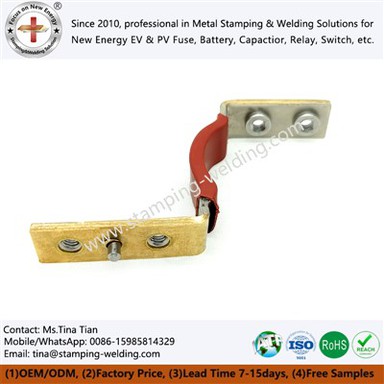


Flexible Busbars For Battery Connector
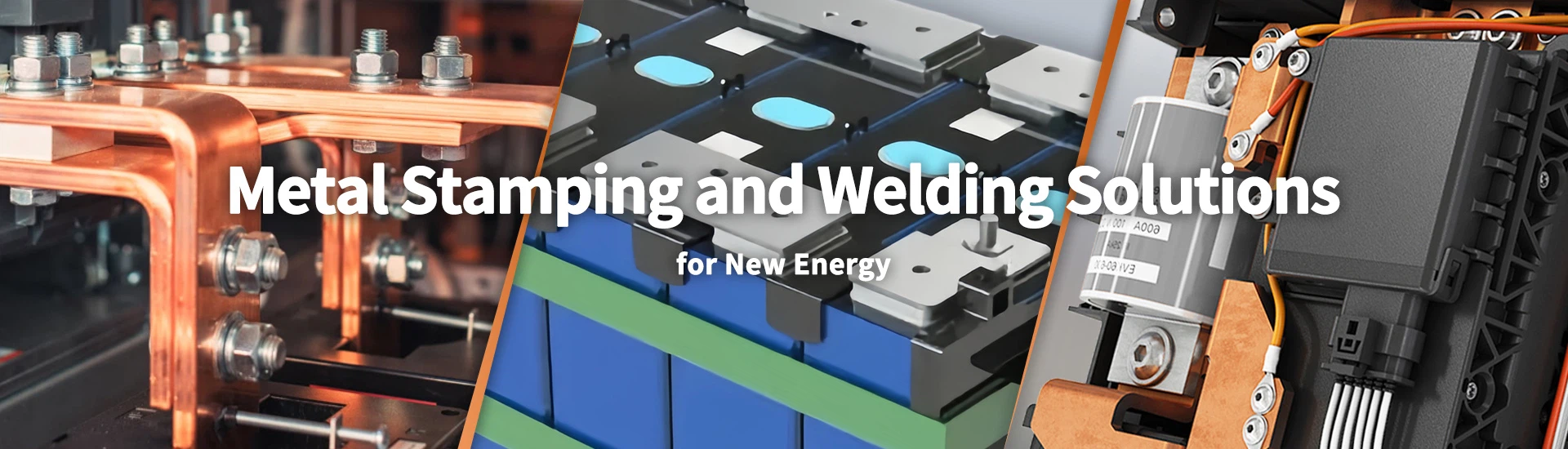
In the design of electric vehicles (EVs), hybrid electric vehicles (HEVs), energy storage systems (ESS), and high-end industrial battery packs, the connection between battery modules and management systems not only affects energy transmission efficiency, but also directly affects the safety and cycle life of the entire vehicle. Although traditional circular wire harnesses are soft, they take up a lot of space and have significant skin effect under high current; Although rigid copper bars can carry high currents, they cannot cope with the thermal expansion and contraction generated during battery charging and discharging, as well as the severe vibrations caused by vehicle operation. The Flexible Busbars for Battery Connector was born to address this contradiction. As an innovator in battery connection components, we adopt advanced copper foil diffusion welding technology to achieve atomic level metallurgical bonding of multi-layer high-purity copper foil under high temperature and high pressure, and configure high-strength precision copper terminals at both ends.
- Fast Delievery
- Quality Assurance
- 24/7 Customer Service
Product Introduction

Flexible Busbars for Battery Connector, designed specifically for battery connection scenarios, relies on the core technology of multi-layer copper foil diffusion welding. With flexible structure, low resistance conductivity, high reliability, and strong environmental adaptability, it has become a core upgraded component for internal connections of power battery packs, energy storage battery clusters, car power supplies, industrial lithium battery equipment, and photovoltaic energy storage integrated machines. It is not only a conductor, but also an engineering solution to solve battery system vibration compensation, thermal expansion and contraction, spatial wiring, and stable transmission of high current. It helps equipment manufacturers and system integrators reduce failure rates, improve energy density, extend system life, and reduce full lifecycle costs from the source.
Core Engineering Value
Connection failure caused by vibration and impact
Continuous vibration from vehicle operation, equipment handling, etc., easily causes rigid copper bar failures (loosening, fracture, poor contact, etc.). Flexible Busbars for Battery Connector absorbs vibration and impact via multi-layer copper foil, eliminating loosening and fracture risks structurally.
01
Structural Stress Damage From Battery Thermal Expansion
Battery thermal expansion/contraction during charging/discharging causes structural stress, damaging poles and brackets. Copper Flexible BusBar solves this via flexible stretching and bending, automatically compensating for thermal stress.
02
Narrow Space & Difficult Wiring In Dense Battery Packs
Modern battery packs require high integration and compact space, where rigid copper bars are hard to wire. Multilayer Copper Foils Flexible BusBars enables small-radius bending, fitting tight layouts and improving space utilization.
03
High Heat & Loss Under High-Current Transmission
High-current battery connections easily cause high heat and cell aging due to uneven conductivity. Flexible BusBar Copper features diffusion-welded high-purity copper foil, ensuring low resistance, uniform current, and lower heat generation.
04

specific parameters
Resistance value
Under a standard environment of 20 ℃, the resistance value of Flexible Copper Laminated Busbar per unit length (such as 1 meter) is usually 0.01-0.1 Ω, depending on the thickness, number of layers, and diffusion welding process quality of the copper foil. The low resistance characteristic can ensure efficient power transmission and reduce resistance heating losses.
Current carrying capacity:
They are closely related to factors such as cross-sectional area, copper foil thickness, and ambient temperature. Example: A flexible connection with a cross-sectional area of 100 square millimeters and a Copper Flexible Busbar thickness of 0.15mm can sustain a current carrying capacity of around 300-400A at 40 ℃. In practical applications, it is necessary to evaluate and adjust reasonably based on the working environment and heat dissipation conditions.
Bending radius
Automotive Copper Busbar has excellent flexibility, with a minimum bending radius typically 3-5 times its own thickness. For example, a soft connection with a total thickness of 3mm can have a minimum bending radius of 9-15mm and can be flexibly wired and installed in narrow spaces.

Our factories
Headquartered in Xiamen, equipped with an intelligent production base and R&D center, we continue to invest in the innovation of new energy metal connection technology and are committed to becoming a trustworthy partner in the field of green energy. The production capacity of our Flexible Busbars for Battery Connector is 150, 000 sets/month. We have sufficient production capacity to meet your needs.

contact us
Inquiry does not constitute a binding commitment to place an order. We sincerely welcome all kinds of inquiries about our products, prices, specifications, and related services, and will reply to you with professional and detailed information in a timely manner.

Hot Tags: flexible busbars for battery connector, China, manufacturers, suppliers, factory