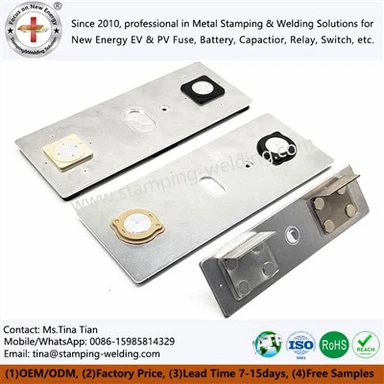
Analysis of the characteristics and applications of brass in stamping processing
May 10, 2026
Overview of copper material types and stamping properties
In the field of metal forming, copper and copper alloys occupy an important position due to their excellent physical and mechanical properties. Although pure copper (such as T1-T3 grades) has excellent electrical and thermal conductivity, its ability to resist compression instability is weak and its work hardening phenomenon is obvious, which to a certain extent limits its application in the complex Sheet Metal Brass Stamping process. In contrast, brass, as a copper-zinc alloy, can obtain superior comprehensive properties than pure copper by adjusting the zinc content and adding trace elements. Especially in terms of deep drawing performance, Brass Sheet Metal Stamping performs outstandingly. Research shows that when the mass fraction of copper in brass is within a specific range, its ultimate drawing ratio is often better than that of pure copper, making it an ideal choice for manufacturing parts with complex shapes. However, impurity elements (such as lead, bismuth, phosphorus, etc.) have significant adverse effects on the performance of brass, especially when multiple impurities coexist; the comprehensive effect is more obvious. Therefore, when producing high-quality Customized Brass Stamping Contact Parts For Wall Socket Plug, strictly controlling the total amount of impurities in raw materials is a key step to ensure yield and performance.
Key factors affecting brass stamping performance
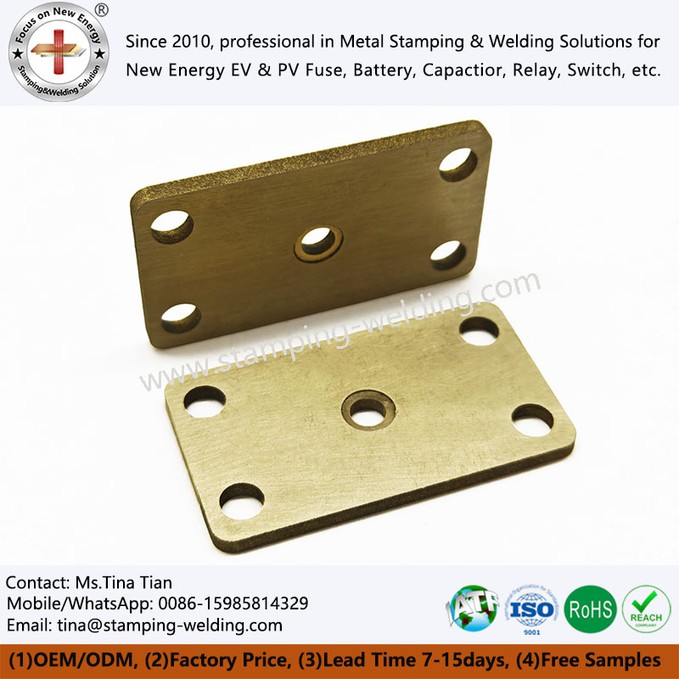
Grain size and surface quality. The microstructure of brass, especially the grain size, directly determines its macro stamping performance. Small and uniform grain size usually gives the material a better surface finish, which is crucial for Electrical Brass Metal Stamping for Socket Switch with high appearance requirements. If the grain size of the sheet is uneven, even if the average size is similar, its toughness will decrease, resulting in a rough "orange peel" phenomenon on the surface of the formed part. Therefore, monitoring the n value (work hardening index) and r value (plastic strain ratio) through tensile tests and cupping tests is an important means to identify whether a material is suitable for precision processing.
Stress corrosion and heat treatment. After cold working of brass parts, large tensile stress often remains inside. If these parts are exposed to moisture or specific corrosive media such as ammonia and mercury for a long time, stress corrosion cracking (commonly known as "seasonal cracking") will easily occur. In order to eliminate this hidden danger, appropriate low-temperature annealing must be performed. This process can effectively reduce or eliminate the residual stress caused by cold working, thereby significantly improving the reliability and durability of the Electrical Brass Switch Socket Part in long-term use.
Process matching
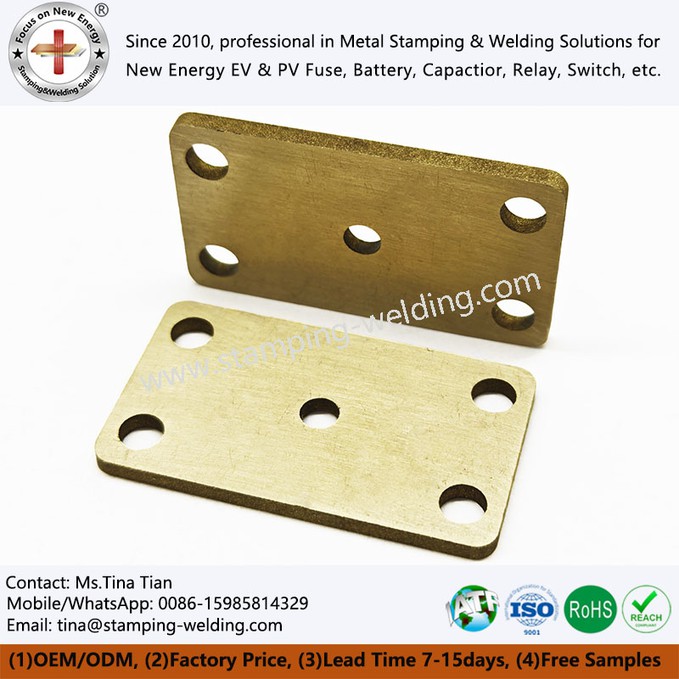
The thickness selection of brass stamping parts is usually between 0.2mm and 6mm, depending on the application scenario and the process capabilities of Cold Stamping Brass for Switch. The relationship between material and thickness: Different grades of brass (such as H62, H68) have different elongation and strength. Thicker materials are usually used for structural parts that bear high mechanical loads, while thin materials are mostly used for precision electronic components.
Influence of process parameters: The clearance of the mold design, the stamping speed and the tonnage of the press all need to be accurately adjusted according to the material thickness. Reasonable parameter settings can reduce springback and ensure the dimensional accuracy of Brass Sheet Metal Parts Terminal. Cost control: On the premise of satisfying performance, optimizing thickness design can help reduce material costs and improve production efficiency.

Industry applications and future trends
With the explosion of new energy and smart home fields, the demand for precision brass parts is changing from "universal" to "high-precision". For example, in battery connectors and micro sensors of new energy vehicles, higher requirements are placed on the electrical conductivity and temperature resistance of Brass Contact Plug Pin for Electric Switch Socket Parts. At the same time, in order to adapt to the miniaturization trend, manufacturers are developing ultra-thin precision stamping technology with thinner thickness and higher precision.
In addition, increasingly stringent environmental regulations have also promoted innovation in surface treatment technology. The traditional electroplating process is gradually being replaced by green processes such as chromium-free passivation, which not only conforms to the concept of sustainable development, but also enhances the competitiveness of Brass Contacts Crimp Terminal Block Assembly For Socket Switch in the high-end export market. In the future, through the deep integration of material science and mold technology, brass stamping parts will play the role of "invisible rigidity" in a wider range of industrial fields.

contact us
Our company has long been focused on the R&D and manufacturing of high-precision Silver Plated Brass Terminal products, supporting customization according to drawings and the production of stamping parts that meet different thickness, grain size and stress treatment requirements. If you need to obtain samples or technical parameters, please contact our engineering team.