The application of tin plated aluminum busbar technology is gaining momentum: lightweight and cost advantages are driving market penetration
Mar 22, 2026
Against the backdrop of the industry's continuous pursuit of "lightweight, low-cost, and high-reliability" in power distribution and new energy systems, aluminum-based bars are ushering in a new round of technological upgrades and application expansion. Among them, tin plated aluminum busbar, with their composite structure of "aluminum core + tin layer," are gradually occupying an important position in new energy vehicles, data center power supply, and power distribution equipment. This article reviews the latest developments and trends of this product from the perspectives of industry applications and technological evolution.

Material substitution accelerates: Aluminum busbars move from "alternative" to "mainstay"
For a long time, copper busbars have dominated due to their superior conductivity. However, with volatile copper prices and the growing demand for system weight reduction, aluminum bars are rapidly entering the high-voltage connection and power distribution fields. Aluminum, with a density only one-third that of copper, can reduce weight by more than 50% for the same current carrying capacity, making it the preferred solution for internal connection bars in new energy vehicle battery packs, power distribution units (PDUs), and bar trunking in large data centers.However, aluminum faces two major technical bottlenecks in applications: the easy formation of a high-resistivity oxide film on its surface and the risk of electrochemical corrosion when directly connected to copper terminals. The mainstream industry solution focuses on surface plating processes-forming a tin protective layer on the aluminum substrate through electroplating or hot-dip immersion, enabling aluminum bar electrical power connectors to maintain their lightweight advantage while significantly improving contact reliability and environmental adaptability.

Tin plating process solves connection reliability problem
The core value of tin plated aluminum busbar lies in the interfacial stability provided by the tin layer. On one hand, the tin layer effectively isolates the bar from air and moisture, preventing oxidation of the aluminum substrate and ensuring stable contact surface resistance during long-term operation. On the other hand, when connected to dissimilar metals such as copper bars and copper terminals, the tin layer acts as a transition layer, effectively inhibiting electrochemical corrosion. Furthermore, the tin coating imparts excellent solderability to the bar, offering significant process advantages in module integration and automated assembly. From a material selection perspective, the industry commonly uses 6101 aluminum or 6061 aluminum bars as the base material. Among these, 6101 aluminum alloy, due to its good balance of conductivity and mechanical strength, is most widely used in power electronics and new energy vehicles; 6061 is suitable for complex structural components with high requirements for bending formability. Some high-end applications further select 6101 T61 aluminum busbars, using heat treatment to improve mechanical properties and meet long-term reliability requirements under vibration conditions.

Customization and flexible connectivity have become technological hotspots
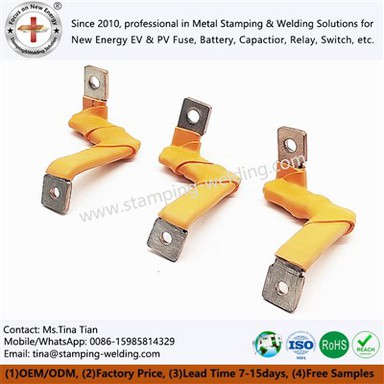
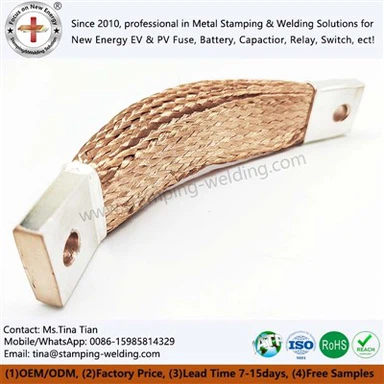
As system integration increases, standardized busbars are no longer sufficient to meet diverse needs. Customized aluminum bars have become a key focus in the industry, encompassing various customized forms such as irregular bends, multi-level branches, and composite coatings. In the space-constrained battery packs and electric drive systems of new energy vehicles, bar design must simultaneously meet multiple constraints, including current carrying capacity, thermal management, insulation compatibility, and ease of assembly, driving suppliers to shift from "simple processing" to "collaborative design." Meanwhile, Flexible aluminum connections and aluminum flexible connections technologies are increasingly widely used in vibration-sensitive scenarios. These products employ a multi-layer aluminum foil laminated structure, combining high current carrying capacity with damping and vibration absorption characteristics. They are suitable for connections between battery modules, bridging between inverters and motors, and other components requiring tolerance compensation and vibration absorption, becoming an important supplement to traditional rigid busbars.
Market Outlook: New Energy and Power Distribution as Dual Drivers
Benefiting from the continuous increase in the penetration rate of new energy vehicles and the large-scale development of energy storage systems, the tin-plated aluminum busbar market is showing rapid growth. In the power distribution sector, data center bars, intelligent power distribution units, and internal connection components of photovoltaic inverters also have strong demand for lightweight, low-cost aluminum bars. It is worth noting that aluminum bar manufacturers are accelerating their transformation towards an integrated service model of "materials + process + testing," extending from simple processing and manufacturing to early-stage structural optimization, coating selection advice, and reliability verification. In the future, with the industrialization of new technologies such as aluminum-based composite materials, partial composite coatings, and integrated insulation molding, tin-plated aluminum busbars are expected to realize their value in a wider range of high-voltage, high-current scenarios.
Contact Us
For further information on tin plated aluminum busbar selection or to obtain technical support, please feel free to contact us. We will provide you with professional application advice and customized services.