


Analysis Of Battery Pack CCS Integrated Busbar Technology And Market Development Trends
Oct 09, 2025
Definition and Structure of CCS Integrated Busbars
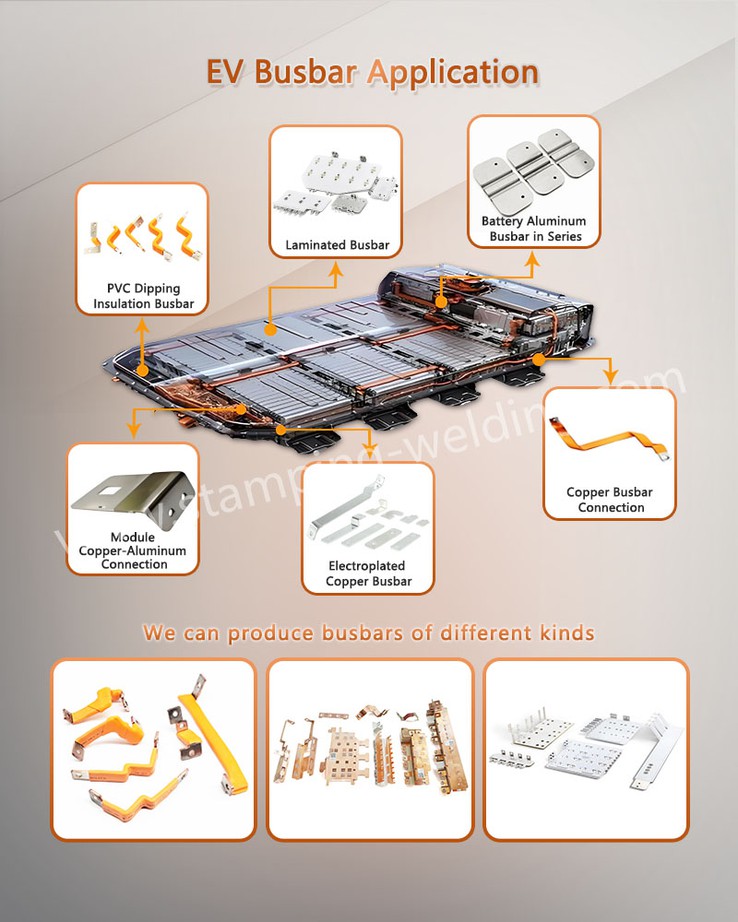
In the power battery system of new energy vehicles, efficient and secure connections between battery cells are critical to overall vehicle performance. To achieve high voltage and high power requirements, multiple battery cells are typically combined in series and parallel to form battery modules. In this process, busbars play a central role in electrical connection.
In traditional designs, voltage and temperature sampling for each battery cell typically relies on a separate wiring harness system. However, this approach not only consumes a lot of space but also complicates wiring and reduces the level of assembly automation. With the accelerating trend towards lightweighting and automation in new energy vehicles, CCS (Cell Contact System) integrated busbar technology has emerged.
CCS integrated busbars integrate signal acquisition components (such as FPCs, PCBs, and FFCs) with battery bus bars, busbar connectors, and insulating structural components. Through thermal compression, riveting, or ultrasonic welding, the integrated structure enables high-voltage series and parallel connection of battery cells, as well as voltage and temperature sampling. Its core components include:
* Copper or aluminum conductive busbars (automotive battery terminal bus bar, automotive power busbar, Power Bus Bar);
* Insulation (Busbar Insulations);
* Connector components (Bus Bar Connector, Automotive Busbar Connector);
* Signal acquisition circuitry (FPC/PCB).
This system transmits voltage and temperature signals to the BMS and is a critical component of the battery management system.

Technical Advantages of CCS Integrated Busbars
Compared to traditional wiring harness busbars, the CCS Integrated Busbar Systems (Automotive Bus Bar Systems) offer the following significant advantages:
1. Structural Integration and Lightweight
Using FPC and PCB as signal acquisition carriers replaces cumbersome wiring harnesses, resulting in a lighter and thinner system with improved space utilization, meeting the compact design requirements of new energy vehicles.
2. High Level of Assembly Automation
The busbar system's modular structure enables rapid assembly and can be integrated with automated equipment, significantly reducing manual labor and improving production consistency.
3. Improved Durability and Safety
The integrated hot-pressing technology significantly enhances the line's sealing, moisture resistance, and corrosion resistance. Overcurrent protection structures are often incorporated into the design of the Automotive Busbar to prevent cell overload and enhance overall package safety.
4. Strong Standardization and Compatibility
The busbar design module can be flexibly adapted to different cell sizes and layouts, facilitating large-scale manufacturing and reducing development and assembly costs.
5. Stable Electrical Performance
High-quality copper-aluminum conductors combined with the Busbar Insulations insulation layer maintain low impedance transmission even under high current conditions, improving the overall system conductivity efficiency.
CCS Integrated Busbar Manufacturing Process
The manufacturing of CCS integrated busbars typically includes the following key steps:
1. Film Cutting and Pretreatment
Insulating film, silicone sheet, Teflon sheet, and other materials are cut to specified dimensions to ensure the accuracy of subsequent hot pressing.
2. Pre-Assembly
Conductive materials (copper and aluminum sheets), insulating materials, and electronic components are stacked sequentially to form the structure to be pressed. This step is crucial to the uniformity and reliability of the conductive path of the Automotive Bus Bar.
3. Hot Press Molding
Using an electric hot press at approximately 160°C, the material layers are tightly bonded together to form the integral structure of the BusBar Systems or Automotive Power Busbar.
4. Welding and Riveting
Metal components are typically welded using laser or ultrasonic welding, with some structures employing automated riveting for both mechanical and electrical fixation.
5. Automated Inspection and Assembly
CCD visual inspection identifies scratches, tab defects, and contamination. The system is then integrated with the temperature sensor and plastic structural components to form a complete Automotive Bus Bar Assembly.
6. Cleaning and Inspection
After cleaning with alcohol, a final continuity and insulation test is performed to ensure compliance with safety and electrical performance standards.
Through the above processes, the Battery Bus Bar and signal acquisition circuitry are integrated into one production process, creating a highly reliable Automotive Bus Bar Connector System.
Market Prospects and Industry Development Trends
Driven by the "Dual Carbon" goals, global sales of new energy vehicles continue to rise, directly driving the expansion of the power battery and Bus Bar Systems markets. According to EVTank, global new energy vehicle sales will exceed 52 million by 2030, with market penetration exceeding 50%.
Based on the average battery module configuration, each vehicle is expected to be equipped with approximately nine battery modules, each equipped with one CCS integrated busbar and corresponding to one to two FPC signal layers. Conservatively estimated, the value of the CCS system (including busbar connector and battery bus bar) per vehicle is over 1,000 yuan.
It is estimated that the combined market size of FPC and CCS will grow from approximately 17.3 billion yuan in 2022 to 39.4 billion yuan in 2025, with a compound annual growth rate of approximately 31.7%. This growth is primarily driven by the following factors:
* Increased system installations driven by increased new energy vehicle sales;
* Increased demand for busbars per unit due to optimized battery module capacity and structure;
* The trend toward intelligent manufacturing is driving upgrades in key components such as automotive bus bars and busbar insulations.
In the future, as electric vehicle structural integration and modularization deepen, power busbars and busbar connectors will further
develop towards higher conductivity, higher insulation, and higher reliability. Intelligent Automotive Battery Terminal Bus Bars (ACCS), integrating signal acquisition, current monitoring, and thermal management, will become mainstream in the industry.
contact us


