Analysis Of Automotive BusBar PET Insulation Technology Trends in The Development Of New Energy Vehicles
Oct 10, 2025
With the rapid growth of the new energy vehicle (NEV) industry, energy management and electrical connection technologies in on-board electronic control systems are undergoing profound changes. Capacitors and busbars, as key components in power conversion and storage systems, are jointly building the "neural network" of electric drive systems. In core areas such as power electronics modules, on-board chargers (OBCs), DC/DC converters, and battery management systems (BMSs), the collaborative design of DC film capacitors and automotive busbars has become a key direction for improving voltage tolerance, suppressing electromagnetic interference, and enhancing system reliability.

Capacitor Application Landscape in New Energy Vehicles
In new energy vehicles, capacitors perform functions such as filtering, decoupling, energy absorption, and resonance. Based on capacitance and voltage rating, three main types of capacitors are currently used in automotive systems: ceramic capacitors (MLCCs), aluminum electrolytic capacitors, and DC film capacitors.
Ceramic capacitors (MLCCs): They offer excellent high-frequency characteristics and are suitable for signal chains and low-voltage systems.
Aluminum electrolytic capacitors: They have high capacitance but low voltage resistance and are primarily used in low-voltage applications.
DC film capacitors: They combine high voltage and high reliability, making them the primary capacitor type for DC-Link and filter circuits in new energy vehicles.
The high-temperature, high-voltage, and high-current capabilities of film capacitors make them key components in Onboard Control Boards (OBCs), DC/DC modules, and drive inverters. Capacitor module integration often requires a co-design with a capacitor busbar or DC capacitor busbar to shorten the current path, reduce equivalent inductance (ESL), and improve power conversion efficiency.
Trends in Film Capacitor and Busbar Integration
1. DC-Link Capacitor and Busbar Integration
Capacitor modules in new energy vehicle high-voltage systems are often directly integrated with the busbar to form a capacitor laminating busbar structure. This design minimizes the inductive loop under high-voltage and high-frequency conditions, significantly reducing power loss.
In electric vehicle busbar systems, the New Energy Vehicle Film Capacitor BusBar and busbar for Power Capacitor are key solutions. The busbar's laminated copper conductor structure is insulated and protected by Automotive BusBar PET insulation film, ensuring high dielectric strength and mechanical flexibility, meeting EV high-voltage safety standards.
2. Busbar Material and Plating Optimization
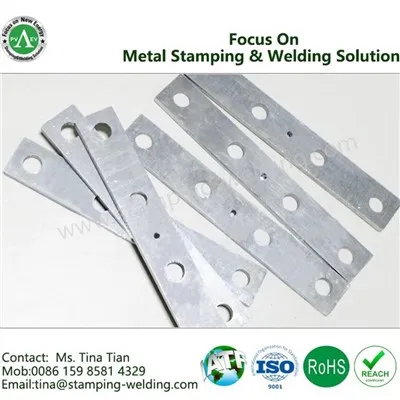
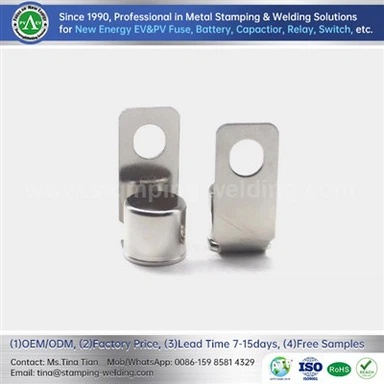
To improve electrical conductivity and corrosion resistance, tin-plated copper busbars for EVs and tin-plate busbars for automotive are widely used in electric drive systems. These busbar automotive components ensure low contact resistance and high thermal conductivity during voltage conversion and energy distribution.
In addition, busbar insulation technology achieves high-voltage insulation through PET, PI, or epoxy powder coatings. Combined with the automotive power connector structure, it enables system compactness and modularity. For EV busbars and EV battery busbars, controlling insulation thickness and dielectric strength are key design considerations.

Extended Automotive Applications of MLCC and CeraLink Capacitors
MLCC capacitors (multilayer ceramic capacitors) remain irreplaceable in automotive low-voltage and control systems. They are primarily used in control units (ECUs), ADAS, radar, and in-vehicle infotainment systems. MLCC's soft terminal design and three-terminal structure effectively reduce mechanical stress and electromagnetic interference.
CeraLink capacitors, targeted at high-frequency SiC/GaN power modules, play a key role in busbar-for-busbar film capacitor modules due to their low ESL and high switching frequency characteristics. They are often used in conjunction with the busbar car structure to form a high-frequency, fast-response current loop and enhance DC link stability.
Subdivision of the Automotive Busbar System
Based on the new energy vehicle platform architecture and power module layout, automotive busbar development is currently moving in the following directions:
Automotive Ground Bus Bar (GBB): Provides a grounding and interference prevention path for the entire vehicle and is commonly used in Onboard Battery Control (OBC) and Battery Management System (BMS) systems.
Car Battery Bus Bar: Enables series and parallel connection of battery packs and carries high current.
Auto Bus Bar (General Motors Busbar): Covers charging, electric drive, and electronic control, suitable for multiple vehicle platforms.
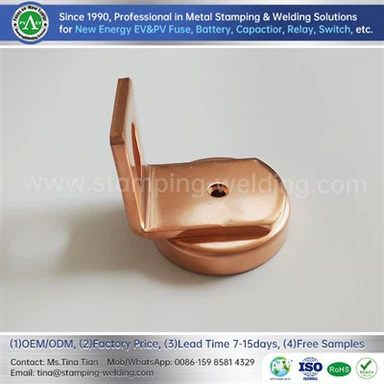
Capacitor Busbar & DC Capacitor Busbar: Co-packaged with capacitor modules to optimize energy circulation.
This segmentation trend reflects the dual demands of new energy vehicles for high power density and structural integration.
System Integration and Reliability Improvement
In new energy vehicle electrical systems, the collaborative design of capacitors and busbar modules is no longer simply about conduction and energy storage, but rather a high-frequency, high-voltage, and low-impedance system collaboration.
Automotive BusBar PET insulation technology ensures high-voltage safety.
Capacitor laminating bus bar provides a low-ESL current path.
Tin-plate Busbar Automotive achieves corrosion resistance and long life.
The busbar electric vehicle architecture supports rapid energy conversion in intelligent electric drive systems.
In the future, the BusBar automotive system will work with the Capacitor Busbar to build an integrated power network supporting higher voltage platforms (800V+) and higher-power-density electric drive modules.
Conclusion: The Evolution of New Energy Systems from Capacitors to Busbars
Amidst the continuous wave of innovation in new energy vehicles, the technological evolution of capacitors and busbars is driving upgrades in vehicle electronic control architecture. From early independent wiring to today's integrated Tin-Plated Copper BusBar for EV solutions, and from traditional DC-Link capacitors to the New Energy Vehicle Film Capacitor BusBar structure, power transmission paths are shortened, efficiency is increased, and reliability is enhanced.
The integration of the Automotive BusBar and the DC Capacitor BusBar represents a new direction for smart electric vehicle electrical systems: lighter, safer, and more efficient.
Amid the trend toward "higher voltage, greater integration, and lighter weight," the coordinated optimization of busbars and capacitors will continue to provide more stable and efficient power support for new energy vehicles.
contact us