Technical Guide For Selection Of Electrical Copper Stamping Parts
May 03, 2026
In electrical system design, the appropriate selection of Electrical Copper Stamping Parts directly affects the product's conductivity, mechanical lifespan, and reliability. For different application scenarios, a comprehensive consideration must be given to multiple dimensions, including material composition, sheet metal quality, processing precision, and environmental adaptability.
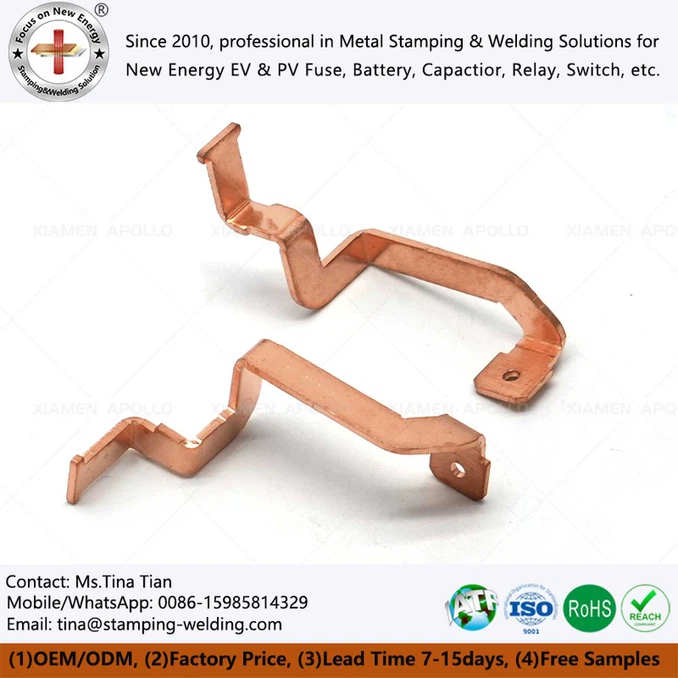
Material selection
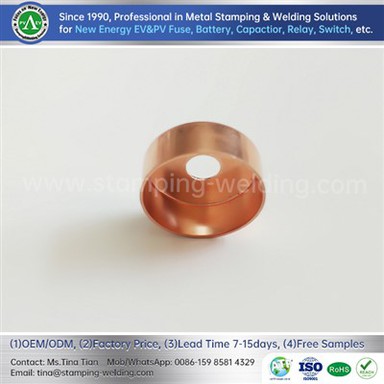
Regarding material selection, pure copper (such as T2 and C1100) should be preferred for high conductivity requirements (e.g., terminals and connectors) due to its excellent conductivity. For components requiring higher strength and flexibility (e.g., switch springs and plug contacts), beryllium copper or phosphor bronze are recommended. For mechanical structural components (e.g., brackets and fasteners), brass is suitable due to its good corrosion resistance and sufficient strength. In these applications, copper parts and electrical copper stamping parts are common basic types, while precision copper stamping parts are better suited for high-precision scenarios.
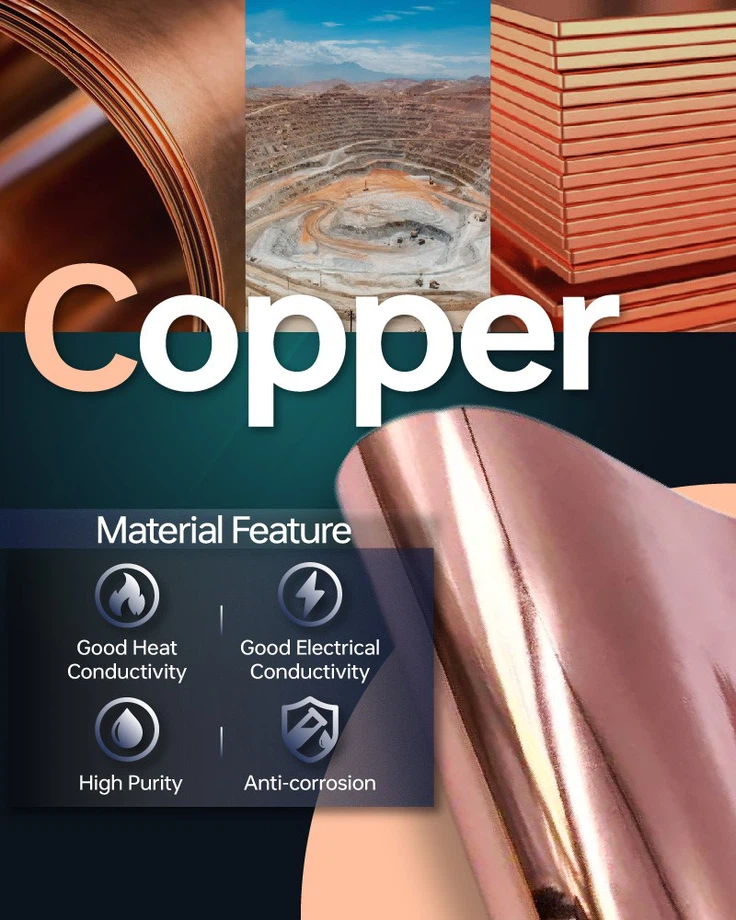
Board quality and specifications
The quality and specifications of the sheet material directly affect the molding effect. The sheet material must have a smooth surface, free of cracks and scratches, with consistent and uniform thickness. The appropriate hardening state (e.g., hard, semi-hard) should be selected based on the cold work hardening characteristics. Simultaneously, the stamped of the copper sheet and the copper sheet stamping process must ensure that the material state matches the mold design to minimize subsequent deformation.
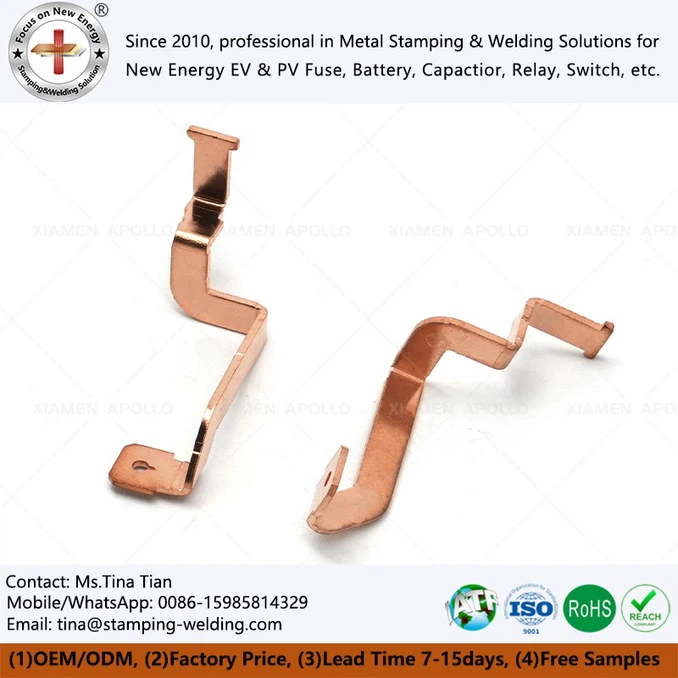
Processing and structural performance
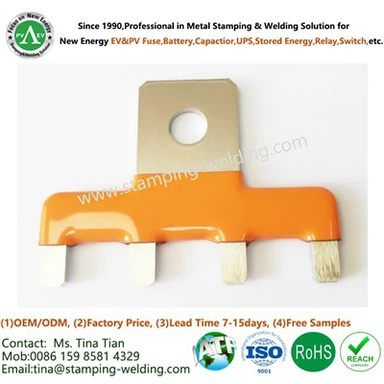
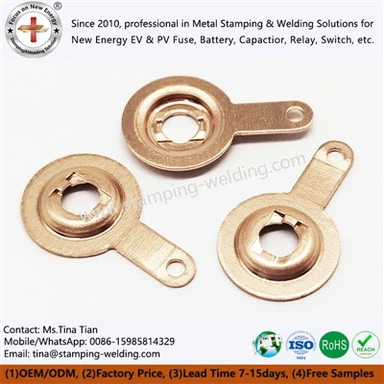
In terms of machining and structural performance, for high-precision parts with complex multi-step forming processes, progressive die or high-difficulty stretching capabilities are required. Processes such as Cross Copper Metal and Pressing Copper Stamping Bending Connecting Parts enable mass production of complex shapes. In addition, Copper Stamped Components and Copper Strip Stamped excel in ensuring dimensional consistency.
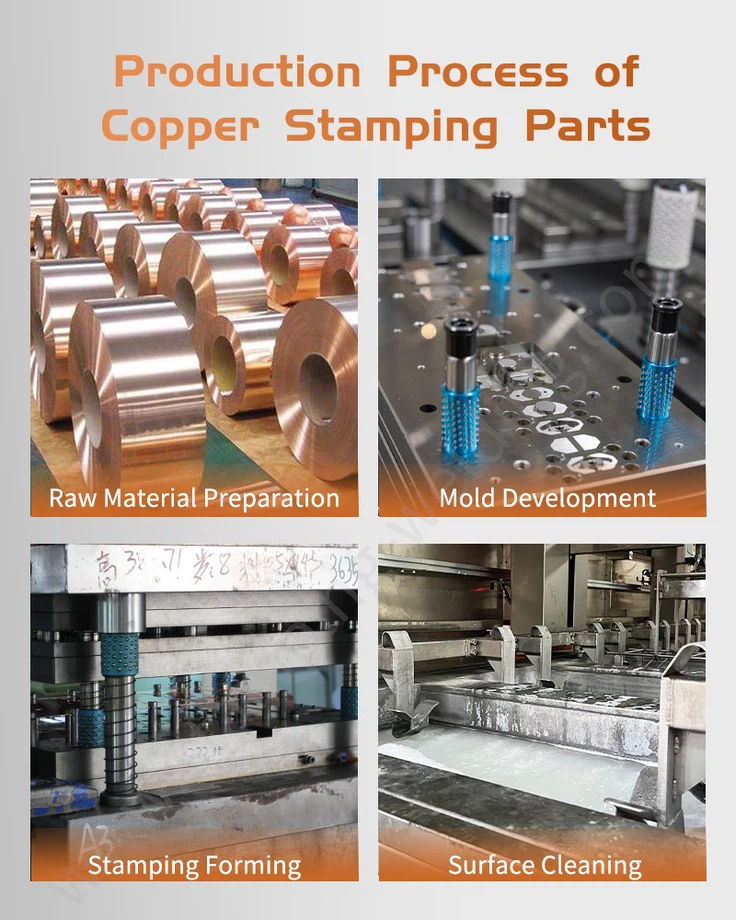
Key Selection Considerations
Key selection considerations include: strength and flexibility (ensuring components can withstand mechanical stress without fatigue failure), environmental adaptability (oxidation resistance, and, where necessary, Silver Plate Over Copper treatment to improve contact stability), heat dissipation (utilizing copper's excellent thermal conductivity), and cost and material utilization (optimizing coil thickness and width to reduce waste). For electrical components such as switches and sockets, Stamping Riveting Electrical Copper Press Parts for Switch Socket and Copper Spring Contacts meet the dual requirements of flexible contact and reliable conduction. Meanwhile, Copper Sheet Metal Fabrication and Custom Metal Copper Stamped technologies provide flexible support for customized electrical connection solutions.
Contact Us
For more detailed information on material selection, precision machining, and surface treatment solutions for Electrical Copper Stamping Parts, please feel free to contact us.