Analysis Of Future Development Trends Of Aluminum Stamping Parts
May 03, 2026
Aluminum Stamping Parts are experiencing rapid growth in the global automotive, aerospace, and high-end electronics manufacturing sectors. The main driving forces are the demand for lightweighting, breakthroughs in manufacturing processes, and environmental pressures. The global metal stamping market is projected to continue expanding until 2034, with aluminum stamped parts showing particularly promising application prospects.

Driven by demand for lightweight vehicles
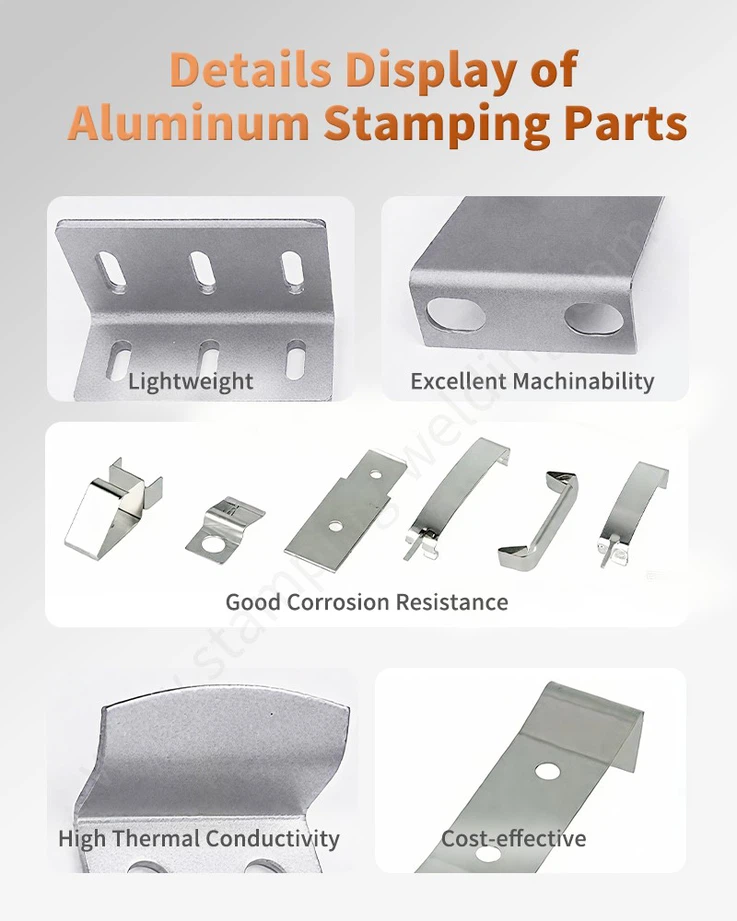
In the automotive industry, to improve the driving range of new energy vehicles and the fuel economy of gasoline vehicles, aluminum alloys, with their advantages of low density and high specific strength, are gradually replacing traditional steel, achieving weight reduction of 40%-50%. Their applications are expanding from existing body panels to high-strength body structural components, chassis systems, and even battery casings. The penetration rate of aluminum stamping technology in new energy vehicles is continuously increasing, while simultaneously placing higher demands on the precision and strength of stamped aluminum parts.
Refined and composite manufacturing processes
In terms of manufacturing processes, hot stamping technology is becoming increasingly widespread, helping to solve the challenges of forming high-strength aluminum alloys; hydroforming technology is being used more extensively in the production of complex-shaped chassis and structural components. Digital simulation technology, through CAE optimization of mold design and process parameters, effectively reduces springback and improves forming rate and surface quality. These technological advancements are collectively driving the development of Aluminum Stamping Parts towards refinement and composite processes.

Industrial Landscape and Intelligent Manufacturing
In terms of industry structure, although integrated die casting shows efficiency advantages in certain vehicle body structural components, stamping still possesses irreplaceable cost and performance advantages in lightweight body panels and mass production. The future will likely see a complementary pattern of "die casting as the main body, stamped for body panels." Simultaneously, intelligent production lines are rapidly being implemented, with automated robotic loading, unloading, transfer, and quality inspection becoming the trend. Intelligent testing equipment ensures the dimensional accuracy and material properties of high-strength aluminum parts.

Green circular economy direction
Green and circular economies are also important directions. Aluminum alloys not only reduce carbon emissions throughout the vehicle's lifecycle, but their waste can also be reused at a very high rate due to its high recycling value, meeting the requirements of sustainable development. Overall, aluminum stamping will continue to play a key role in the wave of lightweighting and smart manufacturing.
Contact Us
For in-depth information on the latest processes and solutions for lightweighting, precision forming, and intelligent manufacturing of Aluminum Stamping Parts, please feel free to contact us.