Analysis Of The Manufacturing Process Of Cap And Contact For Electric Vehicle (EV) Fuses
May 03, 2026
In the design and manufacturing of high-voltage fuses for electric vehicles, the Cap and Contact for Electric Vehicle (EV) Fuses play a crucial role in current transmission and structural sealing. To meet the stringent requirements of high voltage, high current, and instantaneous energy surges, the industry generally adopts a complete process route of high-precision stamping, surface treatment, and welding assembly.
Material selection
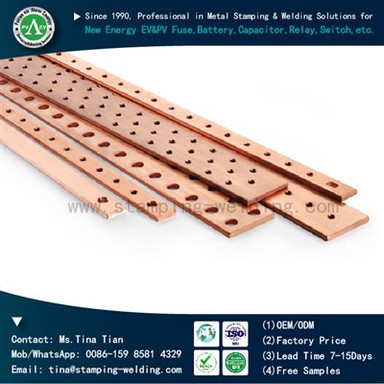
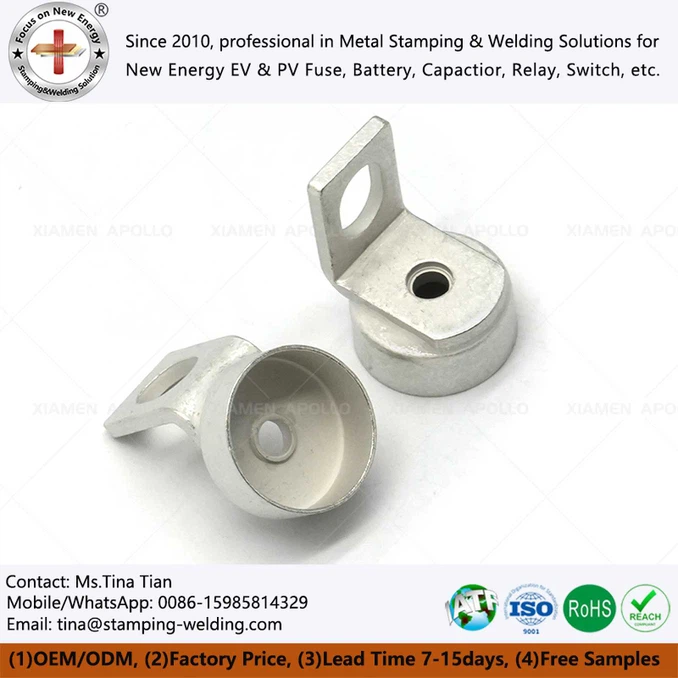
The main body is typically made of copper or brass to ensure extremely high conductivity. The surface is further plated with silver, tin, or nickel to enhance corrosion and wear resistance and reduce contact resistance under high-temperature conditions. In this process, Copper Metal End Cap and Fuse Link Contact and Copper End Cap and Fuse Terminal Contact become common basic component forms.
Manufacturing process
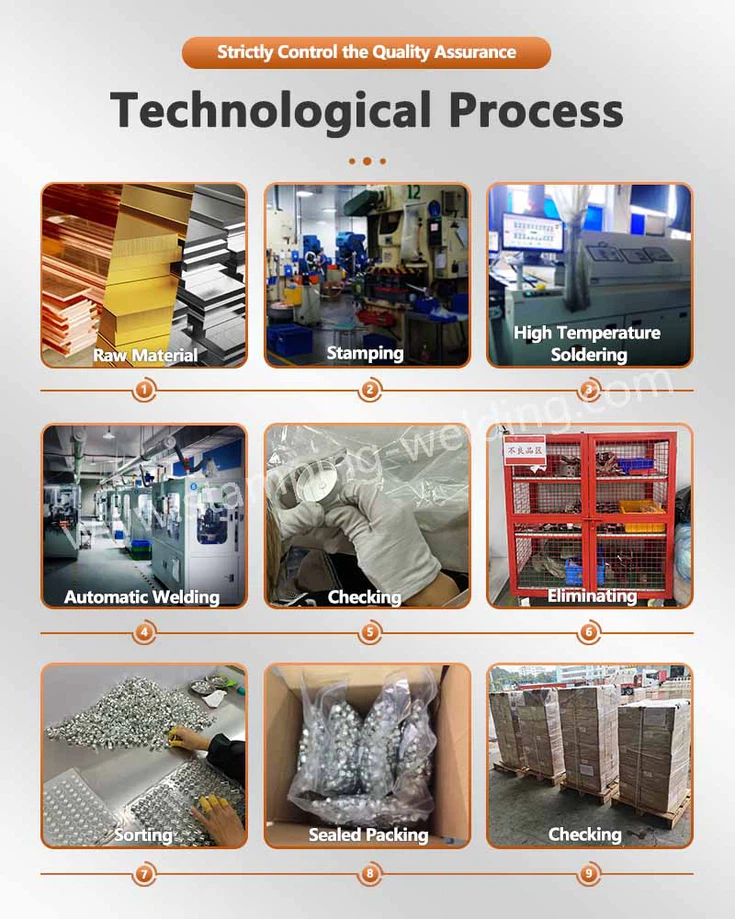
- Stamping: High-speed automatic stamping presses and progressive dies are used to stamp copper sheets into pre-formed structures of end caps or contacts, involving processes such as blanking, stretching, and punching. The formed parts encompass various forms including Fuse Contact Knife Caps, Copper Caps, and L-Type Terminals.
- Cleaning and Degreasing: A cleaning line removes lubricating oil and metal debris from the surface of the stamped parts, preparing them for subsequent electroplating.
- Electroplating Process: This is the core step in improving electrical performance. Silver plating, due to its excellent conductivity, is the preferred choice for high-voltage fuse end cap contacts. Components including Outer End Cap and Contact Welded Assembly Sets and Outer Cap and Automotive Fuse Terminals all achieve stable low contact resistance after silver plating.
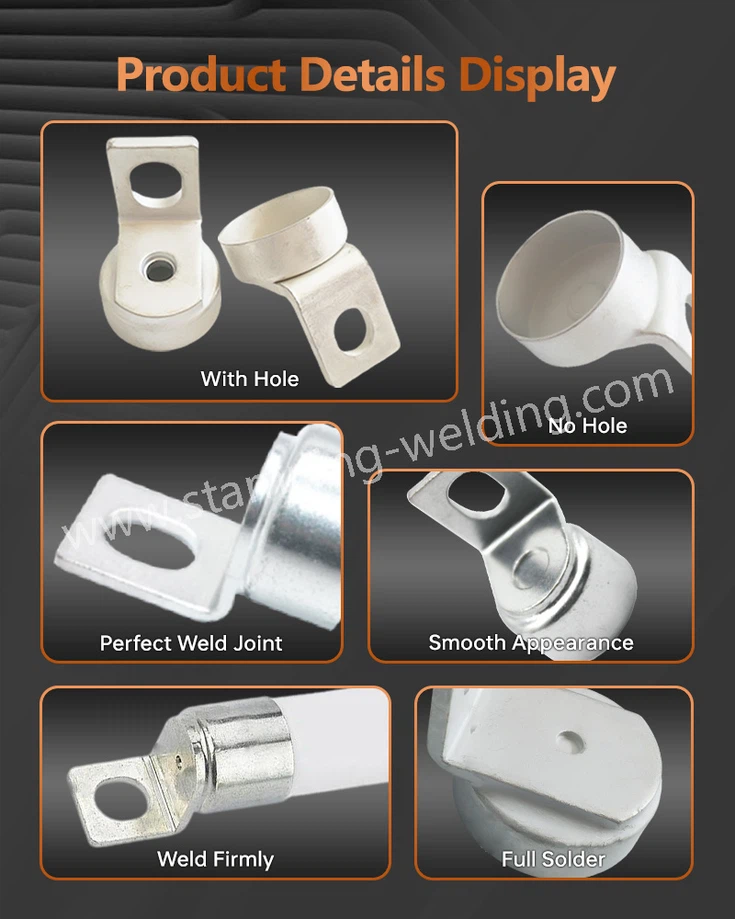
- Welding and Assembly: For structures requiring enhanced resistance to welding, Fuse Cap and Contact Resistance Brazing or Fuse Cap and Contact High Temperature Soldering processes are used to fix the contacts to the end caps. Subsequently, laser welding or crimping techniques are used to connect the cap assembly to the fuse's internal fusible element and ceramic housing, ensuring sealing and low resistance at high temperatures. Typical product forms include Outer Cap and Terminal Welded Components, End Cap and Terminal Welding Components, and Copper End Caps and Fuse Contact.
Key characteristics and quality control
The cap and contact assembly must ensure the flatness of the connection surfaces to minimize contact resistance. Simultaneously, the consistency of thermal expansion between the component and the molten material under thermal conditions must be considered to prevent connection breakage. For different application scenarios, specialized specifications have been developed, including Cap and Contact for Electric Vehicle (EV) Fuses, Cap and Contact for Fast Acting EV Fuse, Cap and Contact for Battery Pack Fuse, Cap and Contact for Hybrid Electric Vehicle Fuses, and Cap and Contact for Battery Power and Auxiliary Fuses. Furthermore, the Copper Cap and Fuse End Blade Femules structure is also used in some designs.
summary
In summary, the cover and contact assembly of electric vehicle fuses are manufactured through precision stamping, surface electroplating, and high-strength welding processes. The core of the process lies in the unity of conductivity, sealing, and structural strength.
Contact Us
For in-depth information on high-precision stamping, electroplating, and welding manufacturing solutions for Cap and Contact for Electric Vehicle (EV) Fuses, please feel free to contact us.